Super Bowl Ads Broke Records at $10M — What This Means for Your Business Right Now
Posted on February 11, 2026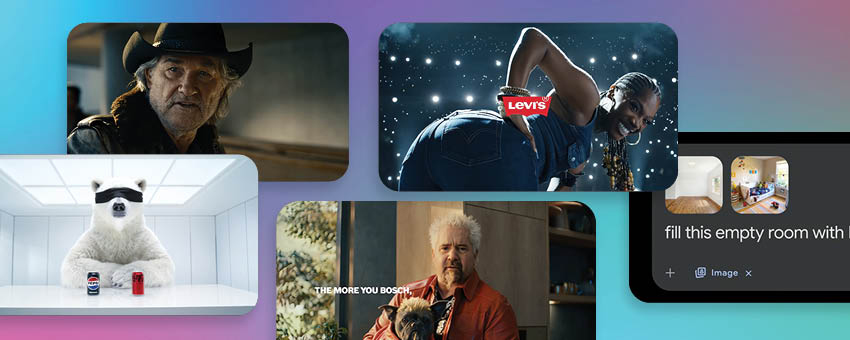
What was your favorite Super Bowl commercial? It’s a common topic after the big game, but the shocking fact is that brands paid more this year than ever before for an ad slot — $10 million for 30 seconds to be exact. Here’s what Super Bowl ads can teach us about crafting a successful marketing plan…
The day after the Super Bowl, the buzz isn’t just about the final score — it’s about which commercial stole the show. A successful video ad has to hit on multiple levels. It must be relevant, engaging, clear, and memorable.
But what stood out most during Super Bowl 60 wasn’t just the creative (even that Coca-Cola bear drinking a Pepsi Zero Sugar) — it was how much brands invested in their marketing this year. Super Bowl ad slots hit a record $10 million for just 30 seconds.
Here’s what Super Bowl advertising can teach us about marketing right now.
1. Big-Budget Traditional Media Is Back — And It’s Earning Trust
Major investments in traditional media like Super Bowl ads signal something important: brands want mass reach and real impact.
Traditional advertising is making a comeback. Why?
Channels like TV commercials and direct mail share something powerful — they feel established and legitimate. In a world saturated with digital noise, traditional media stands out because it feels real.
Even out-of-home advertising like billboards is gaining traction. One study found that out-of-home (OOH) ads drive an average 13.3% increase in U.S. ad awareness — outperforming TV (10.2%), digital (3.9%), and connected TV (2.2%).
That’s a strong signal. Marketing methods that feel tangible and authentic break through digital clutter more effectively.
Studies also show that broadcast TV, Connected TV (internet-streamed television through apps like Netflix, Hulu, or Roku), and direct mail rank among the most trusted marketing channels.
In one survey of 1,200 consumers, print advertising ranked highest in trust at 82%, followed by TV at 80%, and ads in the mailbox at 76%.
Another study revealed that consumers actually enjoy TV and mail advertising more than other formats. Direct mail was rated the least overwhelming (20%), streaming TV ads fell in the middle (13%), and text messages ranked lowest (9%).
If you haven’t reconsidered your investment in traditional marketing like TV and direct mail, now may be the time. Brands are shifting dollars toward channels that generate attention and trust — and small businesses should pay attention.
2. Advertising That Stays in the Home Stays Ahead
People don’t just watch the Super Bowl — they experience it. Whether at a party with friends or relaxing solo on the couch with game-day snacks, viewers are in a positive, comfortable environment.
And that setting matters.
Mark Marshall, Chair of Global Advertising and Partnerships at NBCUniversal, noted that brands are increasingly drawn to advertising during “communal experiences” like live TV events, rather than the more solitary experience of watching content online.
Marketing shouldn’t feel invasive. It should fit naturally into a person’s day. That’s one reason we added Connected TV ads to our Everywhere Small Business plans — they allow business owners to reach prospects in the comfort of their homes while they’re relaxed and receptive.
Video ads on platforms like Roku, Hulu, and Amazon Prime may not always generate an immediate phone call, but they absolutely build brand recall. When someone eventually needs your product or service, your business is already top of mind because they’ve seen your commercial multiple times in a trusted environment.
Direct mail works the same way.
When people come home from work, checking the mailbox is almost a ritual. They flip through the stack casually. If something catches their eye, it can stay in the home for weeks — even months.
Consider this:
- One study found direct mail has a 95% engagement rate and is interacted with at least four times inside the home.
- About 31% of mail items were still in the home one month after delivery.
- Mail boasts a stickiness in the home you won’t find with email or digital. Most mail (51%) is read and displayed in the kitchen, while nearly a third of mail (31%) can be found in the living room. This likely engenders repeat exposure and deeper brand recall.
Super Bowl advertising reminds us that the setting and medium matter. When advertising lives in the home, it earns attention and repeat exposure. Connected TV and direct mail together keep your brand front and center.
3. Investment Drives Growth — The Brands That Invest Win
What did you drink on game day?
The beverage wars are fierce during the Super Bowl — and the brands that invest heavily in marketing usually win.
A Veylinx study examined whether Super Bowl commercials increase consumer demand. The answer: yes. Super Bowl ads drove a 6.4% overall increase in product demand among 2023 viewers. Michelob Ultra saw a 19% increase — the highest among the eight brands studied.
Anheuser-Busch was one of the top spenders during Super Bowl 60, purchasing 2.5 minutes of advertising to promote Michelob Ultra, Budweiser, and Bud Light — not including the cost of celebrity appearances like Kurt Russell.
Since 2001, Bud Light held the top spot as America’s number-one beer. But in 2023, Modelo invested $155 million in TV advertising. After outspending Bud Light by 75% and Michelob Ultra by 35%, Modelo rose to the top.
This year, Bud Light responded by increasing its advertising investment to regain market share.
The pattern is clear: strategic, sustained marketing investment drives revenue growth.
Ask yourself:
Am I doing everything I can to market my business?
If the answer is no, it may be time to increase your investment and market more consistently than ever before.
So What’s the Best Way for a Small Business to Do This?
You may not have $10 million for a 30-second ad — and you don’t need it.
Today, small businesses can access television audiences through local Connected TV campaigns. We offer this through our Everywhere Small Business Platinum Plus plan, which makes multi-channel marketing affordable and manageable.
An ESB Platinum Plus campaign includes:
- Our flagship direct mail postcards
- Matching digital ads on Facebook, Instagram, Google, and YouTube
- Connected TV commercials
These channels work together to move prospects from awareness to purchase.
Take All Our Children Elite Childcare Academy:
They launched an Everywhere Small Business Platinum Plus campaign targeting families with children up to 10 years old within a five-mile radius. After mailing 4,000 postcards and running digital and Connected TV ads, they enrolled three new children — generating an estimated $42,900 in annual revenue.
Owner Antoinette Elliot said:
“I feel like my campaign was most successful, in part, because it’s everywhere. Just like it says — Everywhere Small Business campaign. If you go to watch a movie, we may pop up. If you check your email, we may pop up. We are literally everywhere — between the socials and the commercials — it’s everywhere.”
That’s the power of coordinated marketing.
If you want to test local Connected TV ads or launch a direct mail campaign, we’re here to help you succeed.
Call us at 1-800-628-1804, and one of our marketing consultants will help you build a plan that fits your goals and your budget.
Or email me directly at joy.gendusa@postcardmania.com.
Best,
Joy
P.S. Want to see more real-world success stories? Visit our case studies page!