Podcast Episode 13
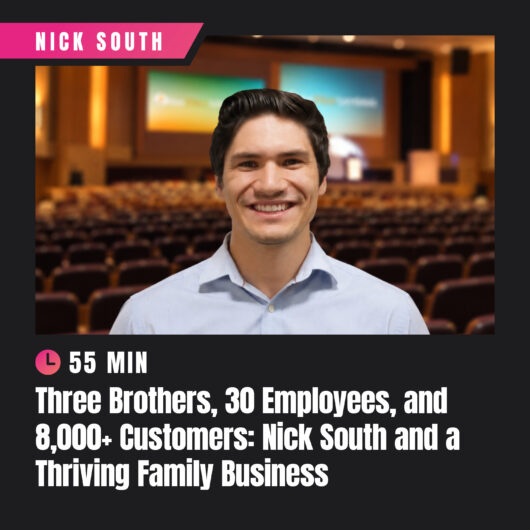
Three Brothers, 30 Employees, and 8,000+ Customers: Nick South and a Thriving Family Business
To be a guest on the show, email podcast@postcardmania.com
Listen and watch on your favorite podcast applications.




Episode Overview
Host Chris Foster talks with Nick South, co-founder of SoTellUs, about building a video review platform alongside his father and two older brothers, hiring for fit over résumé so people stay for a decade, and why knowing your numbers is the line between running a business and funding an expensive hobby.
Podcast
Episode Transcript
Here’s the transcription below of today’s episode, a conversation between host Chris Foster and Nick South, co-founder of SoTellUs, about building a video review platform alongside his father and two older brothers, hiring for fit over résumé so people stay for a decade, and why knowing your numbers is the line between running a business and funding an expensive hobby.
Note: This transcription has been formatted from the original episode transcript for readability.
Transcript
Chris: Well, all right — Nick South, welcome in to the Everywhere Small Business Podcast.
Nick: Hey, I appreciate you having me. Thanks for having me here, Chris.
Chris: It’s terrific. Tell us a bit about yourself and your business.
Nick: Yeah, so our company is called SoTellUs. Essentially we manage the online reputation, marketing, automation and AI services for over eight thousand small businesses across thirty-three countries.
Chris: That’s incredible. I didn’t know that you were international.
Nick: Yeah. North America is obviously our primary, but I mean everything from Indonesia to China to India. We’ve got clients all over the world.
Chris: That’s incredible. I do want to ask you about that later — how you started to branch out internationally. But just tell me a little about the origin story of the business. How did SoTellUs get born?
Nick: Yeah, so Ron, who’s our dad — because we’re a family owned business — our father was a great salesman. Top sales guy at every company he’s ever been at. I think one time he told us it was around a hundred and fifty million dollars in product sold. And the last place he was at, he worked for — you remember the Yellow Pages?
So he used to go door to door for Yellow Pages, and he was the top salesman in that company for like four or five years straight. And what would happen is, every time he’d do really well, they would take his book of business, pass it on to somebody else, and move him to a new territory. So he’s thinking, I’m doing all this good, I’m the number one guy in the company — I should be getting rewarded, not being moved to this other place. And of course he got the trips, he got the watches, he made the cool bonuses and stuff. But the better he did, the more he’d notice they’d say, okay, go do it over here now, go do it over here now.
So we kind of wanted to build something of our own. My older brother Troy was the VP of YP.com back in the day — a publicly traded company — and managed over a thousand employees. We were getting into websites at this time, and my brother and my father brought this to YP: we want to offer this to customers. And at the very last second they scrapped it and said, hey, we don’t want to do this. So our dad’s like, this is a no-brainer, we’ve got to be offering this. And so we created something called Easy Site Master, which was our first website company.
Chris: Hang on a real quick moment. So Nick, how old are you? Your brother’s VP of YP, your dad’s a huge salesperson crushing it. How old are you and what are you doing at this moment?
Nick: So right now I turn thirty in a couple of weeks.
Chris: No, no — I mean at the moment when your dad was like, hey, let’s start this business. How old were you at that point?
Nick: I was young. Single digit age. And then my other brother, who’s one of the founders of the company — because I came in here about just over ten years ago — he’s about eight years younger than Troy. But they founded it together. Troy, like I said, was at YP and doing other stuff, and then he came on with Dad to start running the website business. Yeah, there are a lot of us.
So we go into the website thing, and we end up meeting some big partners like Joe Polish and some other prominent guys at the time. We end up building this website business, doing really well, and then they used the website business to develop another content marketing software called The Post Place. It would basically take videos and articles and post them out everywhere, backlink them, create pages on your website for you. And the SEO value was insane — we had guys that were five, six, eight X-ing their business in like six months. It was ridiculous.
So we took that and we decided to build SoTellUs. The concept was, we worked with a lot of home service people, like carpet cleaners. And one thing we noticed that was huge was video reviews. In the carpet cleaning world they call it the wow factor. They go in, they show a picture of the carpet prior, and then they clean it —
Chris: The before and after.
Nick: Exactly. And they capture the client coming in on video being like, oh my gosh, this looks like when I first moved in. And it worked really well with that content marketing software we had.
So we developed SoTellUs to go get video reviews, because nobody was doing the actual review part for videos. Not only were we the first video review system, we are still to this day the only verified video review platform acknowledged by Google. There are video testimonial platforms, but there’s still no other verified video review platform.
And from there is when it started just growing. We got a developer, built this thing out — he’s still with us to this day as well. The company was pretty much just us four. My two older brothers — I kind of replaced my dad, actually. He was mostly the sales guy, worked with affiliates, did the events. So I came in and replaced that. And then Trevor, he’s the marketing genius. Both my brothers just know everything. We all do a little bit of everything, but Troy’s the operations guy. Everything mingles perfectly.
So from there it was us four or five at the time, and now we’ve grown this company. Since I’ve been here over ten years we’ve five or six X’d our employees, we bought our own building, and we just continue to grow every single year.
Chris: Wow. First, congratulations on the growth. There’s a lot to go back and unpack, because I think it’s so cool that you are a real family business. Instead of a pizza shop where it’s dad and three brothers making pizzas, it’s a software company where dad and three brothers are making software platforms. It’s really cool.
So I have to imagine, growing up — you’re the youngest of the brothers, right? You’ve got the two older brothers. It must be a real trip for you guys to talk as family and as brothers and as business partners. These conversations must mix and mingle all the time.
Nick: Yeah, they definitely can. But I think it maybe comes down to our faith and stuff like that — a big part is really finding where the other person is, finding each other’s strengths and what they’re best at. Troy is super smart, analytical. I never went to college, neither did Trevor, and Troy’s got multiple degrees. Masters are easy for him — this is a challenge. He used to be an airline pilot as well. He’s got this whole thing.
Me and Trevor are more similar, but Trevor’s been doing marketing for so long — he’s been in website development since it was a thing, ads since it was a thing, all these different things. And then me, I ended up getting into sales. I was always kind of resistant to it, and then I thought, well, let me actually sell something I believe in, and I ended up really, really enjoying it. Just showing people what we’re about over here. Once people come in, they like what we’re able to give them, but at the same time they know when they come here, we’re a relationship-based company. I think too many companies have gone transaction-based, where it’s just about getting that card.
Chris: I appreciate that a lot, in terms of being a relationship versus a transaction. Especially for small business owners — they want relationships with the people they work with. They don’t just want to be sold a bill of goods and moved on. They’re looking for partners in their business success.
So you’re the sales guy of the three-legged stool. I imagine — I guess this is a question — do you talk to your pop about sales? Because apparently your pop was a master at sales.
Nick: Of course. Ron was the main person. Funny enough, even when he semi-retired, as we say, he’d still come to events. He would be the one to roll out to all the events with me. He’d come host the booth with me, I’d go talk on stage, and then we’d have people come to the booth after. And he still did great all the way into his seventies.
But growing up, everything was a negotiation — done in good faith. That’s what I think made the biggest difference and helped me get over the resistance to selling in general. We’ve been at events where people sold these cool little splash pads for schools and backyards, and I remember telling the guy, hey, how many of these could I sell for you and then get one for free, versus buying one?
Chris: Yes, let’s go.
Nick: I just remember my dad pulls me over and he’s just like, I am so proud of you.
Chris: Your dad is like, that’s awesome. Sales is in the blood. And for small business owners, especially a small family business, you’ve got to be good at sales. Someone in the business has to be good at sales. When you guys started, clearly your dad put that path forward, and of course he’s going to teach you about it.
I think what’s really cool is that as a family you’re almost serial entrepreneurs. You couldn’t work for a larger business than YP at the time — that was just such a massive business. And then going from there to say, no, we’re going to do our own thing. So this is your third business, and SoTellUs goes back to the content marketing platform and reinforces it. But you said that you’ve hired and brought on staff, you have your own building. How many people do you have on your team?
Nick: There are about thirty people. Ninety percent of them are all in office, and then we have like four or five that are virtual. Funny enough, some of them were in office and then ended up moving back home — we had a guy from Boston who was here for years and then said, I’m going to move back home, so he’s virtual. And we have three or four people that help with websites that are virtual. But at least ninety percent of our people, and anybody who speaks with our clients, are here locally, inside of our office with us.
Chris: That’s fantastic. Thirty folks. So out of the thirty, how many people do you manage, if you manage folks at all?
Nick: I manage the sales department — that’s my main thing — but then I’ll go and overlook the success coach stuff. That’s the thing when there’s three of us. My two older brothers are kind of the main guys, and then I’m the third that comes through, and we go over a lot of big picture stuff. But mainly sales, and then also the people who manage our clients, who we call success coaches. I oversee them a lot and check in.
It’s almost like we’ve developed a culture where we don’t really have to micromanage. We make it very clear up front. We’re still a small business, is what we say — we’re completely self funded. We get offered investment opportunities all the time, and we’ve declined them. So we tell every person here, you are a cog in this wheel. If one cog is off, the whole machine’s off. We have good expectations, but we also have great camaraderie, great relationships. We’ve got guys here eight years, nine years, five years. We’ve got employees that have been around forever and have no intention of wanting to work with anybody else, just because of the culture we’ve cultivated here.
Chris: That’s wonderful. Where did you learn that art of cultivating the culture? Because clearly this was the business you moved into. I don’t think YP had a great culture per se, from what I understood, so you didn’t learn it from them. Where did you learn to create a culture that people wanted to stay in?
Nick: That’s a good question. One, me and my brothers, we’ve read a lot of books. We’re big on Audible, on reading, and we’ve read pretty much everything there is to read around business. And me personally, I’ve been in a lot of coaching, and I’ve run massive events and things like that, which gave me some good experience in that as well.
But a big thing we noticed is that because we grew slowly — especially at the beginning, we’ve had bigger growth spurts since — because we grew slowly with the hiring of employees, every time we brought somebody on we asked: number one, are they good at what they do? Number two, are they willing to learn more? And number three, how do they jive with our company?
There have been times where we had a guy who seemed really, really good and we’re like, wow, his resume’s awesome, but this just doesn’t seem like it’s going to cultivate well. And we’ve taken the chances and we were proved right — six months down the road, they were really good at their job, and then there was way too much confrontation going on with his head of department, sometimes thinking they know better than the guy who’s been here for eight years who built the system.
So that’s been a big part — making sure, as we bring people on, how well will they fit in, are they good at their job, and are they able to continue to be molded and to learn more. That’s a big thing for me with sales guys. If I hire a sales guy, I want a guy I can train, because I tell everybody, I can make you the best salesman on planet earth for SoTellUs. I don’t need to teach you how to sell cars. I’m going to show you how to sell this software — and by selling, I mean how you can educate in a very easy way, so that I don’t have to push people.
My lowest close rate guy is seventy percent. And that’s just because I believe the product sells itself. If you believe in it, everybody will believe in it with you. But also, don’t ever press them — people appreciate that in today’s world. There are a bunch of sales coaches and gurus on the internet now and they’re still preaching these nineties tactics of closing sales, and I’m like, go try that with a B2B and see how well that works. That does not work like that.
Chris: That’s very good advice. I want to probe into that a little more, Nick, for a sales strategy some of our listeners can pick up. The impression I get is that your quote unquote sales approach really isn’t a sales approach — it’s really an education of how your software can help that business. Does that seem right?
Nick: Yeah, I mean obviously the sales portion still comes in. You still want to ask the right questions, because my thing is I have to figure out if this is going to work for you. If we don’t think this is going to work for you, if this isn’t for your business, we’re not going to move the conversation forward. All my guys know this. We’ve had it before where sales guys will get somebody on and it’s like, this isn’t going to help their business, man — and we have to refund the money. We don’t argue, we just say, hey, sorry, this isn’t this type of business.
So we still ask the right questions. Number one is figuring out, is this going to work for them? Number two is okay, great, it is going to work — so now we’ve got to see what value it’s going to bring and what solutions they need. The cool part with our service is I ask, do you want to get reviews? Do you want to get found? Do you want to get leads in the door? And the cool part is it does all three. If we’re only here to focus on one, great, because it’s going to do that, but it’s also going to do these other two things too. And it all comes down to the end goal, which is getting new customers.
So yes, it’s still sales, of course. But again, it’s presented in a way of education, of actually caring for the customer. The pushy old school stuff doesn’t work when you’re dealing with franchises and corporations. Try pushing a CEO to make a fifty thousand dollar purchase on the spot and see how well that goes.
Chris: Exactly. But also, it seems like your focus is on SMBs. You are yourself a small business. You are yourself a family business. Your customers are family businesses. So you actually have a natural empathy for what these folks are going through in terms of trying to promote and grow.
Nick: Yep. That’s literally what we tell people — that’s our tagline. We want to give small businesses the same marketing and opportunities that these large corporations spend ten to fifty thousand dollars a month on, and give it to you at an affordable price. We want to give them the same power the big guys have, for a price the small guys can afford.
Chris: I love it. That’s a beautiful mission. Was that always the mission of the business? Is that coming out of your dad’s YP days, which served small business? Has that always been the mantra for your family?
Nick: Yeah, inside the business the biggest thing has been giving the highest quality solution we could, and doing the best we could, for the most transparently affordable pricing. I will break down the cost of your system and why we charge what we charge. I’ll tell people, I’ll tell you what our profit margin is off this. And they appreciate that. They respect it.
They’re like, whoa — and I’m like, yeah, I know, this much is kind of a lot. Okay, let me show you what it costs just to host your stuff. And then I go down the list and they’re like, this is way more justifiable. And them being a small business, they understand, because then they think about why their own prices are the way that they are.
Chris: Love that. That’s a brilliant — like you said — transparent and authentic approach. When did you guys cultivate that presentation style?
Nick: I would say it was probably two or three years after I was in, because I did so many reps. I’d be on meetings sometimes ten hours a day, just pitching, and we only had one product at the time — SoTellUs did a lot less than it does right now. So I got hundreds to thousands of reps so quick. From talking to everybody, I found out what they’re looking for, what people appreciate the most. And some industries are different.
We have a ton of childcare, we have a ton of home service, and they hit on two different things. Reputation matters a ton — I’d say it matters even more for somewhere like a childcare. Same time with the home service business, it’s going to help as well, but they’re usually looking more at getting found and how to capture some additional leads. Because there are different types of buyers — sometimes understanding who’s a logical buyer, who’s more of an emotional buyer, who’s more analytical. I think those are important to understand.
Chris: Yeah. These are all the things you learn not only from doing the reps, but like you said, from all of your own education — reading a lot of books, seeing presentations, talking to coaches. Is that something you guys instill within your team? Like, hey team, you need to be educated and constantly getting better.
Nick: Of course, always. Even at the beginning of this year we made our whole team go through new types of certifications, just so they have a better understanding of certain stuff. We’re HIPAA compliant, but we wanted everybody — all the tech guys, so when they’re building out security and stuff like that, we want them to be HIPAA certified and have a complete understanding of why.
For us in the sales department, I’ve always got, hey, I want you guys reading this book, I want you to listen to this. I can’t force them to, obviously, but I’ll usually bring it up in conversation and try to ask them about it. Hey man, did you listen to Never Split the Difference? And then I just say, cool, what’s one thing you want to try implementing on your next sales call? What did you get out of it? You don’t need to remember the whole book — give me one thing you got from it.
Chris: I love that idea of instilling education into your team so they can get better. Do you think that’s a cultural thing that’s a reason for your success? That’s the impression I get, Nick — that yes, you’re a family business, but man, the investment you’ve made in your team almost makes it feel like your team is an extension of your family.
Nick: It absolutely is. That’s the main reason there have been offers turned down to purchase the company — because they wanted to replace everybody. And we’re just not going to do that to them.
As far as how it’s been here: if you’re a part of this place, these guys stay forever. When we hire you on, if you’re that fit — we have a little process, sometimes when we hire you on we’re going to put you on as a contractor first and we’ll see how well it goes, and then we can move into, you’re W-2 now. You’re here for life. Our goal is we want everybody to retire here. That’s our goal when we hire people.
Chris: Welcome to the family. That’s awesome.
So now, as you plan to scale this business, do you have big lofty ambitions? Or is it more measured? You said earlier that you were growing slowly so you could hire really carefully, to make sure the core team you were building was the right group — kind of like the business book Good to Great. Audience, if you don’t know Good to Great, it’s terrific. They talk about getting the right people on the bus, and the success of the business depends on the people on the bus. Now that you’re at thirty, which is a lot of folks, what are your ambitions for growth and scale right now?
Nick: So every year we want to grow. That’s our hard line. Because we’re family owned, we control it — we control what the growth is and how it impacts us. Our main thing is we need to make sure every year we grow. It depends percentage-wise, but usually we just say, if we’re growing, that’s what matters the most.
In over ten years, we’ve never had a down year once. Not once. That’s a big thing. Now, some people can go twenty percent one year and the next year they’re down three percent — and that’s not a bad thing, you still grew seventeen percent over the last twenty-four months. But our big thing is the consistency and keeping the momentum as long as possible, and just continuing to scale.
When we see departments that may need some additional assistance, that’s when we start looking in. We talk to the heads of those departments and to some of the subordinates and just say, hey, how’s your workload feeling? What’s been going on? Do you feel overwhelmed? But then we also look at measurable things — how many calls are you doing, how many meetings are you on, what’s your actual time spent on the computer? So if somebody does say, yeah, I feel like I’ve been a little overwhelmed, it’s like, okay — do you think we could do something different during the day? We noticed you only have about three hours’ worth of work to account for, so maybe there are a few additional things we can implement before we have to get a new person.
Chris: Maybe some time management. That’s part of the people management. When you get to thirty folks, you manage the people who manage the people. So as you start scaling and growing, what have you found from a marketing and promotion and sales side to be really effective in terms of moving that needle and moving your business forward?
Nick: Funny enough, I’m going to bring it back to relationships. We cultivated a huge affiliate group. We’ve always looked for partners and collaborations, and that’s been a big thing.
I talk to a lot of businesses about this. So many businesses try to jump into ads right away — when they’re super small, under a year old, six months old, with no online foundational visibility. And I always explain to people, you do not want to jump on that right away. You jumping into ads right now, you’re going to spend way more for way less. Ads — certain parts of marketing in general — should be looked at as a scalability thing, not a survival thing.
And even some of the better companies, if you’re spending crazy money on ads, you’re still maybe getting thirty to forty percent of your sales from those. The rest, we go for word of mouth, affiliate partners, who’s in large groups — and we incentivize. We’ll pay solid percentages, higher than most of the industry, for certain products. But also doing it for them, too.
I completely changed how we work with affiliates about five years ago. Most of our affiliates are marketing companies, or coaches and stuff like that. So their priority is not to go sell my product. If I put it on them that they’ve got to sell it and then they get the commission, there’s not a lot there — especially because our price point is lower. It’s more of a volume thing. One client’s not bringing you in five grand a month.
So we had to figure out a way to have it done for them. And that’s one of the things I do with my sales guys — I teach them how to work with affiliates, how to create their own little group of affiliates that they work with. That’s been the biggest thing: again, just building those relationships. I’ve had affiliates I’ve talked to sometimes once or twice a week for a year that never brought in a sale, but I still would take their call.
And some people are like, bro, that’s a waste of your time, why would you do that? And then crazy enough, that guy ends up bringing in a twenty-five location franchise the next year. And it’s like — that’s why we do it.
Chris: Of course. That is the way of the world — cultivating these relationships continuously, even if they don’t have an immediate payoff. Time and time again you find it’s those relationships that down the road actually pay off. I think that’s a really interesting strategy, that you’re selling to sellers versus trying to knock on every door of every small business. That’s a great strategy. Was that the thinking from the beginning, or did you stumble upon it, or did you read about it? How was that business decision made?
Nick: We still run ads and do certain things to bring in clients that way, of course. But the majority of our leads and sales do come in from referral bases, whether it’s affiliates or current customers that also use us.
That actually goes back to the very first website company. I mentioned Joe Polish — that’s who my brother and my father worked with, and Joe Polish was a huge name in the service industry back then. He still is to this day. A lot of people know Joe Polish — I think he’s part of the Genius Network. And he’s been getting an affiliate check from us for well over twenty years now.
Chris: That is awesome. He’s like, this was the easiest decision I ever made, to link up with these guys. They’re just paying me money every month.
Nick: It’s so funny. That’s one of our big breaks — we went to this carpet cleaning event and we built out all these template websites back in the day, and instead of doing the pay-for-the-build thing, we just had a monthly cost. And we went from having no customers to over 350 clients at that same event.
So we realized from the get-go that working with the right people is always going to be the best. There’s a book called Who Not How. That’s a big thing — looking for who has the solutions, who’s done it, and collapsing that time, versus figuring out how to do it yourself. It’s not that it isn’t admirable to try to figure it all out yourself. But as I’ve tried to tell people I’ve mentored — here’s the thing, it takes you twice as long, maybe longer. You can spend ten years trying to figure out how, when the person who’s done it can teach you in two.
Chris: That’s a great insight. I had the fortune of listening to a guy named Brandon Dawson — he’s actually in your neck of the woods in Scottsdale, with Cardone Ventures. And he always was speaking about who. He said, be an owl. Who? Who? Pull time and money forward. Who has done it? See what they’ve done and connect with the people who’ve done it, to learn more quickly.
I just got off an episode with Brian Fullerton from Brian’s Lawn Maintenance, and he said the same thing. He started to learn how to do it, and now he actually has a thing called the Lawn Entrepreneur Academy, where he’s helping other landscape businesses learn how to do things that took him ten years to learn.
I’ve seen that now repeat in multiple industries, where you find the folks who are doing it currently and can introduce you to the audience. Do you think that, as advice to a small business owner, that would be something you’d say — hey, find the people who’ve done it well, or find other networks who can help you expand, instead of trying to bang on it yourself?
Nick: A hundred percent. Personally I’ve done a lot of coaching, just to learn from people who have sold software companies and done big things or scaled massive businesses. I think the who is important for everything. It should always be who, who, who — like an owl. Because it’s not about what you know, it’s about who you know.
When you go into these old phrases and you think about, how did you get that really good job that you worked for? You knew somebody. It’s usually those things. So the people who have done it — there’s no point in not learning from them. I don’t know why you wouldn’t want to. If they’re in a position you want to be in one day, that’s what I’d look at: do they have what I want? Are they doing what I want? Have they accomplished what I’m aiming for? I think that’s always a great start, going and talking to those people.
That’s why the coaching industry is so crazily lucrative right now, and why there are so many people who go into it. Nobody was doing this back in the nineties and eighties as often — it kind of started a little bit, like Joe Polish, that’s why he was so big. But now it’s growing like crazy. Obviously Grant Cardone’s a massive coach in real estate, and now he’s teaching small businesses how to grow a million dollar this and that. And you’ll see it on the smaller scales too — with lawn maintenance, I’ve seen guys doing it in the lighting industry, in the plumbing industry, the remodeling industry, pressure washing, you name it. So there’s obviously a demand and a need for that. I’d say if you’re somebody who’s figured these things out, look into paying it forward and putting your knowledge out there.
Chris: Paying it forward. I love that idea too. Mentorship is such a vital thing for everybody, especially for small business owners in their first, second, third year, really scraping, trying to figure out how they’re going to get that revenue coming in.
It’s an interesting thing too, because on the business side a lot of people — I think rightly so — question the value of a quote unquote collegiate education in business, because it’s theory. My daughter went to one of the best business schools in Southern California and she said, well, I learned more in my year on the job than I did in four years of college. Because you can’t really teach what actually happens in a company unless you live it.
So going through those coaching exercises you did and reading those books — do you remember one of those aha moments, where what you learned helped you overcome a business challenge, or helped your business overcome something it was struggling with?
Nick: I’m trying to think of something specific. Can you repeat the question one more time?
Chris: Sure. You’ve done some coaching sessions, you’ve had this buildup of lessons. Like you said earlier to your sales folks — read this book and see how you can apply it to one of your sales calls. But for you, in leadership, running a small business, the stakes are a lot higher. You’re not trying to close a sales call, you’re trying to make a business decision that has a significant outcome. So what might you have learned from your education that really applied and helped your business overcome something?
Nick: Yeah, so what came to me — there are kind of two, but the first one I’ll say is knowing your numbers. That is a massive thing. When I talk to so many businesses and I say, okay, awesome, what’s your conversion rate? And you can’t tell me that simple of a number, you don’t know how much you’re closing — then we’ve got problems. You need to understand your business. What’s your cost of acquisition?
I think that is one of the biggest things. We’ve had times where we’re running these ads, these sales are coming in, awesome. Then we do the numbers on those ads against the LTV of the customer — okay, now it’s not making as much sense. Why are we losing money? We’re getting all these new customers every month, but we’re spending this much on ads. And then you look and the LTV is not where it needs to be for these ads to make sense.
Chris: The lifetime value of the customer. The LTV.
Nick: Exactly. That’s why it’s about understanding your numbers. You should know your own business inside and out. You should not be winging it — because if you don’t know your numbers, a lot of times you have a hobby over a business. You need to keep that in check and understand what’s going on.
Chris: That is such a wonderful phrase, Nick. I’m going to repeat that. You have a hobby over a business — an expensive hobby versus a business.
Nick: Expensive hobby is what I usually say. Yeah, expensive hobby.
Chris: So it seems to me that you guys never were a hobby. You always leaned in at the beginning as a business. There wasn’t really a transition from hobby to business — it was all business from the get-go.
Nick: Yeah, we were really just jumping in and taking the leap, for sure. A hundred percent.
Chris: So your dad, as the patriarch of a family business, showing you the value of entrepreneurship, showing you that it’s possible and can be done — do you think that rubbed off on you personally? Like, yeah, I’ve got this. Of course we can do this.
Nick: Yeah. I also think that when you work with people you’re close to, it amps things up — and I’ve seen it go crazy before too, which is where I say I think our faith is a big part of that. And then just how tight the family becomes. The more time you spend with your family, getting to know that person — even if you have a business partner who’s not your family, you should look at them like family. Your company is pretty much your baby. That’s your life. That’s what’s providing the lifestyle for your family.
You and that person should be extremely close and on the same page. It’s not that arguments can’t come up, but you need to be willing to work out conflict resolution immediately.
Funny enough, I had a call from a potential sales guy who’s interested — he’s in home service sales and wants to move into tech sales. One of our older developers sent my number over to him, and the guy reached out to me. He did a door-to-door solar company and stuff like that, ran really well for like two years, and then — I’ve heard the story so many times — and then they screwed me over.
Chris: It’s always them.
Nick: It’s always them. It’s always, they screwed me. When I hear that, a lot of times to me that’s an immediate deflection of responsibility. If you said it didn’t work out, or yeah, we had this agreement but it ended up falling through — okay. But I hear this story too many times. I’ve seen so much of, this person did this and this is why it fizzled out.
A lot of times I think it just comes down to communication problems. There are going to be rare times where somebody’s completely oversold what their value is in the partnership. Of course that happens, don’t get me wrong. But the generalization is, most of the time if they screwed you, it’s usually you guys didn’t work out super well, you didn’t communicate enough.
And the other thing is money — money can change people. I have seen this with my sales guys. I bring young bucks over a lot. I bring in super young, hungry guys who want to learn how to hustle, who have very little sales experience. And I do that because I want to mold them myself. I don’t want old school habits, or bad habits from a prior company. So it’s nice when I get young guys who come in — I completely mold them from the ground up, and within ninety days they’re closing like crazy.
But sometimes they forget this is sales. A lot of times we’re feeding these guys — you’ve got leads, you’ve got demos coming in, you’re not making a bunch of phone calls to get these sales. You’re just getting nice easy sales sent over to you. And then it’s great, great, moving to the next level — here are some lists, you’ve got to start cultivating some of your own leads now. And sometimes these guys are so used to making this easy, fast money that they get a little entitled. And now it’s, well, now I’ve got to make sales calls — like this was agreed upon in the beginning. We told you: training first, shadow, everything, then reps. And we’re paying you more for those reps than you’re going to get typically afterwards, because you’re getting so much more commission. We make it a nice, easy transition in where you build some momentum.
And most of my guys do great. They still continue to go. But you’ve just got to come in — and I think with sales guys, it’s managing emotions often.
Chris: It’s true. It’s so interesting you say that, because while there are numbers and there’s a process and there’s a method, and there’s conversation and persuasion and best practices out there, it can get very, very emotional. Because it’s so tied in with the commission, with a sense of success or failure. Their moods will go up and down based on how they did that day, that week, that month. So you as sales manager, I’m sure, have to play not only mentor but coach, and counselor, and uncle.
Nick: You’re seeing it on my face. There is no truer statement that has ever been said. I love my sales guys. Sales is the lifeblood of the company — if nobody’s bringing in the money, then nobody else has a job.
But it is funny, because this dude will get a good sale, he’s up here, and then sometimes the next day or two days later he doesn’t get anything, and you’ll just see them start slumping down in their chairs. And I’ll walk by and say, hey, what are you doing? These people are in trouble today. And every other day I’m like, just keep going. So yeah, for sure. Of course I’m a little nicer, and I’ll talk to them.
Chris: You put your gentle hand on the shoulder. It’s okay, young buck, you’ll be all right. That’s hilarious.
Nick: Dude, the funny part is when you’re younger than a lot of the guys too — when I was the twenty-five-year-old consoling the thirty-year-old. Which isn’t a big jump, but I’m like, man, you’ve just got to build this mentally. So I do go over that massively in sales. Mental fortitude is everything, because you have to be willing to get ninety-eight no’s to get to two yeses.
And that’s where I think knowing your numbers comes in too. I know the calls my guys have to make each day in order to get to a specific amount scheduled. And then I know how many scheduled demos they’ve got to take, I know how many are going to jump on, I know how many who jump on are going to close. It becomes a numbers game. And then the more you develop their skill in the sales part, obviously those numbers tend to go up, at least in the closing range.
And if you’re not hitting those numbers, that becomes another thing — if you’re demotivated, if you’re not making the amount of calls you should be making, then you can’t complain to me. I’ve got to tell him, listen, if you hit sixty calls today and you took four meetings, I’d have a little bit more empathy. But if we’ve had no meetings and you made fifteen phone calls — what were you doing for the last three hours?
Chris: Right. You definitely have a passion for sales. I love it. It comes through in you and in the company. I think that’s marvelous.
I could talk to you all day about this stuff, but I do have one final question. In your experience as a family business, and your experience learning about prior businesses and website businesses and then coming on to this one, and your leadership role within the sales team — being uncle, mentor, coach, manager for a sales organization — what is one pearl of advice you would drop for a young business owner or a young entrepreneur who’s trying to get to that next level of revenue? Trying to get to that million dollars, trying to get to three million, maybe trying to get to their first half million. What would you say to them?
Nick: What you do today affects you six months from now. That’d be the big thing. What you’re going to do today is what’s going to affect next year. So when you think, you know, it’s slow and I haven’t done too much, not a lot has come in, and you lose a little motivation — just remember that January of 2027 is going to be affected by what’s going on in August of 2026.
Chris: Brilliant. Brilliant. And that has to do with your marketing. That has to do with your selling. Everything. I love it.
Nick: Everything. Cultivating relationships, all of it. And the largest deals, especially in sales, take the longest time to close. It’s not always the most difficult, but it takes the longest time, because it goes through so many different chains of command, so many branches. When you’re doing three hundred plus locations for a franchise, this isn’t something that gets done in two weeks. This is a twelve month thing, where we’re jumping on a monthly meeting for a bit.
But it’s that consistency of sticking with it, instead of thinking, man, this is just going to waste more of my time and they’re not closing yet, there are only four locations now and there’s no sale. If you keep doing it, you’re going to get fifty of them.
Chris: Trust the process. That’s right. That’s awesome. That’s wonderful advice.
Well, Nick, I could talk to you all day about business, and clearly we’re going to have to have you back on. Thank you so much for being a part of the Everywhere Small Business Podcast. You were just a delight and very helpful.
Nick: I appreciate you having me on, Chris. Thank you for having me on the platform. I’m glad, and hopefully I was able to give some value, so people can take away some value from what I said today.
Chris: One hundred percent. All right, my friend. Have a great day.
Nick: Appreciate it too.