Podcast
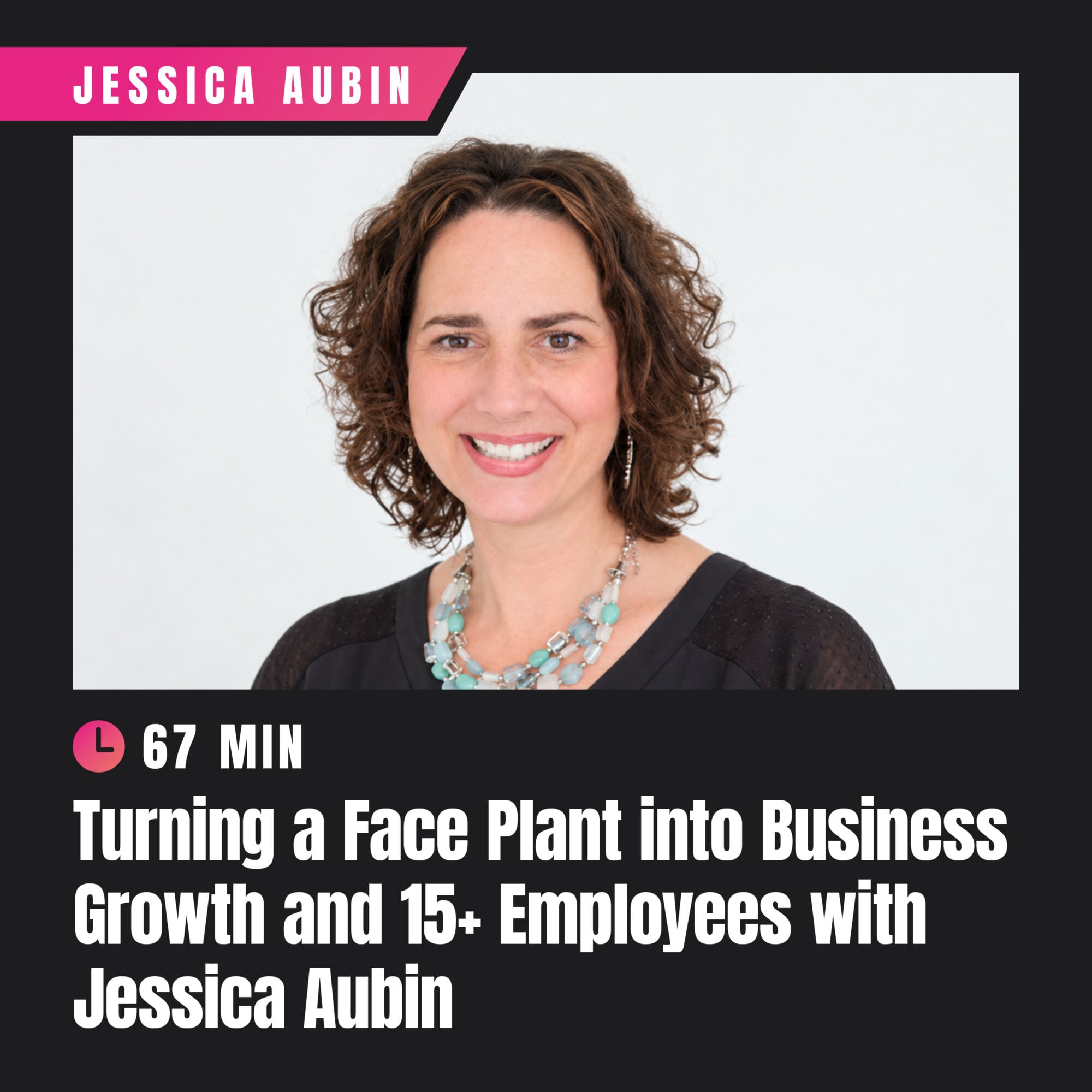
Turning a Face Plant into Business Growth and 15+ Employees with Jessica Aubin
To be a guest on the show, email podcast@postcardmania.com
Listen and watch on your favorite Podcast applications!










Podcast
Episode Transcript
Host Chris Foster talks with Jessica Aubin, a speech-language pathologist and owner of two businesses, about growing from a solo practitioner to a team of 15+ employees, learning from costly face plants, and organizing her staff and marketing to support continued growth.
Note: The supplied episode transcript has been formatted for readability; its spoken wording has not been fact checked.
Transcript
Chris: Well all right, well Jessica Aubin, welcome to the Everywhere Small Business Podcast.
Jessica: Thanks for having me.
Chris: so glad you're here. Tell us a bit about yourself and your business.
Jessica: Okay, so I am I guess a bit of an entrepreneur because I own a speech language pathology business that I started about sixteen and a half years ago. And so funny when I started it was just me. I was kind of a solo practitioner and then over time I just grew.
And I started adding employees, and we started getting busier, and we started getting a little bigger. So it's been a fun adventure to see how that has expanded. and then a few years back I also bought another business, a little local tutoring center. So I actually own a couple businesses, and that's been also a a fun and slightly different adventure because I didn't create that entity, it was an existing business in the community.
For 30 years that I sort of inherited, and you'd think it's very easy to just inherit something like that and keep it going, but as it turns out, it's quite easy to just make these subtle little changes that make things go differently. I'm also a single mom. I have two teenage daughters, and my oldest just graduated from high school, and the youngest is thank you, is still in high school, so I'm in a
Chris: Mm.
Chris: Congratulations.
Jessica: fun place in my life where I can actually have conversations with my kids and they're interesting.
Chris: That's awesome. I I think what's what's so cool about your origin story is you clearly had a skill for speech therapy, and that's a very specific practice, right? Practitioning, you know, skill. But then suddenly, after you, you know, was were a solo practitioner, and then you were like, okay, maybe I'll have to hire someone else because I'm getting so much business, there's an interesting place where you transitioned from just being a practitioner.
Jessica: It is.
Jessica: Mm-hmm.
Chris: practitioner to being a business owner.
Jessica: yes. So funny, you know, after I had employees and I'd had the business for some time, I realized that I wasn't just a speech language pathologist, I was a business owner. I think the term entrepreneurial seizure came into my universe.
Chris: That is pr you were you woke up, you were like, Holy shit, I'm an entrepreneur. I'm having a seizure, I'm on to the merge.
Jessica: Yeah, like, what have I done?
And I was like, and then I and then I got really interested in learning about how to be a business person because when I went to the University of Washington, one of the top programs for my profession, th they turn out great speech language pathologists. I am an awesome speech language pathologist. I will take great care of you.
Chris: Mm-hmm.
Jessica: I didn't know anything about running a business. And I I realized very quickly like, my gosh, I have to be an expert on taxes. I have to be an expert on employment law. I have to be an expert on marketing. I have to be an expert on like quality control. Like I had no training on any of that. Any of those things. And probably like the
You know, when you're starting a business, there are certain things that
You have to have and you have to be good at probably the two most important areas of any business are PR and marketing. You gotta get the clients in. And then also onboarding them and getting them onto services, right? Those the the people who kind of run your front desk and the people that run your marketing are are critical to the success of any organization. Like you don't have that, you don't have business.
Chris: Yeah, you know you don't have a business. If you don't have clients, you don't have business, right? If you don't and sales solves like they say, sales solves a lot of problems. Right to create right. I think what's interesting about the world is you'd got a wonderful degree from UW and you can get a business degree at UW, but I guarantee you you can't get a here's how you start and run and operate a small business degree.
Jessica: Ha ha.
Jessica: yeah.
Jessica: No. No, and it's funny, I had one of my you know
boyfriends had a an MBA and we would talk about like what the business needed and he was like, you know, I have an MBA, but I can't really help you because an all of my classes and you know an MBA is geared towards a large corporation. All of those classes are geared towards like making money in a in a different sort of way. They aren't geared towards being an entrepreneur, a startup. The MBA knowledge and experience
doesn't really help when you've created your own business and you're growing your own business it's a it's a very different skill set and also you have to think on an economy of scale right like when I started out when I my I started my business by subleasing space in a physical therapy office to
Two half days a week. My rent was $261 a month, and it gave me heart palpitations to think about how I was gonna pay my rent bill every month, okay? That's how I started out. And and when when you're a little guy, you don't have the resources or necessarily the reach initially to pay for.
Chris: Mm.
Chris: Mm-hmm. That is
Jessica: you know, a a person who can do each division of your company. You you can't necessarily you don't have the pocket, you know, the the depth to pay for professionals to do everything for you. You have to be able to learn those skills yourself to some degree and implement them with some degree of success so that you can grow, right?
Chris: Right. Yeah. And you have to, you know, you have to learn on the job, like it or not, right? You have to you have to learn as you're doing it. And there are a lot of more resources now. Clearly we want this podcast to be a resource and through our webinars, Postcardmania wants to be a resource for marketing, but we're not gonna tell you how to manage payroll. I am not gonna give you any advice on tax law and employment law, especially in speech therapy. So please don't ask
Jessica: You do.
Jessica: No?
Jessica: Yeah.
Chris: me and don't put me on the hook for that. But but you'll have to but you had to figure that out yourself. And so I what I find really interesting about about you as as you started to tell your story is Jessica, how did you personally grow and change as you started to absorb more responsibility with owning a business?
Jessica: I will not
I did.
Jessica: I
I have evolved so much. I would say that I'm definitely a much more sophisticated being than I was sixteen or seventeen years ago. I that's a great question. Having a business is a little bit like having a kid, you know, they school you. So and I would say I'm still evolving.
Chris: Mm-hmm.
Jessica: One of the along my journey
I, you know, started taking a lot of business classes. I started just grabbing on to courses and learning about organization and how organizations run. And I realized one of the most important things for a business owner to do to be successful is actually just work on themselves. Right? So I I actually started investing more in my
Chris: Mm.
Jessica: my growth as like a human being because in business there's no shortage of upsets there's no shortage of like bad news and to be able to receive those things and handle it gracefully is a real ability and so
I would say that over the years I've learned the I've gained the skill of being able to just really listen and allow people to up you know whatever the upset is I allow upsets to present and I just can
handle that information like just hear it, have it, and not freak out about it. Right? 'Cause I underst I I don't know how to say this, but I I feel like having a business
Chris: Mm.
Jessica: And I've taken classes, I've done trainings, I've I mean I've really invested in trying to become the best business owner that I can be. And over the years I'm just a lot more able to handle the
The crazy things that happen, like you you know, the upset clients, the the unexpected bills you get, the holy moly, that's my my legal bill for this random thing that happened.
Chris: my gosh. this is an an entrepreneurial story that one of our other guests talked about was he was naturally an introvert and then his business development sales guy kind of left and he's like, my gosh, I have to learn all these skills that I just don't have. Like I I didn't have these skills before and and these skills that I'm adding are absolutely brand new.
I mean for you for speech therapy, you went for school for that. So if there's a new development in speech therapy, you're like, Yeah, I got it in my sleep, it's not a problem. This is easy. But then suddenly pivoting towards a I hate to use the word pivot, but you know, your change and absorbing and taking on this mantle of business owner, especially when you have an employee, 'cause suddenly now you're responsible for someone's employment and livelihood, then that's a lot of burden and responsibility that you didn't that you simply didn't have before.
Jessica: One hundred percent. one hundred percent. In the beginning I didn't necessarily have a good handle on just certain aspects of like
paying taxes and employment taxes, I I had no idea how much an employer contributes to an employee's payroll and taxes. Like whatever is getting taken out of your paycheck for your taxes that you feel resentful about, you know, your employer pays an equal amount of that, okay? Your employer pays half of that.
Chris: Yeah.
Chris: Yeah.
Exactly. No, I get it. I get it. I know, I I I understand, right? I get it. Right. I mean, the salary that you pay the employee is not the cost to the business.
Jessica: Yeah.
Jessica: It is not and that's one of the things that I run into a lot is that employees they go, Well, you're charging blah an hour for our services. I want seventy five percent of that. And they don't understand that on top of whatever they're getting paid, you have to pay essentially another third
to taxes, benefits, time off, all the things. All the all the benefits that they want. And so
There's just a lack of understanding about what it takes to make a business go right. I recently had an employee tell me that they wanna just start like a a cash business on the side and that they think that they're gonna charge a certain amount for services and they they feel like they're worth it. And I was very supportive of this person as I am with all of my colleagues who wanna start a business. I'm
Look, it's a jungle out there. If you want to start a business, you need help. Whether or not you admit it, you need help. I'm totally happy to help you because I have done all the face plants. Maybe not all, I hope, maybe not all of them, but I've done a lot of face plants. And and the reality is, like, I also had that idea when I started the business. I was like, okay, this is great. I'm gonna have a super flexible schedule, I'm gonna be able to be a mom, I'm gonna be able to be with my kids, I'm only gonna have to work 20.
Chris: Mm-hmm.
Chris: Mm-hmm.
Jessica: 20 hours a week, and then I'm gonna bring in X amount of money, and it's gonna be gravy. Well, there are a lot of hidden costs in running a business. Yet, as it turns out, face plant city and lots of hidden costs. So
Chris: There are a lot of phase plants.
Face plant city. Well start a business and welcome to pla face plant city. Lars was mentioning that. He said, Yeah, I was talking to this guy. He says, Yeah, you know, entrepreneurs they get to work half days. You just pick which twelve hours you want to work.
Jessica: Yeah, no. I honestly I feel like I must really love to work because I work a lot. when I
You know, I I go to a lot of conferences and trainings and I love to travel for those things 'cause that's my way of like sneaking in a vacation. You know. So like in the in the springtime in April, I was I took my team and we went to the Postcard Mania PR and Marketing Summit and the Growth Summit and it was awesome. First of all, we learned so much. It was very fun to be able to hang out with my team that weekend and the dinner cruise was the best.
Chris: Yeah, the growth summit, which was great.
Jessica: So that was a very fun weekend, but that was also like a vacation for me. So, because when you own a business, you are kind of always on call for it. You know? Even though you might lock the door and walk out of the building, or you might turn off your laptop and step away from the machine. You're kind of always on call for whatever might happen, whatever might come up over the weekend. People get sick.
you know, they have troubles in life, you you know, you get just completely random things that happen that you you never would have anticipated and you just have to go with it. And then also, you know, certain times of the year I put in extra hours on a Saturday or a Sunday just doing admin work, admin tasks, right?
Chris: Yeah, of course.
Jessica: getting organized. It really helps one a few game changers for me w came in when I
improved my organization skills by creating like an admin scale for the business. I created an organization board so that people would know who to go to instead of me being the recipient of like all the questions and I could like start to funnel traffic into the correct area.
Chris: Uh-huh.
Chris: Mm-hmm.
Jessica: Those things were big game changers. And then also, like at this present time in my speech therapy business, I've been able to put a person at the head of each division of my company. So I have it well organized. So I have an HR person, and I have a client services person, and I have a finance person, and then I have my PR team, which I actually PR and marketing is so important. I divided it into two subsections.
Chris: Great. Mm-hmm.
Jessica: One is the in-person referral visits and generation of relationships in the community that are valuable to us, right? So I have two people actually who go about making sure that we have a strong positive reputation in the physical community. And then I also have two people on our social media lines and you know, kind of remote
business. so
lots of I actually have more staff working on my PR and marketing lines than any other division in the company and that's been really good for growth. But it it took me yeah it took me a while to figure out like how to get organized and to learn the you know technology of putting that all in so that I can have a successful organization.
Chris: Wow.
Wonderful.
Chris: So that's fantastic. Congratulations on the growth of your business, Jessica, real quick because I wanna get back to that moment you talked about of never walking away. But before I do, how many people do you have on your team?
Jessica: Yeah, yeah.
Jessica: okay, so admin staff, I have
I have six admin staff for the speech therapists, and we have about eight speech therapists right now. So it's almost a one-to-one. This is another aspect of running a business that I think is challenging for business owners, and that is that
Chris: Wow.
Chris: Wow.
Jessica: Sometimes the flashlight gets put on production and production's super important but you have to have a strong administrative team in order to grow and in order to not take work like in in order to not be like eternally working all the time, right?
Chris: Right.
Jessica: So y so having well grooved in people who handle the paperwork aspect of onboarding a new client, going out getting the new clients, making sure that your finances are in present time and running, you know collections are happening. These things are critical to the success of an organization. Like if you've if you're just so focused on providing services or getting your product sold, you know, if you're selling whatever
own yourself and you're not you don't have attention on collecting money for that you have a problem if you're so focused on providing services or selling your product that you don't put attention on marketing you're going to end up with a slump
Chris: It's true.
Jessica: in your ability to sell new stuff. And then your your business is going to have highs, you know, peaks and valleys where you're like you had lots of income in for a little while and then there's a a slump. You're just gonna get that because you you have to consistently kind of keep your foot on the gas pedal as far as PR and marketing as far as you know and and then also with hiring you have to continually if you want
To grow, you have to continually be growing. You have to hire people to keep increasing your service delivery and your reach. Otherwise, you're going to end up with a shrinking business. Like nothing in life is just static, right? It's not like you're gonna grow to a certain size and just maintain that size. No. You're either getting bigger or you're getting smaller. It's just that's how it
Chris: Mm-hmm.
Chris: Yeah. Yeah. You you you you're you're you're growing or you're shrinking, you know, and in my conversation with Joy Jandusa, who's the founder and CEO Postcard Manage, she says either you grow or you shrink and and it is a true state because businesses are like nature. It is a natural function 'cause it's created by human beings and business like anything in nature can't remain the same ever, ever. speaking of hiring, I saw on your website, Jessica, that you are hiring. You've got two open positions and
Jessica: Yeah it's
Chris: One of the things that I I find so wonderful about small business is that they create employment and livelihood within a community, right? That that the our goal is to help eat our goal at Postcard Mania is to help a small business grow so that they can hire one more person. We duplicate that across the country over millions of businesses and suddenly we can help the American economy and be a big part of that. Your hiring, which I think is marvelous, especially in today's economy. so tell me about the positions you're hiring for.
Jessica: yeah.
So we're hiring another speech language pathologist, obviously service delivery, and we have a couple in person locations where we have a little bit of a hybrid situation where we do some in person services and we also have remote telehealth positions. And so we're hiring speech language pathologists for our pulse bow location where we do video fluoroscopic swallow studies for people who have
So that's pretty specific. it's pretty niche, but it's also a wonderful opportunity because there are very few outpatient clinics that provide those services. Normally speech language pathologists who
Chris: Mm-hmm.
Jessica: Who have that ability or provide those services work in hospital settings. And we're an outpatient clinic, and we're also a clinical training site for like new graduates and for students. And so we have kind of a unique setup where you know, usually new graduates can't get that type of experience until after they've been practicing for several years and they get scooped up by a hospital.
who's willing to train them in that skill. And we will train our staff to do whatever is needed to help our clients. So it really is. It's a really special thing. We're also hiring for a new part-time person to do referral visits and build our relationship in the community and help work in person on Bainbridge Island.
Chris: Wonderful.
Chris: That's wonderful. Congratulations on that. And I I hope you find the right hires. It also seems to me, and and please tell me if I'm wrong on this, it's almost that position you're offering is almost like an apprenticeship position where you're really helping someone get in. Is that correct?
Jessica: one hundred percent. And it it is. We're helping people get their foot in the door and that's a wonderful you know in our clinic we have a very unique setup because we're on Kittsap Peninsula, right? So it's a little more remote. Bainbridge Island is a literal island across from Seattle. And so
Chris: Mm-hmm. Mm-hmm. And you did win, just as a note, folks listening, they did win a best of KitSAP award. So congratulations for being the best speech therapy.
Jessica: Yeah. Thank you. I'm so we're very proud of that. We won Best of Bainbridge Island as far as our community voted us one of the best businesses on Bainbridge Island. And then we were entered into the best of Kitsap competition for all of Kitsap Peninsula and
Chris: Should be.
Jessica: One of the doctors that I work with was teasing me, he's like, Is there even any competition in speech language pathology? And I was like, Well actually at that level, yes.
Chris: Yeah, of course there is, you know, but you won the award. But I think that is a community acknowledgement, Jessica, of the work you guys doing. But quite honestly, and I I it's the work that you did. I mean, the thing that I think is so beautiful and brilliant about small businesses and the work that you personally have done is you've created opportunity for someone else. Like you've created a place where you've invested in the in your own development, your own skills.
But because of that investment, you're hiring someone, you're growing to hire and bring somebody in as an internship role and basically changing the course of that person's that young person's life as they get into the career.
Jessica: Absolutely. Yeah, absolutely. And they're getting opportunities to do things that they wouldn't normally get to do in other settings. You know, we work with adults and children. So if a person wants to get experienced learning the gamut of what can be done in an outpatient setting, we're one of a very few places in the United States where you can have that. So it's it is a really special place to be.
Chris: Mm-hmm.
Chris: That's great. So my dad had a stroke years and years and years ago and suffered from aphasia. so and so he had to go through a speech therapy to really learn, relearn how to speak, right? And then even years later he got it wrong where he would see a female cat and say, that's a nice he's a nice dog, right? He'd get he'd get the things kind of you've seen it all. I know you've I know you have seen it all. But for us, we were this is our first time experiencing this. so I love the work that you guys are doing.
Jessica: Mm yeah that happens.
Chris: I wanted to get back though to that moment where you said that, you know, you never step away from the business. But and you're a parent, you never step away from being a parent. And we chatted at before we actually got on to the recording. I'm I've got two young adult daughters and and I said, Well, I'm not really an active parent, but it doesn't mean that I'm not a parent, right? They they're
Jessica: Right.
Chris: They're up in their launch, but I'm still engaged. You've got teenagers in the house, you're really engaged, you're hands on. and if a business is like a child that has grown and is its own entity, and just like a parent, it never stops being a parent, you're never not a business owner once you own the business.
Jessica: Yeah, it's true. it is a bit of that situation. I've you know, so the more that I've mastered the skill of organization and management,
I have been able to delegate responsibilities to other people and just let go of those things and then get time for me to go do my thing. And so while you're always on call, it's true, you get you definitely get that time where you're not necessarily doing
the work yourself but you've been able to properly delegate it so that the people that you're helping get the help that they need and your staff know what they're doing and they get their jobs done and it just kind of comes together in like a very beautiful way. So
Chris: Right.
Chris: Yeah. And and you also give opportunities to the team you delegate it to because when you start delegating more and more responsibility to other folks, they get the chance to grow too. Right?
Jessica: Yes, yes, it's amazing. And they get like a career path and it's really fun. So some employees
come and they do their training with us and then we're kind of like a screenboard for them to their next thing. And then I've had employees who, you know, stay with us for years and years and they're grouped in and they're not going anywhere and they're just sort of like part of the the fabric of our business, right? So it's wonderful to have really yeah, it's wonderful to have a really grooved in team. Like we're
Chris: Mm-hmm.
Jessica: where we all just know what needs to be done and we get it done and then and the cool thing about that is that my employees then have spa the space, like the ones who are have been there for a while
we they are creative problem solvers. They have a lot of autonomy in their position to create an ideal scene. And because they un because we all understand like what is the ideal scene. Like we're all headed towards that same direction. And so that's I
Chris: Mm-hmm.
Jessica: I think my employees really appreciate just having a little bit of of room to just be creative problem solvers. Just, you know, take the responsibility for make they understand what needs to happen and and they don't need me micromanaging them. Like they understand what is sitting in front of them better than I do. And so it's nice for employees to be able to build into a business and help
it expand and grow. and actually to be honest, I mean it would be wonderful if you know when I arrive at the place where I'm ready to retire, my employees are interested in actually taking over the business and owning it and continuing to because they understand how it works and they have the ability to keep it going and then they can keep those services available you know
in our community. So that would be I guess that would be the the end game is that you've you've grooved in your employees so well and they feel enough ownership over the business and enough you know they can participate in the creation. It it's one time I had a woman
Chris: Right.
Chris: Mm-hmm.
Jessica: make a comment about how I'm I'm a very creative person and I shouldn't be running a business. And I was like, well wait a minute. I I actually can't think of anything more creative than like starting, building and running a business. Because you're constantly creating, you're constantly iterating, expanding. Like as your business grows
you whatever you did, like what I did when I was a solo practitioner, it doesn't work anymore. Like those days are over, right? Now I need a policy and procedure manual. Okay?
Chris: Bye bye. Go ahead. Yeah. Yeah. Uh-huh. A hundred percent. Well, you've got what, twelve, fourteen people on your s on your staff, right? you know, you've and i it you have divisions. You're growing, you've got divisions, you've got to have policy procedure. You know, you I think you spoke to it earlier, but I I wanna I wanna lean in a little bit more on that, Jessica, because you're
Jessica: Yeah. And we're growing.
Chris: Of course. so glad. gl we're charged up and ready to go. so you mentioned before about really devoting time, effort, energy and a team to marketing and promotion and kind of the PR and the marketing and that that wasn't necessarily an afterthought for you, that that's a really important piece and you mentioned before how critical it is for businesses to do that. So what personally as a
So, I mean, I've been in marketing since the late 1930s. I've been doing it for, you know, ever. and and and but as a business owner, you you you didn't start as a marketer, right? You were a speech therapist and then you're a business owner, and then you're like, holy crap, I gotta learn how to do marketing. What you have you personally and professionally and as a business owner learned from marketing? And what kind of things have you learned worked and not worked? And and what are some things that you wish you knew more about?
Jessica: Mm-hmm.
Jessica: These are great questions. in the beginning, when I first started my business, I got with a group called SCORE, and I had a SCORE mentor. And that person kind of coached me up on like some basic rules, and they were like, you need three touches. Like you need to go.
Meet with people and you need to touch them three times. And I was like, Okay. So that was like my operating basis for like the longest time. There's way more to marketing than three touches.
Chris: Yeah, yes, there is. I can tell you that that's true.
Jessica: It's a way more sophisticated machine than that. since then I've gotten a lot more savvy. Now, one of the things too that's important is like in the beginning when it was just me and I wasn't exactly even 40 hours a week, me running around telling people that I had a business was enough. You know, the word of mouth was enough to get me busy. But then,
you know, as you as you grow and as you start to expand, you kind of hit a wall with expansion where word of mouth doesn't get it done anymore. And I you know, and then I had to become more sophisticated and I started doing programs and courses to learn more about marketing.
Chris: Mm.
Jessica: Like the purpose of marketing and PR is to make good works well known and to bring in an abundance of new referrals so that you're essentially you know drowning the business in new business. And then you can expand. If you're not creating that, you it's gonna be rough. You know, you're gonna have you're gonna have different types of issues that
Chris: Mm-hmm.
Jessica: Come up from that. So most people understand that they need a website, and most business owners understand, like, yeah, social media is important. But there are actual formulas for success on those lines. Like there's an actual way to go about expanding your presence on social media and
Understanding who your target audience is and where they live online in the physical universe, understanding how to get a communication line with them and find out what is needed and wanted from your target audience. These things are critical to having a really good marketing campaign. And so one thing
I only just discovered Everywhere Small Business about a year ago, actually. And this is a fabulous product because it literally is all the things. It is literally like you're reaching people in the physical universe with an actual postcard. You're reaching people online through Google.
Chris: Mm-hmm.
Jessica: Facebook, like multiple channels, right? You're you're following interested party, people who've demonstrated that they're interested in your product, you're following them a lot around in the digital universe, so that you get at least three touches, and as it turns out, you need like twelve or fifteen.
Chris: Sure. Mm-hmm. You do. You you you couldn't have said it better ourselves. that's a beautiful way to talk about our everywhere small business product, Jessica. I appreciate that. you know, and you started to market more aggressively and you learned what was the biggest aha about marketing for you? Like what was something that you what that surprised you?
Jessica: Hmm. Well you know it's funny, I knew I needed to be talking to people.
Okay. But how to talk to people. I think a lot of and I have to expressly train my staff on these points. But a lot of people think that if you just show up at a business with your business cards and your brochures and all and and educate them about what you do, that that is going to pull in the the clients and the referrals and and what's needed. That's not how it works. Like
I'm sorry, but like I get solicited all the time by people for different things and when they're like, I do this, I do that, I don't have the time of day for them. I'm s you know, like my inbox gets flooded with with all kinds of ad I don't I don't want your help, okay? I don't want it. You can help me by just stop talking to me, okay?
But the thing is that like what's what the best marketing really is finding out, like being curious about the people that you're trying to help. And I come from the service delivery background, so that's kind of my angle. I'm sure people have, even if you're selling a product, but like being curious, like okay, what is it that people actually want from me?
Jessica: Like starting there, even from your referral sources, right? When I go around and I'm networking with my referral sources, I'm interested in finding out about them. I need to understand like what is it that I provide to these people that's helpful to them. And like if I don't have that first, then I don't have a communication line with them. They're not interested in me until I become interested in them. So I
Chris: Yeah.
Jessica: I think that that's a very big tip. There is an art to understanding who your public is and finding out what they need and want. There's a real art to that too. And I I think that when when I was setting up my account with Everywhere Small Business, one of the first things that the account manager went over with us is like, Okay, who are we marketing to? Like
Tell me where they live, tell me what their age is, tell me where they hang out, tell me what kind of beverage they like to drink, like all the things. They want to know what color pants they wear in the morning, what which hair products they're using, like everything. You know, favorite deodorant. So you really are defining your demographic, and it is actually that important because especially with the the digital universe.
Chris: Yeah.
Chris: Mm-hmm.
Jessica: Knowing specifically like about your demographic helps to really laser you know, put your your marketing money to good use. I was at a conference this spring, a different one, and one of the keynote speakers was talking about how they changed the way that they were using Facebook ads.
and that they were re recalculating their formula and they saved thousands of dollars, hundreds of thousands of dollars, by just making sure that they weren't just throwing money out there to the wind, right? So defining who your public is will is totally worth it. In my speech language pathology business, right, one in as part of everywhere small business
Chris: Mm-hmm.
Jessica: you can buy like a specialized mailing list. So it's not just not you're not just sending out a postcard to every single person in a zip code. But you're sending out a postcard only to the people who fit a certain diagnosis or who fit a certain specific demographic. And the more specific you can be when you're demographic, the more effective your marketing is. You're not wasting all of your
Chris: Mm-hmm.
Chris: Mm-hmm.
Jessica: marketing dollars on a general public, but you can be very, very specific and making sure that you're communicating to the people who might need your help. And so that's that was a big game changer for me too because I you know marketing is not cheap. Like it's a a big in any business it should represent like
10 to 15% of your budget for the business, depending on, yeah, it should, if you're doing it right, and also depending on the circumstances. So this is also funny. Normally, when when things start going rough, it's very knee-jerk to want to cut back on the marketing budget, which is actually the opposite of what you should do.
Chris: Y you're correct. You're correct.
Chris: Hundred percent.
Jessica: You should actually spend more money on marketing in a crisis because that is the thing that's gonna get you out of the crisis. You know, like when the going gets rough, people like to bail. They're like, no, the ship is sinking, let's jump out of the boat. Well, no, actually, if you want to get things going again, you actually need to pedal faster. You need to move the ship faster in order to get out of the
Chris: Yeah.
Jessica: You know, there's like this thing like if you're on a bicycle and you're riding down a hill and you're starting to lose your balance, slowing down makes you more likely to fall because you
Chris: That's right. No, a hundred a hundred percent. I I love the analogy, right? If the ship is slowing down in stagnant waters, what you need is more wind in the sail, right? What you need is to row harder and invest more. So in at Postcard Mania, we talk about marketing not as an expense but as an investment. because what you're doing now and investing now will pay off three, six, nine, twelve months ahead of time. And if you're not investing now, then you can't hit your growth goals in even
Jessica: That's right.
Jessica: It is.
Chris: You can't even hit your maintenance goals if you're not investing in. it seems to me though that you've really understood this from a business side because from the impression in the 40 minutes that I've known you, which is awesome by the way, it's one of the best 40 minutes I've had in a long time. there's this upward spiral that you've created where you started to bring some people on. You knew that when you were a person
Jessica: It's true. So true.
Chris: you could handle X amount of work, but to get more work you needed another person. And then to get that other person you hired, well, gosh, you gotta get more work to keep that other person busy. And then suddenly you start doing that and you have ambitions for growth and someone says, Hey, are you hiring? You're like, I'm not, but I sure would like to and get more business. I gotta get more business. So I gotta start marketing, right? And so you have this upward spiral of energy where you're marketing more, getting more business, hiring more, then you need to market more to support that business. And
And it's a really interesting thing where just like children and you've experienced this, there's this moment in those years between eight, ten, twelve where these youngsters start becoming young people and then and then they're younger teenagers and they forget their shoes and stuff and things like that happen and you know, i I I I Right, they're right over the mailbox when they first start driving. I get it, or
Jessica: They run over the mailbox.
Chris: You know, they they lost a shoe in the park and they come home with one shoe and I'm like, I how right, don't know how that happens. But right, right, right. but but and then and then and then there's but there's this moment where the kids start to flourish where they move up and you're like, Wow, you are really transforming. So you had your business for sixteen plus years, you've got a child in high school, it's almost like the growth of the business is
Jessica: yeah. How did you not notice?
Chris: paralleling the growth of your children and there's a sense of now real flourishing and momentum is pushing your business to a higher level just as your kids are moving into young adulthood.
Jessica: Yeah, it that's a great analogy. It it really is actually like the Yeah, amazing.
Chris: It's amazing when you put time and attention into it. so a couple a l a couple last questions for you, Jessica. What for you now looking back 16 years and you can look back at these markers and you're so sweet to call yourself, you know, a faceplanter and you look at all the face plants, but you get back up, right? Doesn't matter how many times you face plant, as long as you get back up after you face plant, right? what was
Jessica: That's right.
Chris: Do you think the maybe the biggest factor of your success? What's the thing that you can look back to and say, aha, that moment, that insight, that decision, this is what really set me on my current trajectory?
Jessica: Wow, that's a big question.
Jessica: So
What set me on that trajectory? Learning. I I really invested in learning about business management technology. I really have invested in also being okay with, you know, doing a face plant. Like it's I had
Chris: Mm.
Jessica: Several colleagues that I helped start private practices because they were interested in doing that. So I helped them start it. And then you know, in during COVID things got tough. It's really tough. And and several of them decided to just pack it in. And I think the difference between me and them is one, I I really invested in a growth mindset.
Chris: Yeah.
Chris: Mm.
Jessica: I really did things that built into me. and I I really invested in learning management technology that allows me to grow and expand. you know, for small business owners, truthfully, like an MBA degree is not really appropriate.
Chris: Mm-hmm.
Chris: It's not gonna help.
Jessica: No, they're wonderful classes for entrepreneurs and small business owners through the Hubbard College. they teach classes that are more geared towards entrepreneurs. and I've I've taken I've learned a lot of that technology to implement into my business, and it's been the thing that has allowed me to expand and grow and the thing that helped me to see that.
Chris: Mm-hmm.
Jessica: You know, when business is slowing down, the thing to do is not, you know, go home and roll over and cry about it. But you might you might do that too.
Chris: And become a turtle, right? That does not that does not help, right? There, you know
Jessica: It doesn't, but you need to really like like step on the marketing gas and step on the hiring gas and just actually put a little energy into those areas so that you can pop out of the trouble that you're having and you will. You know, so it's it's amazing to me too how like the experience of doing it and like having survived, you know, various I mean
Chris: Mm-hmm.
Yeah, you will.
Jessica: pandemic was just crazy, right? And then and like having survived various things, I have a little bit of yeah, that again too.
Chris: Right.
Chris: Hmm. right. So you kind of seen that movie before. yeah, and you get experience and and the confidence that you came you you got yourself up from your face plant and you're like, it's another face plant. I've done I've done hundreds of them. I'll I'm gonna get up again. This isn't, you know, this isn't, you know, debilitating. And and you said that earlier in the very beginning of our discussion, where personally you've learned to grow to overcome setbacks and to be calmer about upsets, right?
Jessica: Yeah.
Chris: it's interesting too. I was wondering and I was gonna ask you about this because you're using the same phraseology of Hubbard management system in terms of communication lines and upset. I was wondering about that because that's something that George Indusa, our founder, has implemented into our business in terms of the structure and the organizational structure. I was I was gonna ask you about it, so I'm so glad you covered that because whatever technology you use or whatever business structure you use, all that I would, you know.
Jessica: Yeah.
Chris: I would just ask our listeners to take Jessica's note that get some learning, right? Learn about how other people are successfully managing a business. I talked to a wonderful woman. she was also at Growth Summit. you I don't know if you met her. Her name is Jacqueline Sugg, from Wheatland Family Dental. And she read she read a book called Traction. And she said, That's what I needed. It became our playbook, it became our blueprint for how to
Jessica: Yeah.
Jessica: No, I didn't.
Chris: organize our business in terms of setting up a meeting and what does a meeting look like and what do we cover in a meeting and what's an agenda, right? And why do you follow agenda and what's a follow-up note, right? All these things that kind of help to organize and manage a business because the tools and the resources are out there. And like you just spoke about, you're not gonna get it in an MBA. You're gonna get it from Learn and Lived. It's a learn and lived. it's learn and live like like it or not, it's learn and lived.
Jessica: You're not.
It is. It is learn and live.
Jessica: I honestly I feel like I get more out of specialized conferences and conventions that I go to, like that are targeting that skill that I'm missing at that time. I'm always looking for a really good conference, summit, convention, some you know, where I can educate my team. Those things are really valuable.
Chris: Uh-huh.
Chris: Wonderful. That's wonderful. And good for you for all also wanting to educate your team. Okay, I guess it'll be the last question that I ask because you've been you've been such a delight and you've dropped these beautiful pearls of wisdom. Just poof, boof, you're just dropping these along. So I guess I'm gonna ask you to conjure up a last pearl of wisdom. what kind of experienced advice would you give to an entrepreneur or a business owner that's trying to get to that
seven hundred and fifty thousand dollar mark or that one point two million dollar mark, just trying to just get to that next level. what would you say to he or she if they met you at the coffee bar or at a cocktail mixer or something like that?
Jessica: Mm. Mm.
Jessica: Yeah, there really is actually it's funny, there is a kind of wall, right, in your growth where in the beginning, you know, you're just growing, growing, growing and everything's cool, and then you really do kind of hit a wall and it it's about the time where you're expanding your team. And that is where organization gets really, really important. And I would at that moment,
I mean, I would just put that flashlight on your administrative scale, just to clear up any confusion what an administrative scale is. An administrative scale kind of has the long-term goal, how how big, how much revenue you want your organization to bring in, right? You have your long-term goal of that, your vision of the growth and the size the company's gonna get to be. And then you
Have to tie in that long term goal with the structure and organization of your business, and it connects with your organization board. So, like every single organization board has a valuable final product. So each division of an organization produces something that is valuable to the group. And it's very easy to be busy.
Chris: Mm-hmm.
Jessica: Very easy to have employees who are like, I'm so busy. And you're like, Yes, and we're all so busy. But is what they are sometimes people think they're producing something valuable, but unless the business owner has defined how that contribution expands your organization, it may or may not happen, right? You could be very busy,
Doing something that actually doesn't bring in more revenue to the group, in which case you have an employee that's just sort of like taking resources out of the group without expanding it. So I would say understanding about your administrative scale and developing it so that the valuable final product that each person in your group is creating.
feeds into your long term vision, you you kind of have to put that organization in. You have to have an organization board. Otherwise what happens is the growth of the business is gonna get bottlenecked in the business owner. Right? There's one of me. I can only do so many things. I literally only have so many hours in a week and I actually like to do fun things. So so I, you know, in
Chris: Right.
Jessica: In a business, if I don't have that structure in place where with a clear administrative scale and a clear organization board where each person knows what they need to do to expand the business, the business growth is gonna get bottlenecked, and I'm gonna hit that wall right between 750,000 a year or a million, you know. It it really is like a 750 to 1.25. That is the
Chris: That's right. That's the break point. Yeah.
Jessica: range where the bottleneck happens. So if the organizing it really is and if you don't have that organization in where your team can start to take responsibility for the growth of the business with you, you're not gonna grow because you're gonna kinda cut your own little head off right there.
Chris: Yeah. No, that's beautiful advice. There's there's a group called Cardone Ventures and they talk about breakpoints. where there's a break point at a million dollars and and they studied tens of thousands of small businesses and they said, Look, we've seen it all. The breakpoints are at one, three, eight, fifteen, twenty five, fifty, and a hundred. And at each of those breakpoints you are
focused on you have a a problem and you have to role duplicate to make sure that you can expand your organization to move past to the next breakpoint. So there are formulas. There are formulas for business success. And whether you choose to look at re traction or investigate the Hubbard management system or Cardin Ventures or this organization or SCORE, someplace else, there are there are ways out there to learn. And I think that for you, when you mentioned the big breakthrough, you said it was learning. It was learning. It was
Jessica: It was. It was learning. Honestly, I've I'll be totally honest with you. I've I've worked with SCORE, I've taken Stanford Business school classes online. I've worked with the Hubbard Management Technology and and Hubbard College. And of all of those things, the most successful thing for me was implementing the classes and the you know the pieces of
the elements of business growth from the Hubbard College that has been my most successful action.
Chris: Excellent. Wonderful. That's great advice. Well, Jessica, you're a delight. I wish you all the success in your business. Congratulations on the growth.
Jessica: Yeah.
Thank you so much. It's it's fun. Honestly, when business isn't going well, it's not fun. But when you can like s you know, get out of the tailspin and start to like expand again, it's very fun to have a business. It's it becomes a game and it's it's a fun game to play.
Chris: You know, it's an interesting you say that. I I know we were gonna wrap up, but you always say such interesting things. you talk about this game and I mentioned to Jack to this woman Stephanie Betters about the Simon Sinek's book The Infinite Game, right? Where business it never it's a game that never ends, right? And you also mentioned yourself that, you know, it's a journey right now. And so that's one thing that's a through line that a lot of owners are talking about, is that this is this journey that you evolve with and that
Jessica: Yeah.
Chris: It doesn't end, right? You're constantly trying to grow and constantly moving on the journey personally and the business moves along with you and you move along with the business. It's like you're holding hands with the business and you're going on a journey together.
Jessica: Yeah, yeah, it's true. It is. It's it's it's you can't extricate yourself from the growth of like you have to grow as a being in order to grow with your business. It these two things are inseparable. It's like the business is an extension of you. You know, whatever you create in your personal life is gonna show up in your business, right? So be ethical, be hardworking, be ethical.
Chris: Mm-hmm.
Jessica: Create rules that everyone can follow, you know? It's it's so important to to be all those things, yeah.
Chris: Wonderful. All right. Well, Jessica, best of success. Thank you so much for the time. Have a wonderful day.
Jessica: this was so fun. Thanks for having me.
Chris: Of course. Take care. Bye bye. Okay.
Jessica: bye