Podcast
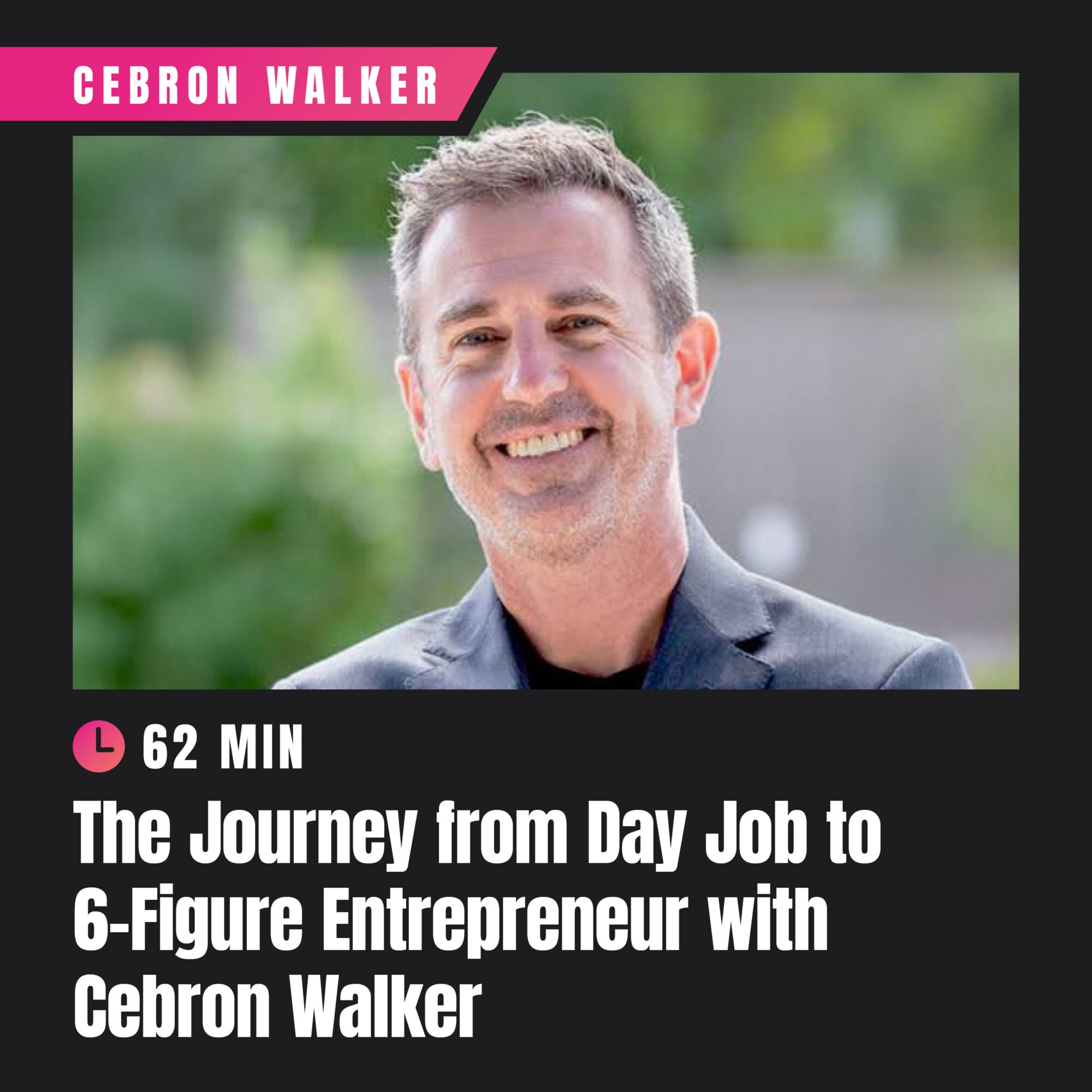
The Journey from Day Job to 6-Figure Entrepreneur with Cebron Walker
To be a guest on the show, email podcast@postcardmania.com
Listen and watch on your favorite Podcast applications!










Podcast
Episode Transcript
Here’s the transcription below of today’s episode, a conversation between host Chris Foster and Cebron Walker, founder of Walker Kreative, about leaving a VP job to start an agency with two clients and no company name, niching down to veterinary clinics and writing the book on it, and why the part of running a business he likes least is the part that would let it grow without him.
Note: This transcription has been formatted from the original episode transcript for readability.
Transcript
Chris: Well, all right — Cebron Walker, welcome in to the Everywhere Small Business Podcast.
Cebron: Thank you for having me.
Chris: I’m so excited you’re here. Tell us a little about yourself and your business.
Cebron: I was born and raised in Northern California, and about eleven or twelve years ago I was working a VP of marketing job and just had this realization — more like a midlife crisis — that sitting in a seat nine to five for somebody else was not the thing that was going to help me accomplish what I really aspired to do.
Which was to help as many small business owners as I possibly could reach to have great businesses and really achieve their own dreams. That’s just what makes me happy to be doing. So I started Walker Kreative. We had our ten-year anniversary earlier in the year.
Chris: Congratulations.
Cebron: Thank you. It’s been awesome. Creating your own company and having it be successful — and of course making a lot more money than I ever would have made staying there — but also doing everything I wanted to accomplish.
It was so funny, because one of the things when I got married, I told my fiancée at the time, someday I want to write a book. It was just this sort of passing comment. And the book’s out now, and she said just this morning, actually — we were having coffee — she said, you know, you did what you said you wanted to do.
Chris: There we go. Come on. You did what you said you were going to do. That is excellent.
Cebron: It was so silly. Like, yeah, I did that. Okay.
Chris: Congratulations. It’s wonderful. So there’s a lot to unpack there, which is why we’re having this conversation.
In so many entrepreneurial stories, folks don’t start off that way — they transition out of a business and say, I think I can do this myself. What I found really interesting is that you just said you wanted to help as many small businesses as you could. Which, in a wonderful, beautiful alignment, is what we do here at PostcardMania.
Cebron: I know, it is true. It’s funny how worlds collide, because you guys have helped my wife with her business for years. And now, because of my book and because of other things Walker Kreative is doing — going vertical with this veterinary industry — she said, well, why don’t you use PostcardMania and do a little postcard campaign? And I’m like, I don’t need to do that, I’m a marketing company, I do this for a living. It was a little bit of education from her back to me of, no, this is another tool you could possibly use.
Chris: So tell me now, with Walker Kreative — again, congratulations on ten years — how many folks do you have in your business?
Cebron: People-wise we’re about ten. We’ve been as high as twelve, so it’s in that range.
Chris: That’s fantastic. The one thing we love is that not only are you supporting small businesses through your marketing efforts, but because of your initiative you’re creating employment for ten other people.
What we talk about is that the reason our goal is to help small businesses grow is that if they can hire one more person from our efforts, and we can duplicate that across a thousand, a hundred thousand, a million small businesses, we create an upward spiral in the American economy. You help strengthen communities by hiring, which is wonderful.
So talk to me about the mindset when you first started your agency. Did you have clients on board, or were you scrambling? Was that leap comfortable, or were you jumping in saying, oh my gosh, what did I do?
Cebron: That’s a great question. Going back eleven years, I was thinking, this isn’t what I really want to be doing. I enjoy doing marketing and public relations work, which has been my world for thirty-five years now, but it’s not really getting me where I want to go.
So I talked to my wife — we’d just had a baby. He was one, or just about to be one. And it was probably November. I said, I’m thinking at the beginning of the year I’d want to do something.
So I worked on the weekends to develop two clients. One was a flying car company — they were developing a flying car. They didn’t have one yet. It was a dream this gentleman and his wife and his group of people had, and I said, well, let me do your website, let me do your marketing for that dream, go with you with cameras to air shows, and sort of build the brand of your flying car. And the other guy did some piece of the private jet industry. They wanted video products, they wanted a website, they wanted to get their brand going. And they bet on me.
I didn’t even have a name for my agency. It was just me then. So I had two clients, and I knew if I could get a third good one, that would pay my mortgage. By Christmas time I was like, okay, I’ve got two. I’ve got a third I can see in the future, I can do some sales calls. That’ll pay the mortgage, I can pull this off.
So my wife and I said, do it. You’re not going to be happy there, just pull the plug. It was interesting, because I gave warning. I agreed to train new people, but the employer at the time was very unhappy with me. They couldn’t believe that I would go, because I was a key executive there doing their marketing. They were not happy with me, but I said, I understand, I’m going to help you — you don’t have to take my help, but I’ve got to do something else.
So we parted ways, it was fine, and I started this agency with no name. And by the summer of the next year, six months in, I had five clients and was making more money than I was making at the other company.
Chris: That’s a beautiful story. I think that’s a lovely story of bravery on your side, and confidence that you could do it. And also — not to underscore the importance of something I’m sure you know — your wife’s buy-in was so critical.
We talk often about how small businesses are family businesses, because the family’s all in. Your most important partner is your partner, whoever that is. In my case, my wife. That person you share a house with — if they’re fully behind you, you’ve got it.
Cebron: And in the dedication in the book — it’s funny how things happen almost in a subconscious way — I dedicated the book to her, that this would have never happened without her. That relates to the company and everything. But that’s what you have to have: that full support, so there’s no counter-intention to you going after that dream.
Chris: That’s very true. It clears the lines, it clears that pathway so you can move forward unencumbered and not worried about those counter-intentions.
So walk me through that first year of agency growth, when it was the agency with no name. It’s kind of like the man with no name, right? The agency with no name to Walker Kreative — which sounds a lot better than not having a name. In that first year, where did you start really saying, this is taking off, this isn’t just going to be a solopreneurship job, this is actually going to be a true agency where I can hire a team? Because you were used to that at an executive level — you managed teams. So when did that transition happen?
Cebron: Right away. You have to find partners for things like website development or video. You can’t do everything yourself. I had to find good people. So I found a website partner that would build for me while I managed everything.
And then, funny enough — I have to get a logo. I have to create some awareness of this agency. So I found a designer through a friend. I said, well, what should we name the company? Let’s create a logo. So we created Walker Kreative — and Walker Creative with a C, the regular American version, was taken. Some English company had it, and they weren’t really growing or going anywhere. So I said, okay, let’s just take Walker Creative but use a K. It also looks cooler in a logo.
So now I had a designer, and I said, do you want to be my designer? Do you want me to just use you for me and all my clients? And she was totally into it. So I had a designer, I had a web team. Those were my first two partners coming in.
Chris: At the time, were they 1099s?
Cebron: Yes. The web company was its own company, so I would sub out that piece. I was still writing everything. I was managing and directing — I was creative director on all pieces for everything.
And starting a company, as you can imagine and have probably experienced, is hundred-hour weeks. You’re working seven days a week.
Chris: One of our guests, Lars, said it’s nice — you’re only working twelve hours a day. Being your own boss is great, because you get to choose your own hours. You just choose which twelve hours of the day you want to do.
Cebron: Completely. You can go to your kid’s play or soccer game in the afternoon and you don’t have to ask approval, and you can do it at two in the afternoon — but you’re still working to midnight. You’ve got stuff to do. But it’s your choice.
And it’s actually lovely. I’m sure there are a lot of people for whom that’s not their thing. They’d rather have a schedule — okay, this is my work time, nine to five or whatever it might be. There are people that fits. And then you have the entrepreneurial spirit, and that’s a different person. There are different types of people.
Chris: Did you always have an entrepreneurial spirit, Cebron? And it just flourished and revealed itself later in your life?
Cebron: Yeah. I was always different. Everywhere I went I quickly became a creative leader. That’s a real asset, I feel like. It led me to have a full life that I really liked and appreciated.
So I think that was always part of me. I did have jobs where I worked hours given to me by management, but my attitude toward it was entrepreneurial. Creating new ideas. And hopefully most of the time bosses enjoy that or appreciate it.
Chris: Of course. I think that if you’re in a management or leadership role and you bring somebody on, what you want is that person to tell you all the things they want to do, versus you having to tell that person what to do. You want that coming from them — hey, this is all the stuff I can do. And then as manager you’re like, okay, let me curb and curtail and mold it so it’s in alignment with the business goals. But you want those folks who come to you with ideas.
I think it’s interesting that you found a place for yourself that you wanted to create your own. Now, on the flip side, as you own and run an agency — what kind of employee do you hope to have? Who do you want coming on board?
Cebron: My first employee is a great example of what I want. I guess I got lucky, but who knows.
I needed to add another piece, which was social media. I had clients where I would do their website, manage it and host it, so I’d get monthly recurring income. And that was the key — if you don’t mind me sharing — to build a business that has a recurring income flow. I find people I know who have a website company, and they’re going to build websites, and then you get paid one time when you’re done and that’s it. Hopefully you’re hosting those websites, but that’s a little bit of money.
So you need a business where you build into it a way to get recurring income every single month that pays you. And so I wanted to add social media, probably in year two.
I hired a girl to do that, and right away she just grabbed the ball and ran with it. It was exactly the kind of employee you want. She had bonuses for actually getting more clients on board that she could do work for. And then it was, why don’t you — because she had more hours, she could do more — why don’t we start selling Meta, well, at that time Facebook advertising. So now she was managing ad campaigns for two or three clients, doing social media for fifteen clients. She wanted to add, because it was more income for her. She had a growing family.
And it was funny, she’s like, let me see if I can beat my husband.
Chris: Of course. And that’s what you want — to create this alignment of goals, so that the employees’ goals are in alignment with the company goals. If the employee succeeds, the company succeeds. If the company succeeds, the employee succeeds. So there’s this collective good that happens with the team as you build it. It doesn’t matter if you’re one employee, ten, or four hundred — that whole mindset aligns the entire organization.
A lot of businesses, when they first get started, don’t think about aligning the employee’s interests to the company’s interests. Sales commission programs might be counter to what the business actually wants. Salespeople are going to follow the money, they’re going to follow what they want. But if you put the commission structure in alignment with the business goals, then everybody starts to win.
Cebron: Yeah. And it’s an interesting thing to develop, because each person has a different personality, so you’ve got to make sure they have a little policy write-up on how that fits them. I’m sure with a company like PostcardMania it’s more formal, because you have a lot of people to deal with, so it’s got to fit everybody. I’m still learning, with a team of ten people — how do you write something that everybody fits into, and how do you do that?
Chris: That’s a really interesting transition for you as a business owner, because you go from founder to owner, and then you’re CEO and you’ve got ten people. You’re creative by nature. That’s probably a new skill for you to learn — how do I do the business side?
Cebron: I hate it, though. I frickin’ hate that. And my staff, I’m sure they know it. If I have to sit there and figure out personnel things and this type of stuff, it’s the last thing I want to do. My wife gives me a hard time about it, my staff do. I’ve hired an establishment person to come in — all I want is someone to kick my butt to do it, to put in the thing I should put in, and then just do it for me. But it’s not fair, because I am the CEO, so I do need to do the work. So for me it’s the toughest part.
Being creative, creating amazing cutting-edge websites or video products, or optimizing YouTube channels, or using AI tools to drive more leads to clients — these are the things I just love to dive into. Finding problems in client flow and then resolving those problems. That’s what makes me get up in the morning.
Coming back to the office and making sure that someone’s established on their position and knows their duties, and are you keeping track of your numbers — someone else can do that. It’s awful, because it’s important. It actually leads to growth. I know that. People have told me that.
Chris: It is an interesting thing, because the challenge of being a CEO is that all employees look to you to run the business. Yet for you, Cebron, it’s the actual work of the business that’s most interesting.
Cebron: Yeah, and I think that might have been part of the reason I use it as an outlet — like when I wrote this book. This is how you do all the marketing for a veterinary practice.
Now, we handle marketing for all types of small businesses, and my next book talks about that — whether you have an HVAC business or a florist shop or a bakery, any kind of small business that takes care of their community and is a community local business. The next book’s going to be about that. But this one was for a veterinary clinic specifically, because we love working with veterinary clinics and we have a lot of veterinary clients around the country.
This was writing up how you do it, putting down the policies of marketing for a veterinary clinic. Ten chapters, every part of it in sequence, checklists, cheat codes, the whole thing. It’s almost like this made it fun. If you wanted me to write this up for my own company, I wouldn’t want to do it. Because it’s for someone else — I’m helping somebody else improve themselves and whatever theirs is. It’s like the cobbler’s children have terrible shoes.
Chris: It’s such a truth. I find that so fascinating, but it reflects — your team is doing great, your business is growing, but your passion, your dedication, your heart and your interest is to serve your clients. Serving your customers versus even serving yourself.
So tell me about veterinarians. What about veterinary practices spoke to you, to the point of writing a book?
Cebron: Well, to be careful — I love all my clients. I love all of my clients. But many years ago we started picking up veterinarians, and then one after another through word of mouth. So we had veterinary clinics all across the country in different kinds of scenarios — a one-doctor practice, small, with three treatment rooms, and then these five-doctor practices with two buildings.
So I learned a lot about these different small, independent veterinary clinics. Not corporate, not the big boys, but just these independent clinics. They had maybe one practice, or maybe two, or maybe even three. And I thought, I know so much about them after this many years working with veterinarians, and I just like them. I like animals. I grew up with dogs.
And there’s something interesting with veterinarians — maybe it’s because they’re not doctors to humans — they’re more chill somehow. I tend to see a higher stress level with doctors that deal with humans, whether it’s teeth or bodies. That’s not a perfect survey, it’s only my individual experiences. But I thought, you know what, the first outing on a book, I’m going to go with veterinarians, because I know I can help them. I know I’ve solved their problems over years.
And most of my veterinary clients have been with me five, six, seven years. My oldest veterinary client has probably been with me for eight years. So it’s a long-term relationship where they’re like family.
Chris: Sure. And you become an extension of their business. Most veterinary practices, especially small ones — which most of them are — aren’t going to have a marketing department. There’s no way. They’re always going to outsource that, because they’ve got to book clients, they’ve got to see their pets, they’ve got to follow up with insurance, they’ve got to manage. So they need an outsourced department, and you become their marketing department to help them grow.
So what do you find is the most common challenge for veterinarians when they’re trying to get new patients — or new customers? Do they call them patients or customers?
Cebron: Clients. The pets are the patients, and the clients are the owners.
Chris: Excellent. Thank you for that.
Cebron: They came out of vet school — maybe they’re relatively new, with an office they’ve had for three years, and they had a dream to own their own practice, so they’ve opened their own practice. And they don’t know all about business. A lot of them are busy, busy, busy, and personnel is their biggest challenge, really.
Hiring, firing, toxic employees, finding out why people are stressed out in the business and what’s going on, finding that toxic person and having to get rid of them. That’s an incredibly difficult situation for a veterinarian who likes to take care of pets, and all their attention is, I want to help these animals, I don’t want to deal with personnel problems. So personnel and finance are huge issues for veterinarians — and then marketing, to be getting new clients in.
Most veterinarians have great medicine, so there’s no differentiator there. You don’t hear, well, that veterinarian has terrible medicine so no one wants to go there — that’s not something you hear at all.
What we have found is that a lot of clients come to us after a couple of other experiences with a website company or a marketing company. If they’ve gone to a big box company — without speaking badly of the competition, that’s not how we get clients — they’ve had a bad experience a lot of the time. Most veterinary offices have a website. I’ve run into a couple that had a Facebook page and never had a website, so that website was their first experience. But most have a website, and they’ve had bad customer service.
They didn’t know a lot when they got their first outing into some marketing pieces, which might be a website, might be creating a Facebook page and how to start doing social media. And now they’ve run into problems with it and realized they’re not getting all the service they need. They need to update it, they need to change things, they don’t know who to call. They get an account rep on the other line and they’re a number. Two weeks later they get a call back or an email that says, what did you want?
That’s terrible. And then they’re like, I needed to change Sally’s photo because she left and I replaced her with Billy. And they’re like, okay, I’ll give you a ticket and we’ll pass that off to the next department. They go through this long enough, and then they hear about us.
What I like to call us is a concierge marketing agency. We’re not the price tag of what that might sound like, but we are right there with you. If Sally left and Billy came and you need the photos changed out on your staff page, it happens overnight — and you can call my cell phone. That’s what we really pride ourselves on: customer service and being right there for you.
Chris: I think you did answer it. So much about you is interesting, but this piece where you said they prefer to deal with animals more than people — I get that. The veterinarian’s choice to move into that profession means you really want to take care of animals, you feel comfortable with animals. Those might be introverted personalities, where they may not feel great and comfortable in social situations with people who can talk and have opinions.
I mean, to take care of an animal requires heightened sensibilities, because you really have to pay attention to the clues the animal is giving you that are nonverbal. Especially — dogs are more expressive than cats, because cats lack the facial muscles. But cats are very expressive with their body.
Cebron: You sound like you have both cats and dogs, or what?
Chris: No, I just have cats. But cats are very emotionally expressive — you just don’t look for it in their face, because they physically don’t have the anatomy to wink. That’s why when you look at a dog and you can see their eyes, you’re like, oh my gosh. But cats look at you and they seem quote unquote cold or unemotional. No, they just don’t have the muscles around their eyes so they can twitch and show. So they express themselves differently.
Cebron: I didn’t even know that. That’s amazing. I just totally learned something.
Chris: Where I was going with this gets to your point about the challenges veterinarians have. Veterinarians naturally have to have heightened sensibilities to be successful in their medicine — it’s a prerequisite. But that sensibility and focus on the animal isn’t going to apply in the business world. It’s not going to apply in their marketing with their website. They’re like, it doesn’t matter what my website looks like. Well, of course it does. And so you can go in and say, look, this is all the things you don’t have to think about. I can take care of all of this for you.
Cebron: And trying to explain it to a veterinarian — I think they appreciate it and eventually they sort of go, good, just take care of it. Because today, more than five years ago, with AI there’s this whole mix of SEO and AI coming together with generative optimization, and making sure these large language models know how to interpret information from your website so that they’re recommending your business as an authority. How do you accomplish that?
So you try to communicate in a full way. We’re not just building you a website with your picture on it and this and that. We’re doing a bunch of things to make sure that you show up in recommendations, and your Google Business Profile is done properly, and your website and everything match — so that ChatGPT is going to say that you’re a doctor of authority and they can trust you. We’re building all that in there. And then with enough information, the veterinarian or any small business owner realizes you know what you’re talking about and this is actually going to help. Okay, good. Let’s go.
Chris: That makes a lot of sense to me, because you’ve got to give them the confidence that they’re not going to spend ten thousand dollars in three months on Facebook ads, get a bunch of likes, and have that money just get flushed down the toilet.
Cebron: To that point, it’s very interesting. We had an optometry client in Utah — really great people — but they were stressing out about leads, and they were like, can you just run Facebook and Google ads to drive leads to get us more clients? And I said, I could. We know how to do that. But your website is a mess. There are broken things happening, it doesn’t load rapidly. I gave them a list of things the website isn’t doing for them, and it doesn’t have a clear call to action so that when you arrive you can do something.
And they were like, okay, okay — well, let’s do the ads and let’s get more leads, let’s make more money, then you can do our website. I said, that’s backwards, because they’re not going to convert. They’re going to arrive from the ads to a website that doesn’t help convert them, and then you’re not going to get the clients you’re hoping for. And they said, can we just test it for three months? And I said okay — I’m going to tell you, it’s probably not going to work. I’m going to say that up front. But I’ll do it if that’s what you want.
Honestly, I probably should have just said, I don’t want the business. Because it didn’t work, and they just went away like, well, you guys didn’t work. And I was very clear up front. And their website, to this day — I didn’t check it this month, but the last time, because I reached out to them much later down the road and said, hey, how are you guys doing, I still think we should fix your website — it was still the same situation. And they were like, well, we’re fine, we’re going to try somebody else.
Chris: We’ve experienced that before, where someone says, I’m going to do some direct mail. And we’re like, great. And they say, yeah, but I have my own creative and I have my own list, I just want you to print and mail it. And we’re like, okay, we really would love to help you. No, no, no, I got it. And they push the direct mail out and don’t get any responses. Direct mail doesn’t work, you don’t work, you suck. And I’m like, no, no, wait — time out. You didn’t give us a chance to actually do our job to help you.
So I understand that completely. There are some clients who are reluctant to have a humble approach to things they don’t know. Because every business is an expert at something, which means they’re not an expert in something else.
Cebron: And it was my first client, the guy in the private aircraft industry eleven years ago — he said something to me. He goes, I’m hiring you because you know marketing. I don’t know marketing. And I would make mistakes. Hire a professional to do a job you can’t do. Don’t fake it, don’t just keep trying. You’re going to make mistakes. It’s a lot faster to just let the professional do their job.
Now, it goes without saying that people want to do their own creative things, and you don’t want to invalidate that with somebody. But it is nice to just go, good, let the professionals take care of it.
Chris: It is interesting. I work with a veterinarian as a client — well, we’re the client. We’ve got two cats and we go to the Cheshire Cat Clinic in San Diego. They only do cats.
Cebron: Yeah, there are a lot of those.
Chris: I felt very comfortable, because they only do cats. I’m like, a hundred percent, that’s exactly where we’re going. And they’re amazing and wonderful, very heartfelt, very caretaking and communicative.
And it was interesting, because I asked the doctor we work with, would you like to be on the Everywhere Small Business Podcast? Because I’m curious about you as a veterinary business. And she said, no, I don’t deal with anything of the business. I just deal with my patients and their owners, their clients. I have no interest in that piece of it.
Cebron: And was she a doctor, just a doctor, or an owner?
Chris: She’s a doctor. I think she was a part owner, but she says, I don’t deal with any of the business. I only want to deal with these animals. Because that’s why I got into veterinary school.
It’s an interesting market, because there’s an altruistic nature, whatever you want to call it — there’s such a unique passion that a vet has to try to take care of animals. So of course the business side, the finance, the admin, the marketing, that’s the last thing they’re going to want to think about. In fact, Cebron, you don’t even want to think about your admin, and you run your own agency.
Cebron: Yeah. And probably every business has a bit of that, truthfully, because they built the business they envisioned, from their perspective. So they’re able to do enough to be dangerous, but there are all these other pieces where they need help.
Chris: That’s beautiful. So if you don’t mind my asking, if you can share it — how many clients do you have?
Cebron: We have about fifty clients around the country. And we have a couple of international clients, like in Japan.
Chris: That’s interesting.
Cebron: It’s cool. A green tea manufacturing company that supplies matcha to Starbucks. It sells all over the world. We went out to Japan — we’ve been out two times to shoot videos with them, which was a very cool experience. A timber company in Japan, interestingly. And then one other Japanese company that’s in physical training and fitness and has a bunch of gyms, and swimming companies. So we did a bunch of stuff in Japan. Through word of mouth we got that.
Chris: Which is what happens so often. There’s a business owner that works with you, and there’s a community of different business owners who meet up and they’re like, I just met this fantastic agency, you should give them a call.
Cebron: Yeah. That just happened with a great med-spa-ish client that does very high-end skincare, with spas in Brooklyn, Manhattan and Beverly Hills. Through word of mouth the CEO of that company said to another owner of another company, well, he does video for me, you should use Cebron, they’ve done video before. And they were like, let’s look for somebody new. So now I’m in conversation with that other company.
Chris: Congratulations. What I also love about what you just said is that that person said, you should use Cebron. By name.
You’ve mentioned a lot now about word of mouth. And when you said you got Japan and then these other companies in Japan, I thought, clearly that’s word of mouth, it’s not through marketing and sales. Do you have a marketing and sales team or person on your staff?
Cebron: My fault, because I don’t hire a salesperson. That is part of the issue — I’m the face of the company. I’m all over YouTube and the website of course and social media, and my staff take pictures of me or whatever.
We’ve just begun, mostly related to the book coming out, to do our own marketing. Like actually paying attention to that. I do podcasts like we’re doing here today, and I do workshops — I tend to have a monthly workshop for doctors and things like that. But that was it. This is the first time, working with you guys, that we’re doing some postcards and some other things like that. So it’s brand new for us.
Chris: Isn’t that interesting? It makes sense to me, though, because as you build an agency you need one, two, three, four clients, and suddenly you’ve got five clients and then you’ve got ten clients, and you’ve got to hire somebody. And then through word of mouth, because they’re seeing what you’re doing, they find you.
One of the beautiful things about specializing in veterinarians is that your veterinarian in Pittsburgh doesn’t compete with your veterinarian in Milwaukee or Clearwater. So they can learn from one another. They can refer, because they meet — of course they meet. They all talk, they go to their conferences, they meet up and they refer and connect.
So as you start building up to forty, fifty clients — and congratulations on that, that’s a wonderful achievement — you become their marketing partner, and suddenly you have this base of recurring revenue and business happening with current customers, and then you stack on new customers. And it’s interesting, Cebron, that the pace of that is different. If it’s only through referral and word of mouth, your pace with ten employees is fine.
Cebron: Right. You’re not getting such an inflow of ten brand new clients at once — which would create a complete nightmare for us, honestly.
Chris: It would, because you’d have to say, gosh, now I have to hire three new people, vet three new people, train three new people. Do I trust them? What if they mess up?
So as you start thinking about 2027, 2028, the next two or three years — what kind of growth aspirations do you have? Do you want this steady, managed growth? Are you looking for significant hockey stick growth? Where are you in your mind as CEO?
Cebron: Hockey stick growth would be scary, and I think that could lead to real problems. So I would like the steady — one, two, three new clients a month, where we can sort of go, good, bring them on. That kind of pace has been normal to us. We know how to deal with it.
Most people will talk to me directly. That’s how it gets onboarded, because with any small business I’ve got a breadth of experience now working with all types. Let’s say they’re veterinarians and they hear about me through the book — it’s a very smooth onboarding, because I understand them. I have that initial conversation, then they work with the website team, or we do a video shoot, whatever pieces they need.
And it’s fun, too. The fun of it all, I never wanted it to go away. I was just in Alaska last week with a client, and we spent a day hiking in Alaska after doing a great video shoot. Or I was with another client in St. George, Utah, and we did a great video shoot and then went mountain biking in St. George, which is the Olympics of mountain biking.
Video shoots are my excuse to get out, because me and the video team go, and if I’ve not met the client, that’s my time to meet them. When you do a website you don’t need to go there. When you’re doing social media, you can send a social person out to shoot, but I wouldn’t tend to go. But for a video shoot, when we’re going to shoot a professional set of videos, I’ll tend to go, because it gives me a chance to meet the client, and I really like that. It’s my moment to travel with them. I’ll probably be going to New York later this month.
Chris: So I’ve got a question for you, Cebron. Even though you don’t like to do it — when do you decide to work not just in the business, but on the business?
Cebron: Anybody out there right now, if you’re a coach on that part, give me a call. I need it.
Chris: There are a lot of business coaches who are going to be picking up the phone. We know a ton of business coaches.
And that’s the thing. There’s an interesting transition for every owner-founder to CEO, where they say, gosh, this is what I have to do now for my employees. I have to work on it. Our CEO and founder Joy Gendusa was talking about that — she said there’s a moment where she went from seven to eleven employees. And I said, well, eleven’s kind of close to fourteen, and that’s almost double. And she said, I know, we doubled. What do we do with doubling in size? She had to learn how to say, okay, this is how I as CEO — my responsibility is to work on the business.
So are you thinking — I’m not saying you are — but are you thinking either of a business coach, or of hiring a partner who focuses on that?
Cebron: Yeah, for sure. I’ve been thinking about it for at least a year now. Probably the best bet is to move the best employee up, because they know it. Then they start running things. I don’t mind still being part of the brand — I’m known as part of the brand, so I’ll probably keep speaking and stuff like that. But to run the business, definitely that would be the right move. Because I don’t really want a coach to make me run the business. Especially at this point in my life, I want to move up so that the business can run without me.
Chris: And also, that gives other people opportunity. If you’re able to say, I’m going to still be the creative vision, I want to onboard clients, I want to meet clients because I love that — but I need someone to manage the day to day of the business and improve our operational efficiencies, set up marketing, set up a sales organization. Because then we can manage a scale from ten to fifteen to twenty to twenty-five people, and do that in a progressive, measured way.
That gives that employee opportunity, but also, Cebron, it gives all your other employees more opportunity, and you get the chance to hire more people. It gets to build a little bigger than it is now, and provide opportunity for those employees, while still preserving your role as that creative lead, that vision of the business.
Cebron: Yeah. And back to the priority — the thing I think is part of the big challenge in scaling is maintaining the customer service. Not letting growth affect the feeling the client feels. Right now clients can call me, they can text me, they can text my direct staff that are below me, and they get responses. That feeling should never go away. Even if it’s not necessarily going to be me, the next person is still going to respond the way I would.
Chris: A hundred percent. And it’s interesting, because you’re at this beautiful transition moment where there’s a role duplication of sorts — helping someone else step into that management role without losing the personal connection that makes your brand special. That’s wonderful.
Cebron: Yeah. If you want to do something crazy and have a terrible schedule, but be adventurous and creative and build something that’s yours — entrepreneurship and creating a small business is it.
And it’s neat, because I looked at stats recently, and small business creation is growing in America. It’s fantastic. It is the backbone of America. Walker Kreative has sponsored two different video shoots, one in Northern California and one in St. Petersburg here in Florida, where we’ve highlighted and celebrated small business owners. We took our cameras around to small businesses and had them tell their stories, and then we edited it together into a video about small business.
And the first one we did was neat — Google actually called me, some manager at a high level in Google, and asked, can we use part of your video in a commercial that Google’s doing to push small business ownership?
Chris: That’s wonderful. I love that. And it’s so interesting, because I didn’t know you did that, but it’s in complete alignment with what we’re doing here at PostcardMania in serving the small business. Because you and I both agree it is the backbone of the American economy. It strengthens families and strengthens communities, because we know small businesses are family businesses and family businesses are personal. If you can make a small business strong, those families are stronger, your communities are stronger.
And it’s easier now than ever in the history of planet Earth to get online, get a website, get a Google listing, watch some YouTube videos, visit one of PostcardMania’s webinars, listen to podcasts — and figure out how to actually build your own business. Because when you do that it creates so much opportunity, not just for you, but for anyone you might hire.
Cebron: And so many of us have — you know, how do you get an LLC? When you say create your own small business, what does it mean? Then you have to look at legal things and you’re like, I guess that means I should go to the Department of State and get an LLC. Well, how the heck do you do that? And it’s different in California — I did it in California and then I did it again in Florida.
So you find someone who’s done it. Find a friend, a little mentor of sorts. You can watch a YouTube video on it, and there’s so much incredible info on there — but then watch the video and then go find a real human and go, how did you do it where we are? Because it’s not that hard. There are just a lot of details.
Chris: And I think what I would also hope any small business owner or marketer listening to this knows is that there are folks out there who want to help. There are so many people who are like, yes, I want to be a mentor to you, I want to help you achieve your goals in this next step, without getting anything out of it. It’s not like I want equity and I want to take control. There’s a part of being human where we want to seek opportunities to help.
I mean, yes, you run a business — but I also believe, Cebron, just in the fifty-plus minutes we’ve known each other, you really want to help these veterinarians. You want to help their practices thrive. Of course you do.
Cebron: A hundred percent. And I would say as well — it’s interesting you brought up someone who’s like, I’ll help you but I want equity, or I want this or I want that. That probably happens, but to that small business owner out there: don’t take it. Invest in yourself, do the hard work, and let the stress of having to make money be your stress. Because that teaches you the lessons you need to know to be successful, and to make it past that ever-dangerous five-year mark that small businesses don’t make it past. You have to go through it.
If you have someone out there who’s like, well, it’s a neat idea, I’ll give you a hundred thousand dollars to help you get there — that would probably ruin more businesses than it ever helped.
Chris: I agree. And there are so many stories we’ve had on this podcast where a small business owner goes through a moment of darkness. They’re in the wilderness, they don’t know how long the wilderness is going to last, and so oftentimes they give up. But if you go through it and get out of it, you’re going to be better for it and you’re going to be stronger for it. And you’re going to learn how to do that.
Jessica Aubin, one of our guests, said she became the master of the face plant — but more importantly, she became the master of getting up from it.
Cebron: Yeah. The failures are what teach you. To think, I’m going to try to do this without failures, is impossible. You actually won’t learn how to survive. So you need to go through it.
I did a podcast where a guest of mine was talking to me, and he went to zero. He had credit cards, and he put a hundred thousand dollars on credit cards to get out of a tough spot, and he just endured it. It took him two years, but he paid off those credit cards and then went profitable again and survived.
But to max out a hundred thousand dollars in credit cards to get your business to survive for the next few months is a scary thing to do. You’re knowingly going to crush yourself for the next few years, especially if you have a family. But to do that and to power through it, and to determine that you’re going to sell your services or your products and take responsibility for selling it — then you’re going to make yourself so tough that you’re going to survive and you’re going to do it.
Chris: It’s what makes you successful. That is great advice. So, one last question for you, Cebron — what question do you have for me?
Cebron: Oh, I’m excited, I’ve got a question. How do I use PostcardMania in this new adventure of selling this book — using the book as a lead tool to help people learn how to market their businesses? And of course many of them are going to go, well then you should just do my website or my videos or my this or my that. So I’m going to lean on PostcardMania to learn how to do what you guys do.
Chris: Such a wonderful question. Thanks for asking it. This was not planned, by the way — I had no idea that we would end up doing business together. Which is fine, but that’s not its purpose.
Cebron: No, it was funny, because I got invited to do this podcast, and I don’t think anybody involved in the invitation knew that I had just hired them. My person that booked it wasn’t connected to the other person in my business, in a different office, that had got the postcard.
Chris: Which is hilarious. So the way PostcardMania would help you is that we can get a list of veterinary offices nationwide. We do the list creation, and then, working with you, develop a postcard campaign and even a digital campaign to those businesses. But really, for businesses, it’s a postcard campaign. We can design it for you, we design it with you — you have great designers, I’m sure, but we understand the thirteen elements of a successful postcard.
Cebron: We’ve already done what you told us not to do, so we were going back and forth with your postcard designer. Our postcard is now final — except my book became a number one Amazon bestseller in three categories. It just happened over the weekend.
Chris: Congratulations, man. So you might want to change your creative to use that as well.
Cebron: Yeah, put a little star on it or whatever. Because Saturday morning my wife screamed in our bedroom, and I thought there was a rat or a spider or something, and she said, I just checked it — your book is number one on Amazon. So that was very cool. So we might need to update the postcard.
But we went back and forth, and of course, being a marketing agency, we were tweaking and tweaking, and Simone, your person on your end, was like, will you just shut up? We know what we’re doing.
Chris: Right. We’re good. We really know what we’re doing.
And so promoting the book as a lead magnet, I think, is perfect and beautiful. There are a lot of ways where, because there are so many veterinary offices, as you start getting more leads and you figure out how you want to onboard them, it’s an evergreen marketing opportunity.
So that’s great, and I’m super excited to watch your growth as well. This has been a delight, Cebron.
Cebron: It’s been great being on the podcast with you.
Chris: Congratulations, and thanks for being here. Have a great day.
Cebron: You too.