Podcast
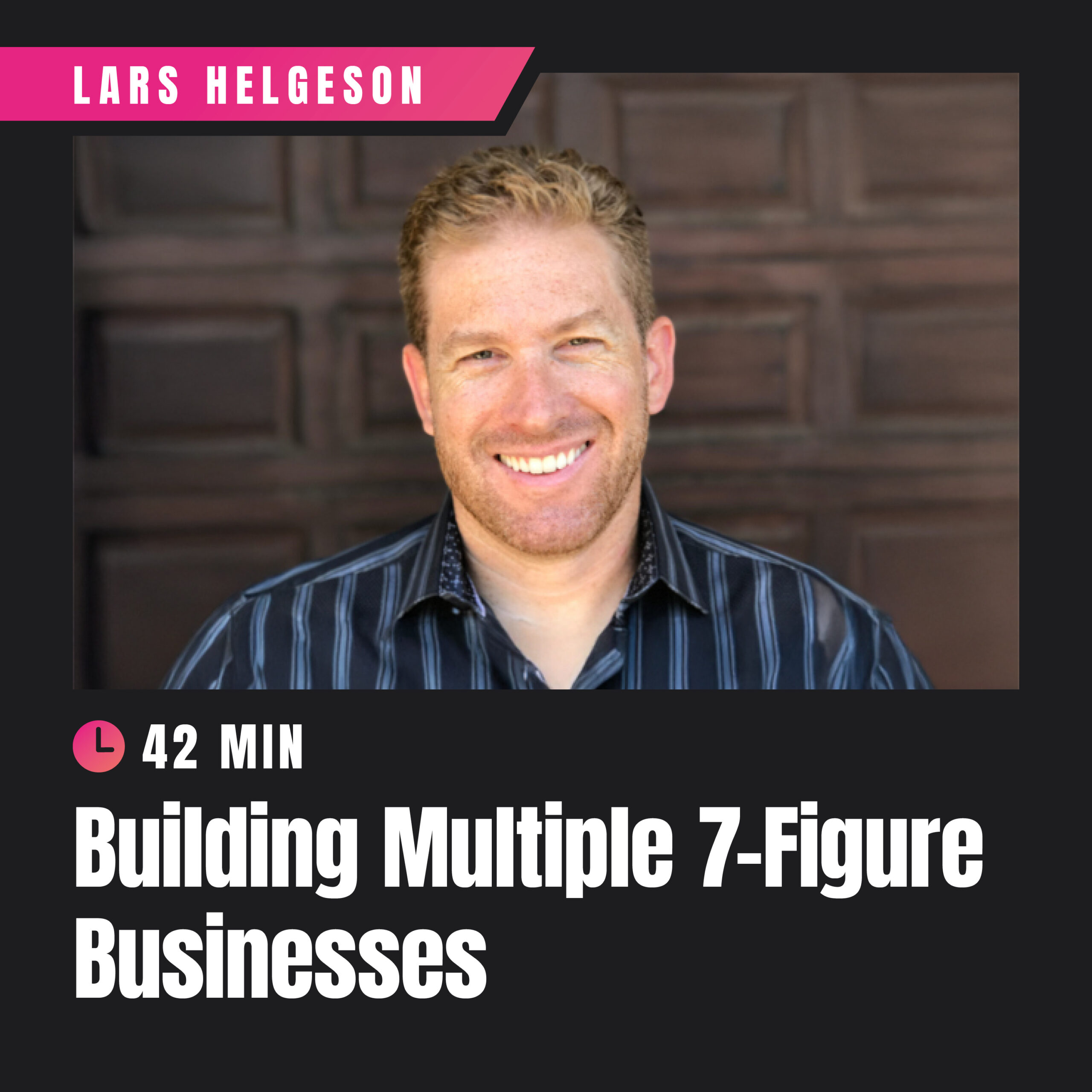
Building Multiple 7-Figure Businesses with Lars Helgeson
To be a guest on the show, email podcast@postcardmania.com
Listen and watch on your favorite Podcast applications!










Podcast
Episode Transcript
Here’s the transcription below of today’s episode, a conversation between host Chris Foster and Lars Helgeson, founder of GreenRope and Complete CRM, about pivoting after 26 years in email marketing and CRM to launch ValaBright, a new platform bringing automated, personalized patient education to healthcare.
Note: This transcription has been formatted from the original episode transcript for readability.
Transcript
Chris: Well, all right. Thank you so much, Lars Helgeson, for being a part of the Everywhere Small Business Podcast. Welcome in.
Lars: Hey, thanks so much for having me. It’s great to be here.
Chris: Excellent. So tell us a little bit about yourself and your business.
Lars: Sure. So my name is Lars Helgeson. I’ve had my own business now for about 26 years. I got out of the military in 2000 and started an email marketing company, and then about 15 years ago pivoted more toward CRM and built a CRM platform called GreenRope, and then a white-label platform off of that called Complete CRM. Last year I decided to pivot again, after working on a project for a couple of years leading up to it, to leverage our platform for automated patient education in healthcare, called ValaBright. Vala is what they would have called, in the Viking clans way back in the day, the wise woman – generally the priestess of the clan. My dog and I both share some Viking heritage.
Chris: Fantastic. And the new business is called ValaBright.
Lars: When I adopted a little Boston Terrier, she was a sweet little girl and I named her Vala. So after thinking about it, I decided to name this new project after her. And “bright” for ideas and intelligence, and shedding light for education. But the wise woman is the wise one.
Chris: Well, also, in traditional lore, the wise woman is also the healer. So it’s actually perfectly appropriate for this business, if you’re working with healers and in the medical profession. It makes complete sense, besides being a cool name for a dog.
Lars: Correct. Yeah, she’s a pretty cool dog too.
Chris: I’d love, if you don’t mind, Lars, to wind the clock back and talk about that first transition out of the Air Force to starting your own business. That seems like a pretty interesting leap. Why your own business out of the Air Force instead of going into the corporate world, or did the corporate world start first?
Lars: It did, long enough for me to get my MBA. But ultimately, I knew, and anyone who’s served understands, that you’re part of a giant machine, and the machine is really designed to perpetuate itself, and everyone is expendable by the nature of what it is. I think what I found was that, and maybe this is my own ego, I felt like I wanted to have more agency over what I could create, what I could build, and my mission, and it just made more sense for me to be on my own. Back in those days there was a lot of new – the internet was new. This was the late nineties, early two-thousands, the dot-com bubble, and no one was sure if the internet was going to be a thing. Here we are on a web-based podcast, right? But back then it was very uncertain how it would be used and what value it would bring to society. I decided to take a chance on it. I had a business partner at the time, and we launched – my very first venture was actually selling original art online, which failed miserably. But then, playing around with different ideas, we created one of the first email marketing platforms, a company called CoolerEmail, and did that for a few years. That grew, and then around 2008 we pivoted toward CRM, to solve a broader set of problems that small and mid-sized businesses face in integrating information. Now the idea of an all-in-one CRM is fairly well established – the bigger brands like HubSpot have been around a long time, and most people understand the importance of combining sales, marketing, and customer service data. Back in the day that was fairly unheard of. I think it’s great that business as a whole has evolved to this understanding that everything needs to talk to each other to be effective at running a business.
Chris: Yeah, you know, it’s interesting too, because the technology that exists now makes it almost the easiest time ever to start a new business. You can start a business, use an e-commerce platform to sell things online, hook it up with a readily available CRM like GreenRope or PCM Nurture or others, and actually start running a business, whereas twenty-plus years ago it was a lot harder. I’m curious, though: do you find, when you talk with other entrepreneurs, that it’s a consistent through line that they realize they don’t want to work for somebody, that they don’t want to put limits on themselves?
Lars: I think so. There’s a sense of wanting to be more in control of your own destiny, but it’s a two-edged sword. When you’re in control of your destiny, you can’t pass the buck. If the business fails, it’s on you. If you have internal problems with employees, it’s on you to solve them. If you’ve got cash flow issues, it’s on you to come up with ways to make ends meet, and often you end up biting off a lot more than you expected. That’s happened to me multiple times, where you realize it’s just a lot of work, and sometimes you have to make very difficult decisions. Sometimes you’re confronted with employees that make things very difficult, both for clients and for other employees, and you have to figure out how to step in and negotiate solutions to very complex, often human, problems. As an entrepreneur, especially as your business grows, you have to get good at managing people, good at managing technology, good at communicating both internally and externally. A lot of times when you first start, you don’t understand all the different kinds of things that are going to get thrown at you every day.
Chris: Yeah, it’s interesting, I was speaking with our CEO, Joy, and she said that oftentimes when small-business folks get started, it’s a good thing they don’t know all the things they end up knowing, because otherwise they’d never begin. You’d never jump in.
Lars: Yeah, it’s true, because it’s sort of this allure of being your own boss and being able to make your own schedule. I remember speaking at a conference once, and there was a guy who put it in terms I really appreciated. He said, “As entrepreneurs, we get to work half days, you just get to choose which twelve hours of the day you’re working.”
Chris: That’s excellent. It’s so interesting that you made that leap when you started CoolerEmail. Did you have a moment where you thought maybe you’d made a big mistake, where you thought, “I can do this,” and then, “Oh my gosh, maybe I can’t”?
Lars: Yeah, at the beginning I had a business partner, and we ended up parting ways. I felt like I couldn’t do it on my own, I felt like I needed a partner to help me. Of course, partnerships can be difficult; they don’t always end amicably or cleanly. There were a lot of issues with the way we ended up separating. So I went from being the internal technology-management guy in the first company to having to do all the things. In some respects, what he did in business development was this mystical black box, because he was very extroverted, he could talk to anyone. But when things didn’t go well and I had to absorb that role, I suddenly went from being the introverted technology manager to having to find, within myself, a way to become the business-development person, the face of the company. You have to put yourself out there online, and people will throw slings and arrows at you simply for existing.
Chris: Sure. But it’s interesting, you mentioned earlier how many skills you have to develop, sales skills, people skills to understand how to deal with human problems and manage folks. I’d think the entrepreneur who has to do all of these things ends up becoming a very well-rounded professional, because they have to touch all these aspects of running a business.
Lars: Yeah, it’s funny, because it’s by necessity, if you can’t do those things, you will fail. It can be difficult. I had some experience with public speaking in the military, but the first time you step in front of a conference with a few hundred people and you have to say something they’re actually going to pay attention to, there’s some pressure, you’ve got to do it right. And that’s just one more tool you have to have in your tool belt. Then maybe a few hours later you’ve got to have a conversation with a customer, and they may be happy or annoyed about something, and you have to figure out how to turn that into something you can use online or with customers, or how you can learn from it. If they’re not happy, who do you talk to about resolving that? It’s just the nature of business, you have to switch gears constantly. In one sense it’s exciting, because no two days are the same. On the other, it’ll keep you up at night. When you own an online business, you’re exposed to eight billion people in the world, and a lot of them have no scruples about trying to hack your system, using someone else’s stolen credit cards, using information from the dark web, there are different ways people try to create attack vectors into your network. The things that keep you up at night can cause real stress, and you just have to learn to live with that.
Chris: So I guess an interesting question is: when did you find yourself becoming more comfortable with this constant state of, I won’t call it discomfort, but you could call it discomfort, this constant state of stress, where you realized that was just going to be the new normal for you?
Lars: It was probably a few years in, when I thought, “Okay, I’m going to make this initial push for this email-marketing business, and then we’ll make it go, and I’ll just sit back and collect my retirement money.” It never worked out that way, we were never acquired. So it’s been about twenty-six years now of running the business day in, day out. Some weeks are seventy or eighty hours, some are forty or fifty; it depends. Some days are long, especially when you’ve got conferences. You have to learn to embrace that uncomfortableness and see it as an opportunity for growth, learning, and self-improvement. You have to approach it with humility, otherwise you’ll go crazy.
Chris: That’s great advice. I think what’s interesting is that you coupled growth of the business with your own personal self-improvement. So often, in the King Arthur myth, the king and the land are one, in business, so often the owner and the business are one, where the business grows as far as the owner grows. Do you feel a responsibility to always be learning and growing yourself personally so the business can do the same?
Lars: Absolutely. And that was actually part of the pivot we made into healthcare. I was seeing that the CRM space, in general, is very crowded, there are hundreds of CRM companies out there, and trying to figure out how to carve out a niche when you’ve got such well-capitalized competition can be hard. Especially in the era of AI, and being able to create code that does things people want, how do you really stand out from the others? What I realized was that I’d always wanted to work more directly with people, to be more helpful. It was something that had been inspired in me when my mom passed away, she had leukemia. She was given her diagnosis and then given a piece of paper and told to go home and figure it out. Fortunately my sisters and I were able to help her, but throughout the entire process I kept thinking about how many other people are given terminal or difficult diagnoses and told, “Here’s your paper, go home, good luck, call us if you need us,” and then they’re stuck trying to figure out what to do, with the mental-health burden and everything else. I realized I could continue making CRMs, selling ads, bringing in more customers, doing general CRM work, and it was good, we work with all kinds of partners in government, childcare, and other spaces, but one of the things I really wanted to focus on was solving this healthcare problem, because it’s so endemic to our entire culture. So many people stress and injure themselves because they’re not aware of things that can hurt them, both leading up to a procedure and after a diagnosis, or post-procedure. I decided I would walk away from what was familiar to me in the CRM world and learn how to approach a whole new market in healthcare. And I can tell you, trying to sell into healthcare is a nightmare.
Chris: You know, there are so many things to unpack about that transition story, Lars. First, I’m sorry for your experience with your mom, but it’s not an unfamiliar story, that someone starts a business because of a need they see based on a personal experience. You think, “I need to solve this for me, and if I can solve it for me, I can solve it for the millions of other people having this experience too.” I think that’s a really interesting impetus for the pivot, a personal driver. From a business-strategy side, it makes complete sense to detach from the CRM business, because it’s crowded, and AI is going to solve a lot of those issues too, so moving away from a market space that isn’t going to be as bountiful as it used to be makes sense. And then, from a market perspective, I can see how ValaBright moves into healthcare, where we know there’s going to be a lot of healthcare need and a lot of communication need, especially as the boomer generation gets into their seventies and eighties and has a lot to coordinate. So it’s probably the right time, right space, a really interesting way to shift your business mindset toward this new venture. But now you’re going into a brand-new market space, and you’re learning how difficult it is.
Lars: Yeah, it’s interesting, because in my mind this is sort of “if there’s a will, there’s a way.” I see that there’s a problem in our culture, and I think everyone does, everyone who’s been through our healthcare system knows what a nightmare it is. And the one thing that raises the tide and floats all the boats in healthcare is education. The more you can educate people, the better off the entire system is, because an educated patient will take better care of themselves, they’ll be healthier, safer, which means less burden on the healthcare system, which means people can spend more energy on the specific things that particular patient needs. It’s a common experience around the world. There was a study that found that twenty-two percent of people who’d had a procedure done claimed they never received aftercare instructions. And when you’re looking at emergency care, like going to the ER, the report showed that something like forty-eight or forty-nine percent of people claimed they never received any instructions when they left the ER, other than the conversation they had with the nurse or doctor. So you get these readmissions, and people complain the ERs are always full, and people complain that they come back, because they didn’t know something, so they had to go back to the ER. That’s an education problem. And when you look at preventable complications after procedures, it varies by procedure and location, but it’s between thirty and forty percent of readmissions that are preventable through education.
Chris: That’s a lot of strain and unnecessary tax on the system, if you don’t need to come back because of the education you got, that relieves the system of those people. What’s interesting to me is: did you know those statistics before you pivoted, or were they revealed to you as you moved into the space?
Lars: I was motivated more by my personal experience and by talking to other people, it’s one of these things that seems like everyone’s experienced it. The thing that kind of blew me away was that the technology to do this already exists, we’ve been texting each other for thirty years. But the system itself is designed, through bureaucracy, through federal healthcare mandates, through the structure of how things are built, to be slow, to force people… you go to the doctor to get a procedure done, or you get diagnosed, and if you’re lucky you get a pamphlet, some paper, but a lot of times the paper’s got all kinds of stuff crammed onto it, and you’re supposed to absorb massive amounts of information. It’s just not realistic for people to be able to do that effectively.
Chris: Yeah. Either that, or what happens is: you get some kind of diagnosis, or you see the doctor, and if you’re a human being, the first thing you do when you get home is go online and start trolling around, you go to Reddit, read a bunch of unhelpful comments, and get barraged by opinions from other people instead of actual, real educational information. And also, to your point, you get snowed with it, whereas if the education is pieced out in small, bite-sized pieces you can actually digest, understand, and then move on to the next piece, that seems like a much more common-sense approach.
Lars: Yeah, the other aspect of it, something people don’t really talk about much, maybe because of the stigma, is that there’s a giant mental-health burden that goes with medical procedures. The amount of anxiety and depression associated with procedures, broad strokes, about twenty percent of people say they experience severe anxiety and depression before a certain surgery. And if someone has a history of anxiety or depression, that number can go up to seventy percent as a result of a procedure.
Chris: Of course. That makes a lot of sense, and to your point about education, the less you know, the more anxious you become.
Lars: Right. And then you go do your own research, and who knows what you’ll uncover, there’s a lot of health misinformation that circulates around the internet, because people like to talk about things to get views, likes, and clicks, because it makes them money. It’s not accurate, but you’ll read things you know are patently false.
Chris: Right, and the most alarming things get the most clicks, the most dramatic moments get the most action. So from a business side, Lars, this is clearly an interesting opportunity for you. How do you think you’re approaching this new business venture differently than when you started CoolerEmail or GreenRope? How does the more experienced Lars approach this new market space differently than the younger one did?
Lars: Certainly more cautiously, certainly more focused on the ROI of individual channels. When I had my email-marketing company and then the CRM company, I thought people were the answer, and I ended up expanding too quickly. I put too heavy a cash burden on the company and ended up sacrificing budget I should have spent on other channels. Back in those days, PPC, pay-per-click advertising on Google and Bing, was a big driver of leads. Now everything’s shifting; the quality of leads we get from Google and Bing just isn’t very good anymore. There are other opportunities, I think, with AI, once we’re able to start advertising directly into AI, there will be some opportunity there when that happens. But I believe in having a more cautious approach, funneling money more directly toward things with direct ROI, and not necessarily toward people who claim to be experts in a certain thing. I have a much more discerning eye now about what people will actually be able to contribute and what will actually move the needle for the growth of the company.
Chris: Sure. I think, too, you’ve learned about different kinds of people, and your instincts have been honed from working with people over so many years, you just get better at it working for twenty years versus two. And you figure out that instead of throwing a body at a problem, you strategically figure out what the next hire’s role should look like first, rather than the individual, carve out the role, figure out what it’s supposed to do to impact the business, and then find the right person for that role.
Lars: Yeah, and I think, not to overuse a term, but, you really have to rely on your CRM to make sure everyone is held accountable. What I’ve found is that a lack of accountability opens you up to all kinds of things. I’ve had to deal with embezzlement, fraud, people intentionally defrauding their hours, all kinds of things. I’m sure every business owner has dealt with this in one form or another. You really need to guard against those things, and accountability and management that gives you visibility into what people are doing, with objective metrics, matters enormously for the overall performance of the business.
Chris: That’s interesting you say that, our first guest, Joy Gendusa, manages the business on stats. We’ve got stats we look at every week and compare over time, and every department has a stat they’re accountable to. There’s an accountability baked into the culture of an organization, and I think oftentimes small-business owners don’t instill that kind of discipline and accountability when they’re bringing people on, because they don’t know about it, they never did it as a job, maybe never learned about it before they became an entrepreneur. It’s a learning curve for a lot of them.
Lars: Absolutely. And I think one of the difficult things is you have to be able to let go of people who aren’t performing, that’s probably one of the hardest things you have to do as a business owner, because you invariably get personally connected to some of these people. You want to see the best in the people around you, or at least I do.
Chris: Sure. And you want them to succeed, as a business owner, you’re investing in a human being, investing in that person being part of the organization. You want them to put the business in their heart the way it’s in yours, and you’re hoping the quid pro quo is that the employee invests back, in the common good, in the business. That’s a challenge when it doesn’t happen, or when for some reason it doesn’t fit. It’s hard for everybody.
Lars: Yeah, exactly. You have to make those difficult decisions sometimes, conversations where you genuinely like someone who works for you, you think they’re really good people, but they’re not performing, and you have to have that hard conversation and say these are objective calculations we have to make, whether it’s for survival, performance, or growth, sometimes those hard decisions fall on your shoulders and you have to do the regrettable thing. Some of the decisions are easy, someone defrauds you, and, well, that’s an easy one.
Chris: You know, I think it’s interesting that you use the word “regrettable,” regrettable in the sense of that human relationship, but at the end of the day, the health of the business becomes this other thing. It’s almost like the business itself becomes an employee that you have to nurture and tend to, this third-party thing that has to remain healthy, and you have to do what you need to do to serve the business.
Lars: Yeah. I think the hard part, too, is that at some point, as the leader/manager, you’re also responsible for the development of the people who work for you, whether they’re subordinates or colleagues. That can be a hard thing too, especially if you’re stretched so thin that you don’t have time to really devote to being a mentor or a coach. Do you have someone else do that? How do you manage the development and growth of the people who work for you when you’re already spread so thin? That’s something I constantly struggle with, if you’re already working seventy hours a week, how do you find more time to mentor? You kind of have to find ways to balance it, and sometimes you just can’t do it all. That’s been a challenging thing for me, I want to have the time to sit down and talk with everyone and say, “How are you doing? What can we do? Let’s talk about your goals,” but honestly, I’ve been so stretched thin, I haven’t done a lot of that. So I need to work with people who take initiative and are self-starters, and fortunately our team is amazing, a lot of them do their own self-growth, and we always talk, but we don’t really have too much of a disciplined internal program for self-improvement. So it’s trying to find that balance, how can we support the people on the team, make sure we all hold each other accountable, and allow for everyone’s growth, because the last thing I want to do is lose anybody. We have very little turnover in the company, but there’s still that feeling that you want to do everything you can for everyone on the team.
Chris: Yeah, well, I think that’s part of the burden of leadership, for those who want to wear that mantle, that responsibility of being a leader, where it’s never-ending and always extending. It’s leading the business strategically for the next three to five years. It’s leading it strategically for the next three to six months, because you’ve got to get some cash flow in. It’s figuring out the operational execution, figuring out the vision, figuring out not only people management, but there’s a very different skill in managing people versus growing, developing, and mentoring people. There are certain aspects where you’re stronger or weaker as a business owner, just like any human being, you’re really, really good at some things, and not as good at others. Maybe sometimes business owners expect themselves to be great at everything, which can’t be the case.
Lars: Yeah. Right. As much as I want to be great at everything, I literally can’t be.
Chris: So where do you look for mentorship, Lars? Where do you look for help, in terms of guidance and consultation, maybe other entrepreneurs or folks who’ll say, “No, Lars, this is maybe what you could focus on, and this is what would serve you, your business, and your team best”?
Lars: I do have some friends who’ve been in business a long time that I talk to about ideas, “What would you do in this situation?”, and those relationships are so valuable, because sometimes it feels very lonely at the top, top of this tiny, tiny little hill. Like, going back to what we were talking about before, our pivot into healthcare, walking away from CRM, something we’d been doing for so many years, to solve a more specific problem, there’s a certain amount of trust that goes with that. I can’t guarantee success. I can’t predict the future. All I can do is try to make the best decisions I can, try to support everyone through our changing business model, and in the process learn as much as I can about it and try to connect with as many people as I can. Through the process I’ve had incredible conversations with doctors, surgeons, nurses, administrators, I’ve learned so much about our healthcare system and the cracks in it, and how we can help with those things. And I have to learn to translate that into revenue for our company, which is not a trivial problem in healthcare. So there’s a lot of trust that the team has put in me, to make sure we navigate through this as best we can, and we’re in the process of doing that. We’ve seen some really good early indicators of growth and connection, we’re working right now with a couple of kidney-transplant programs that are using our technology, which I’m really excited about. We’ve been working with some plastic surgeons, and we’re talking now to a couple of oncologists. So I’m starting to see us get traction, finally, in medicine, traction that’s going to make a direct impact on the health and safety of people all over the country, actually all over the world. Right after this, I’m having a conversation with some surgeons in Greece who are interested in the technology.
Chris: Wonderful. That’s great. What’s interesting, too, is that there’s a real purpose behind what you’re doing, I’d like to believe that purpose-driven businesses find a way to succeed, that the universe kind of conspires to help purpose-driven businesses, their owners, and their ecosystem find a way to make it work. At least I’d like to believe that’s true.
Lars: Yeah, no, I agree. There has to be some amount of hope and optimism in the world, there has to be a sense that if you want to do good, if you want to legitimately make the world better, not just the cliché of “we just want to make the world a better place,” but actually want to help people, the world should conspire to help you do that. It shouldn’t be conspiring to help people grift and take money from well-meaning people.
Chris: That’s true, I agree. So one of the interesting things about the state of your business, right, pivoting it and bringing your team along for this journey, this mission, and having them trust and buy into your vision, believing they can apply everything they learned in previous roles and previous business models to a new business model, not completely different, but adjacent, hopefully taking all those learnings so you’re starting this new business a little bit ahead of where you might have been before.
Lars: A hundred percent. The experience my team has, both in customer service and in the technology, I think has put us in a position to create what we have so quickly, and to leverage the ideas we get from talking to people in healthcare and turn that around very quickly into an actual product they can use for education. I think it’s been amazing to see. We’re working with a couple of medical-device companies now, where we’re leveraging what we’ve learned in patient education to help providers, teaching doctors how to use a device, based on our method of education. The idea is: we combine texting with audio, video, and teach-back surveys and health checks, all together in an integrated solution, to help automate and personalize the educational experience. To be able to do that across all these different types of applications, it would be very difficult to hire someone from scratch and explain all the inner workings of the software and technology, how to use it, and how to apply it to these specific types of problems. It’s been amazing to see our team do that, the way they’ve stepped up, learned, figured things out. It’s a small team, but everyone has figured it out. And it’s amazing to be able to make this kind of pivot, we still do CRM, we still do all those things. Whether they’re talking to a CRM client and showing them how to set it up for automated marketing, sales enablement, or customer-service and ticketing management, or they’re talking to a plastic-surgery office or a device manufacturer and explaining how we do education, they’ve really embraced all of those elements together to make it work. It’s been amazing to see the team take it all on.
Chris: What’s interesting, too, is that you often grow by doing the uncomfortable thing, moving into a place that’s unknown and uncertain, you start building new skills. This is a human story, doing something brand-new is challenging, but when you start to master it, you develop. It might be that your team is developing more professionally because of this pivot than they would have naturally.
Lars: Yeah, I’ve got one woman who works for me who was working in the medical space, more in an administrative role, with a lot of experience in plastic surgery, and she’s learned how to use AI to make videos that would blow you away.
Chris: Sure, and out of the necessity of doing the videos at scale, because you couldn’t do it yourself, she learns the tools. That’s the thing I find so interesting about business journeys, when a business keeps moving, evolving, and pivoting, like we talked about at the very beginning of our conversation, the people also need to move and pivot and change, and they get the chance to blossom and grow themselves.
Lars: Yeah, yeah. And I think that’s a super important thing, if you feel like you’re doing meaningful work, and you can learn in the process, and you can see how it affects people in their everyday lives, I think that gives meaning to what we’re trying to do. It’s one of the things I feel really good about with what we’re doing, because I feel very strongly, and so does the team, that we can make an impact in healthcare. We can save people’s lives. And it’s not hyperbolic, the data shows that when you educate people, you literally save lives. And if we can do that, then that’s a life worth living. That’s meaning.
Chris: That’s meaning and purpose with your work, and that’s what everybody wants: meaning and purpose with the work they’re doing. Well, congratulations, Lars, well done, to you and your team, for ValaBright. Congratulations on the journey and success on the pivot, and it was so great being in touch with you, thank you so much for being on the Everywhere Small Business Podcast.
Lars: Thank you so much for having me. This was great to talk about. Take care.
Chris: All right, talk to you later. Bye bye.