Podcast
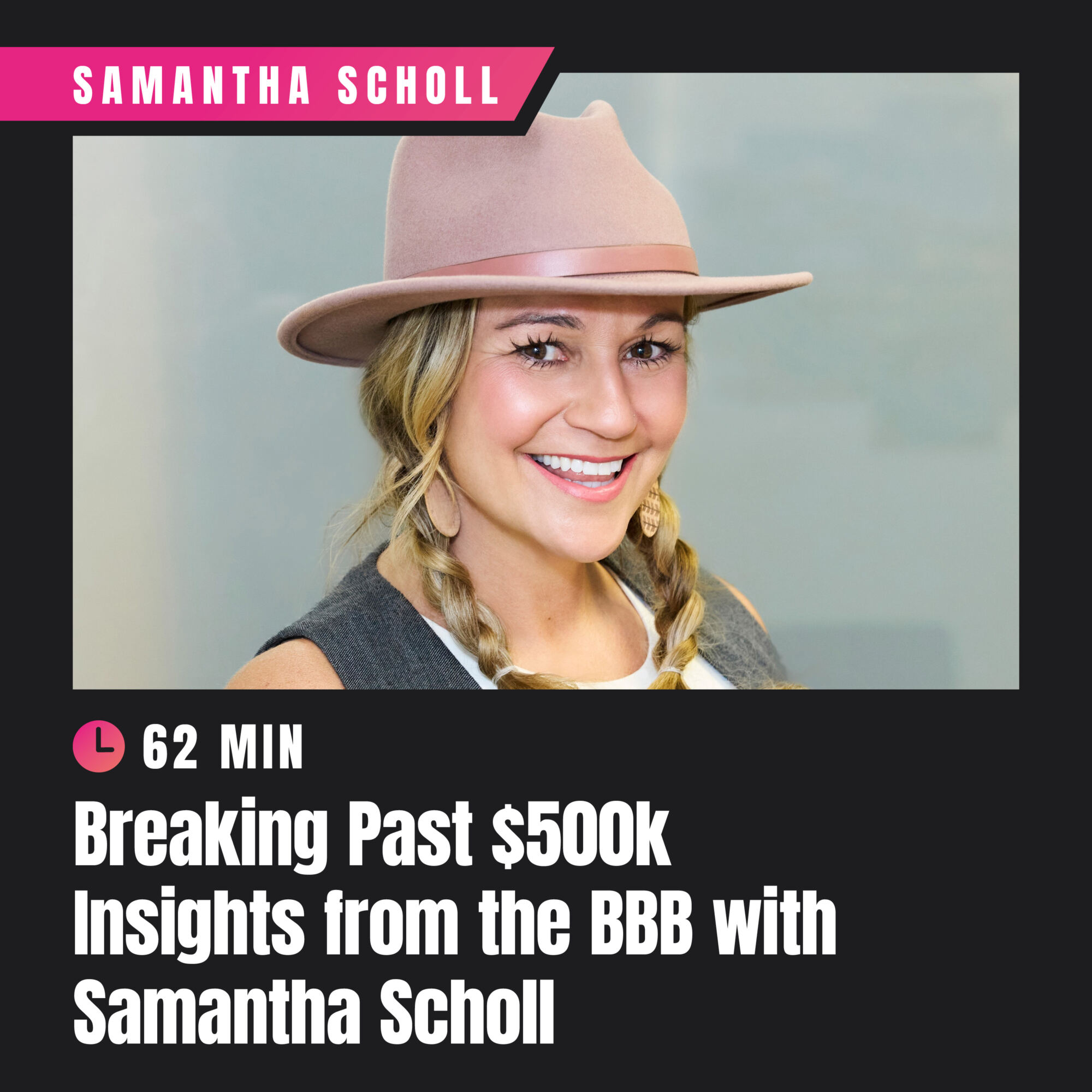
Breaking Past $500k Insights from the BBB with Samantha Scholl
To be a guest on the show, email podcast@postcardmania.com
Listen and watch on your favorite Podcast applications!










Podcast
Episode Transcript
Host Chris Foster talks with Samantha Scholl, vice president of innovation at the Better Business Bureau serving the Pacific Southwest and Mountain West, about helping small business owners grow through education, mentorship, access to capital, and connections with their communities.
Note: The supplied episode transcript has been formatted for readability; its spoken wording has not been fact checked.
Transcript
Chris: Well, all right, Samantha Scholl, welcome into the Everywhere Small Business Podcast.
Wonderful. All right. Tell us a little bit about yourself and the B B B and what you do for them. All right.
Samantha: All right, well, I am the Vice President of Innovation here at the Better Business Bureau serving the Pacific Southwest and Mountain West, which is a gigantic territory. And what does that mean? What does a VP of innovation do at the Better Business Bureau? Well, we do a lot of things, but mostly my team is focused on creating educational programs to serve small business owners, to help them from everywhere from ideation to launch to growing ethically, sustainably, creating resilient businesses all way to exit and scale and everything in between, providing them resources that they need.
Chris: Again, what does that mean? Mostly mighty.
Chris: And everything in between.
Samantha: to learn how to thrive, mentorship opportunities, access to capital, pretty much you name it. That is marvelous. That's the entire life cycle of a small business. And you know what I I find so interesting about that at the outset is that you're meeting them where they are at any given moment. Because you don't know when they're coming into the BPB at what stage they're at. Right. And that's the important thing too, and that's something that our team is really proud of, is that we do have these resources to
Chris: I
Chris: That is marvelous. That's the entire life cycle of a small business. And you know what I I find so interesting about that at the outset is that you're meeting them where they are at any given moment because you don't know when they're coming into the BBB at what stage they're in. Right.
Samantha: Help business owners at any stage. They come in, they have a fledgling business or an idea that they want to start and they don't know where to begin. We've got you covered, right? Or if they're looking to scale and they don't know how to do that, we help them put in the right systems, provide them with the right tools. They want to become an accredited business, the steps to do that. And so we really do provide a holistic support to entrepreneurs, everything from even emotional well-being, educational opportunities, pairing them with mentors.
Chris: I do cover. Wait, go ahead.
Chris: business and stuff to do that and so we really do promote we say like a holistic support to entrepreneurs. Everything from even most people well being educational opportunities, probably with mentors.
Samantha: and just really helping them throughout the whole process. 'Cause business ownership is a lot. I use I am a business a small business owner myself, so I know what it takes to run a small business and let me tell you.
Chris: So why in the clock back? Tell us about that. What was that small business ownership experience that you had and how did you land into the BBB? Wow, that's a great one. So I spent 28 years of my life, a whole career, a whole career in hospital.
Samantha: You had and how did you land into the PPP? Wow, that's a great question. It's actually a really fun story. I love sharing. So I spent 28 years of my life, a whole career. I had a whole career in hospitality. I grew up working in my mom's restaurant. She was a general manager of a restaurant. I started in there probably earlier than I was probably supposed to be allowed to work. But you know, w washing dishes and busting tables and things like that, and just fell in love watching my mom work the room.
Chris: I grew up being in my mom's restaurant. She was a general manager of the restaurant. I started probably earlier than I was probably supposed to be able to work. but you know, washing dishes and busing and things like that and just fell in love watching my mom work the room and be able to really create meaningful experiences for the guests. So I became passionate about that and stuck with it all in college, and just found my quitting, working in our teams, opening and operating restaurants, bars.
Samantha: and be able to really create meaningful experiences for the guests. And so I became passionate about that and stuck with it all through college. and just found my footing working in operations, opening and operating restaurants, bars, casino casinos, five stars to dive bars is kind of how I spent all over the country, really. Vegas, Kansas, Chicago, San Diego, and which landed me eventually here in San Diego where came out as a consultant for a mom and pop shop that I just opened.
Chris: Casino's five stars, five bars in all those countries. Las Vegas, Kansas, Chicago, San Diego, and which landed me eventually here in San Diego came out as a consultant for a mom and pop shop that I just opened, Rush and then
Samantha: restaurant and turned into a managing partnership pretty quickly after that and I just fell in love with the restaurant and it became my baby. We sailed through that through COVID, became a partner in that that restaurant here in San Diego. And when COVID hit and we had to close our doors and I had to pivot, we had thirty five employees that we had to lay off, you know, overnight. Not everyone wants a sixty five dollar filet mignon and a takeout box during COVID. So
Chris: Pretty quickly after that and you just fell in love with the restaurants.
Chris: that through COVID became a partner in that the Russian appearance for the go. And when COVID hit and the medical
Chris: everyone wants a sixty five dollar fit meal out of the takeout box during the so I was looking
Samantha: I was looking and searching for opportunities to help me deal and learn as a business owner how to get through this really tough time. One of my restaurant regulars worked at the Better Business Bureau. And she said, You know what? We have this amazing program. It's a business accelerator. It's specifically catered to under restourced communities, me being a woman and LGBTQ business owner, perfect for you.
Chris: And she said, you know what? Have a subject.
Samantha: it really the B B B really wanted to make sure they're providing equitable access to resources for all business owners. I went through that program, learned a heck of a lot about the B B B, which I didn't know much about. I some I don't know, maybe some old school soggy stereotypes in my brain about what the B B B really really did. And fell in love with the B B B the way that they support small business owners and after
Chris: Talk about a lot about the B V B, which I didn't know much about. I guess I don't know, old school saggy stereotypes when we're worried about what the B V B does really and fell in love with the B V B is a way that we support small business owners. And after got through the eye of the storm of COVID and decided to sell my partnerships for consulting.
Samantha: We got through the eye of the storm of COVID, I decided to dissolve my partnership, start a consulting business, and that's when the BBB gave me a call and said, You know what? We're looking to expand our footprint in San Diego and California. What would you think about coming on board to manage the educational programs that you just graduated from? And I thought, Why not? I I spent this I had this illustrious career in a field that I loved. I really truly knew nothing about nonprofits, which the BBB is a nonprofit. Not a lot of people know that.
Chris: We're looking to expand our footprint to Diego and California.
Chris: But why not? I I spent I had some last year's career. I wrote the company with not nonprofit, but maybe nonprofit. All that. I took faith. Here we are five years later, and running the whole thing in Google with really good offer. So it's been an incredible thing. Well that's that's how I that's how I landed here. What a marvelous story. You know, there's so much to unpack there just in terms of
Samantha: and I took a leap of faith and here we are five years later and running a whole kit and caboodle with all the educational programs we have to offer. So it's been an incredible journey. So that's that's how I that's how I landed here at the B V B. What a wonderful story. There's so much about there just in terms of you know, growing up. So if you don't mind, I wanna kinda walk back. So your mom was GM of a restaurant and which feels like older shit, right? She's managing the whole thing. It's
Chris: you know, growing up. So if you don't mind, I wanna kinda walk back. So your mom was GM of a restaurant and which feels like ownership, right? Because she's managing the whole thing. It's and most restaurants, most restaurants are just family owned businesses, right? So you grew up in a family owned business. What was that like being with your mom, grow working with her and being a part of the family and kind of being a part of the family business while in a family? Yeah.
Samantha: And most restaurants most restaurants are just family businesses. Right? So you grew up in a family owned business. What was that like being with your mom grew up working with her and being part of the family, kind of being a part of the family business while in family? Yeah, I mean she she was just she was managing, so she we didn't she didn't own the places and she would that was her career, so she throughout my life worked in several different restaurants. but then also my grandmother.
Chris: Yeah.
was the person throughout the trail or didn't trouble the course. but they also had grandmother. Her grandmother was a nature. And so I missed that it was everywhere. I did it with her work, watching her work in dinner or or my mom didn't go
Samantha: My grandmother was a waitress. And so I I mean this it was everywhere. I would either go with her to work, watching her work the diner, or or my mom. And to grow up in that space, I really think it taught me a lot about hospitality. And what folks don't realize is hospitality is everything in small business. It is not just for the restaurant or the hotel or we when you think of that hospitality. It's a principle, it's a strategy, and it's how businesses.
Chris: hospitality. What folks don't realize is hospitality is everything small business. It is not just for the restaurant
Chris: It's a principle, it's a strategy.
Samantha: really should be operating with that hospitality mindset. So I really learned how to treat people, how to make people feel warm, welcome, genuine, how to pay attention to details, and how to really understand how to create experiences so people leave remembering how you made them feel. And that's a really big deal, I think, in business. and kind of alludes to building trust.
Chris: Mm. So I really tell people how to make people feel more genuine. how to be details and how to really understand how to experience how people believe or you how you need them to feel. And that's something
Chris: Building. Nothing.
Samantha: And how do you do that? By making genuine real connections. And that's what hospitality does. And so I've kind of taken that fiber that I saw. which, you know, my sister and my brother and myself all went into the restaurant industry. We all became GMs of restaurants. My brother owned a a franchise of a sub place, I'm not gonna say the name. But yeah, so it really is one of those situations where it kind of is in our TNA and we've all brought it into our professional lives and it's helped us.
Chris: Taken that fiber that we saw. which you know, my sister and my brother and myself all went into restaurant. We all became GRS of restaurants. My brother owned a a franchise of sub place, like yeah, so it really is of those situations where it kind of was in our DNA and we all brought it into our professional lives and helped us achieve success because we're able to
Samantha: achieve success because we're able to we really learned at a young age how to connect and how to really truly take care of others in a business sense. Yeah, I think that's a brilliant comment. that the that hospitality isn't an industry, but it's a mindset. Yes. I think that's really cool that you went there. And one of the things that I thought was really interesting that your very first intro when you help small businesses
Chris: Take care of other with this comment. Yeah, I think that's a brilliant comment. that the that hospitality isn't an industry, that it's a mindset. Yes. I think that's really cool that you went there. And one of the things that I thought was really interesting at your very first intro, when you help small businesses, you actually threw in the word ethical.
Samantha: You actually feel in the word ethical how you help small businesses ethically prepare and help be ethically responsible within their growth, right? Which ties into I think what you alluded to in the hospitality and the authenticity. Where there's you know, businesses are often run by, you know, machines or AI, not yet at least. Right. But hopefully they're run by people and they're an intimate connection that people can have, you know what in between
Chris: How you help small businesses ethically prepare and are be ethically responsible within their growth, right? Which ties into, I think, what you alluded to in the hospitality and the authenticity, where there's
You know, businesses aren't run by, you know, machines or AI, not yet at least. Right. But hopefully they're they're run by people. And there's a a an intimate connection that people can have no matter what industry you're in, whether you're in landscape or selling hardware or or or or restaurants. talk to me about your I don't know.
Samantha: you're whether you're landscape or selling hardware or or or or restaurants. talk to me about your I don't know your pairing of authenticity, hospitality, and ethics and how that how you see that play out well within small businesses and what the dangers are when it doesn't play out well. Ooh, well being at the BBB where ethics is part of our mission, right? We want to trust ethics, we want to build these businesses.
Chris: your pairing of authenticity, hospitality, and ethics and and and how that how you see that play out well within small businesses and what the dangers are when it doesn't play out well.
Chris: Yes, that's your
Samantha: So it's it felt almost natural that I landed here because ethics is part of my DNA as well as the hospitality piece. But when you build an ethical business from the ground up, you know, that's important too, is incorporating this higher commitment to operating your business responsibly and ethically, and then to also talk to the point you said authentically, which is also really important to me. All these things are painting a picture of a successful business.
Chris: You that's a
higher commitment to operating your
Chris: This is
Samantha: Now, in this world where AI is kind of going everywhere, there always has to be a human in the loop. We know that, right? Running the machines. And how do we grow? How do we show up for our communities? And how do we do things the right way, even when no one is watching? So that's really, really important. So defining a business owner if they define their core values early on, and always keeping the mindset that operating their business from an ethical standpoint, they are gonna go further because
Chris: And how do we grow how do we show up for our communities and how do we even company even when people are changing? So that's what
just.
Samantha: When you're operating from that vision of being ethical, responsible, honest, authentic, trustworthy, what you're doing is you're building relationships and you're building trust, which translates into loyalty, which translates into I'm gonna bring a an example of into the restaurant industry. If I had a really bad night in my restaurant that I was running and
Chris: Honest, authentic, trustworthy.
Chris: translate loyalty, which translate to I'm gonna bring it in the restaurant industry. If I had a really high night at a restaurant that was running and
Samantha: one of my regulars, I served them a well done steak and then I dropped the entire glass of wine on them, which has happened. worse things have happened. I've done way worse things on accident. and they just literally left their soaking, went with red wine, had this horrible steak that they ended up paying for, the bathroom was flooding. But I've built this trust and loyalty over time. They're gonna scra they're gonna write that off and they're gonna be back next week, that same Friday, because we've built that trust and loyalty. And so that's why be being ethical from the start is so important 'cause
Chris: I dropped tired glass of wine and that's right. and they just were left or soaking up with red winding, the total state that they ended up in before. The bathroom was flooding. But I built trust and loyalty over time. We're gonna they're gonna write that off next week, that same Friday, then we built that trust and loyalty. And so that's why we have the football start.
Samantha: Cutting corners and doing things not the right way might get you to leapfrog a little bit faster sometimes, but it will always catch up to you in the end. Yeah. Right. You know, wherever the content is. But it's a thing that you know there's there's this epic foundation, right? find so interesting is that coming from the hospitality business where you're trying make people feel welcome in space, even though you didn't necessarily have an educational background per se.
Chris: Cutting corners and doing things not the right way might get you to leapfrog a little bit faster sometimes. But it will always be always. Yeah. Right. I mean, you know, whatever they say karma is, but it's a thing that, you know, there's there's this ethical foundation. What I find so interesting is that coming from the hospitality business where you're trying to make people feel welcome in a space.
Even though you didn't necessarily have an educational background per se, total parallel between making small business owners feel comfortable in the space coming into the BBB, like you said, at any stage of their growth. what was that first event like when you first brought people in? What what were the nerves? What was the excitement? What did you learn and what surprised you? Yeah. it was just
Samantha: total parallel between making small business owners feel comfortable in space coming into the BB B, like you said, at any stage of their growth. what was that first event like when you first brought people in? What what were the nerves? What was the excitement and what did you learn and what surprised you? About the first event I hosted at the B B B? Yeah. it was just a continuation of what I've been doing my whole career is a creating events. I ran massive events with five hundred people and we had event spaces and I've
Chris: I think I'm too called and
Samantha: I mean, I've hosted events for thousands and thousands of people throughout my career. So for me, it was just taking what I already know and applying it to the small business community, which is was actually really easy because I found that a lot of folks who actually have you know, and this is absolutely no shade to folks that have done it and gotten their MBAs and all of that, they never really had that restaurant or hospitality experience. And so that's something different to bring to the table.
Chris: But for me it was just taking what I already know and applying it to make it just actually really easy because I found that a lot of people actually have you know and this is absolutely folks that have done it on their MBA, all of that. they never really
Right. Where that
Samantha: Where that's something we do here at at the Argnite space that we're in right now is that we everyone that I hire has hospitality experience and that's by design. Yeah. And that's that's that is our secret sauce. That's what separates us from the other spaces because not everyone is doing it. They don't understand how important it is to really pay attention to those details to really make people feel warm and welcome. And so to answer your space,
Chris: like that we're in with the economy, but we everyone that is higher experience. That's why it is funny. That's cool. That that is our
Chris: they don't understand.
Chris: answers a person is I was nervous because of my first kind of role care because we're meeting some that I graduated this month. And just like I mean I have a a college degree. It really is a degree in hospitality is probably really an issue and world of life. Right. The degree of life. Yeah degree of life. I have I've traveled all over the world and so I have
Samantha: to answer your question is I was nervous because the my first kind of j role here was running the accelerator that I graduated from. And just like I mean, I have a a college degree in sociology and you know, I do have a degree, but I really is it's a a degree in hospitality is probably really what I should say in world experience. Yeah. Yeah, degree of life. I have I've traveled all over the world and so I haven't been able to meet with a lot of interesting folks and and learn from them too. But running that
Chris: Very nice.
Samantha: That accelerator coming on board and really having no idea what I was doing. Truly. and and that imposter syndrome, I had that massively just like, should I be here? Why did they pick me? Am I qualified to run a small business program? I absolutely was. I was doing it. I was doing it as every s wearing every single hat, what HR, doing all the social media.
Chris: and and that imposter syndrome I had the things of course like it shouldn't be part of the MI qualified to run a small business program. I absolutely I was doing hundred percent at every every single hat HR, doing all the social media. Completely menu design, you name it, everything, community engagement, all of it, the financial kind of thing. So really the the experience was lit clear and it was
Samantha: It completely cr menu design, you name it, everything, community engagement, all of it, the financials, everything. So really the the experience was lived in and it was real and it wasn't necessarily something that I learned in theory. I learned it in practice. You learned it in life.
Chris: And it wasn't just it was something that you learned in theory. I learned it in practice. You learned it in life and and and and it's the beautiful moments are when
Samantha: without even re prepared for control your entire career. Right? Growing up with your mom being in a family business, getting that those understanding what that took, having the professional chops, then being a managing partner where you've got employees that you have the payroll and you've got to take care of, you have insurance, you have supply, you have
Chris: without even realizing you'd prepared for this role your entire career, right? Growing up with your mom being in a family business, getting that ethos, understanding what that took, having the professional chops, then being a managing partner where you've got employees that you have to pay role and you've got to take care of, you have insurance, you have supply, you have logistics, you've got marketing, you've got you've got the twenty twenty torpedo.
Samantha: Logistics, you've got marketing. They got a pandemic. You've got the 2020 torpedo. I know, right? So you got me thinking though, and the reason I was looking at my phone is I wasn't not paying attention. I wanted to get her name right. There's a woman named Priya Parker. and I just picked up her book. I haven't started it yet, so I can't necessarily endorse it, but a lot of people had. And it's called The Art of Gathering. Mm-hmm.
Chris: Well, you got me thinking though, and the reason I was looking at my phone is I wasn't not paying attention. I wanted to get her name right. There's a woman named Priya Parker. and I just picked up her book. I haven't started it yet, so I can't necessarily endorse it, but a lot of people had. And it's called The Art of Gathering. So what Priya Parker writes about is she is a professional facilitator. Right. So she brings people together and she says there's a way in which you can
Samantha: So what Priya Parker writes about is she's a professional facilitator. Right? So she brings people together. She says there's a way to bring groups and bring people in because you know, humans are social. We're natural gatherers of together. Yet we also know that there's certain gathering situations that bring in lots of different kinds of people with different backgrounds and experiences and biases.
Chris: bring groups and bring people in because you know humans are social. We're natural gatherers of together. Yet we also know that there's certain gathering situations that are bringing lots of different kinds of people with different backgrounds and experiences and biases and you know
Samantha: know, in thoughts, right? Someone might have a concert center and someone might be an arrogant joke, right? If they're still in the same room, right? So how do you like manage these gatherings? Like when you see all these people from different walks of life in different businesses, what is your spider sense that happens and goes on when when the when the event starts to happen?
Chris: thoughts, right? Someone might have imposter syndrome, someone might be an arrogant jerk, right? But they're still in the same room, right? So how do you like manage these gatherings? Like when you see all these people from different walks of life in different businesses, what is your spider sense that happens and goes on when when the when the event starts to happen?
Samantha: You are literally speaking my language. I'm so happy you asked me this question. this is everything that I do. And I love the the book. I haven't read it yet, but The Art of Gathering is Everything because I always tell people too curating events is an art, not a science. There is not a actual recipe or mathematical equation that if you do this, then this happens. It is all about peeling all that back and being intentional. Understanding how important it is, understanding who you're inviting to the event.
Chris: Reading it.
Is not a actual reason or mathematical thing. This happens. It is
Samantha: And being intentional about curating experiences. we are hosting a a very large event tomorrow. All of those nuances, all of those things you think of, it's an art, bringing different folks, like you said, different backgrounds, making sure that we are focusing on diversity, equity, inclusion, belonging, making sure that when everyone comes to our space, they feel welcome, they feel heard, they feel seen.
Chris: we're a very large amount of growth. All of those
Chris: I'm making sure that we are focusing on diversity equity.
Samantha: and respected and appreciated. And so that if that means making sure we have a safe, quiet place where folks can go to decompress during our our all day summit, we have that. We have a place where they can go. some folks might need a little quiet space and and things like that. Making sure that we are thinking about all these things ahead of time, knowing that we have a diverse group of individuals coming.
Chris: That means we have a quiet place where folks can go to decompressing our all day. We have that. We have a place where they can go. some folks may be a little quiet state in things like that. Making sure that we are thinking about all these things ahead of time, going
Samantha: with diverse needs and backgrounds and all of that. And that's the magic. That's the fun. Who wants to hang out with everybody that's just like them? Right? Like that's not the the art is in gathering people together who are not the same and creating a magical experience where when they when they leave your event or your gathering that they walk away, they cannot wait to come back.
Chris: background and do that and think that's the fun. Who wants to hang out with everybody just like them, right? Like that's not the the art is gathering together who are not the same and creating a
Samantha: Because they met incredible people, they had a fantastic time, they felt welcome, they felt supported, and when they leave they just they literally can't wait to come back. And that's a restaurant, literally, right? That's it. You know, I I think you really touched on some really cute words like you feel appreciated.
Chris: That is a restaurant. That's right. Because because you go to this place where again you feel welcome, you feel safe, you feel like everyone is here for the same reason. You know, I think I think you really touched on some really key words, like they feel appreciated, they feel seen.
Samantha: have seen I have to believe and of course you know better than I do that when a small business owner comes to one of these events there's probably a reason why they feel like they need to be there. Yeah. Some fear, some uncertainty, some doubt, like you said, imposter syndrome, some nervousness about doing things well. Actually really hope to learn from other people because these are parts of my business that are are doing well.
Chris: I have to believe, and and you of course you know better than I do, that when a small business owner comes to one of these events, there's probably a reason why they feel like they need to be there. Some fear, some uncertainty, some doubt.
like you said, imposter syndrome, some nervousness about am I doing things well? Gosh, I really hope to learn from other people because these are parts of my business that aren't aren't doing well. So they're not coming in necessarily
Samantha: So they're not coming in necessarily filled with this bravado like they have all the answers. They're coming in seeking the answers in dialogue. it's and is that close to me, are these people coming in and they're searching? Does that make them more open then to talk with other people and help other people? Or do you have to draw out some of the folks like I'm sure they're naturally some introverts, for example, yeah. And then how how do you manage that within this complex, you know, soup?
Chris: filled with this bravado, like they have all the answers. They're coming in seeking answers in dialogue. is is that close? I mean, are these people coming in and they're searching? Does that make them more open then to talk with other people and help other people? Or do you have to draw out some of the folks like I'm sure there are naturally some introverts, for example, that come in and how how do you manage that within this complex, you know, soup of people? Yeah.
Samantha: Yeah, I mean it's a both and, right? It's a like a D, all of the above type of things. So we have our summits and our events, but really really what I want to talk about is I'll give you an example, our BBB Breakthrough Accelerator. This is a 12-week incredibly intensive in-person experience where these small business owners come. These are established business owners who are looking to scale and grow their business. We offer a holistic approach to entrepreneurship.
Chris: Yeah, I'll be able to what I'm gonna talk about is I'll give you
we
In
Samantha: and we give different modules each week. Maybe it's marketing, maybe it's web design, maybe it's human resources, legal, financial, you name it, emotional, well being. we offer them mentorship. There's a lot of different resources, but to to answer your question, we get folks coming in at every level. I always tell people, check your ego at the door because there are folks that do come in that do think they know it all.
Chris: Financial. But you should too. We have folks I was thinking for ego people because there are folks that do come in that do think that and then there's the folks that come in and are terrified that come out there. And then everyone and so that's coming.
Samantha: And then there's the folks that come in and are terrified to even open their mouth that first day. And the everyone in between. And so that's kind of coming back to that making sure that we have a space where we are supporting educational growth and that we are encouraging these folks to be able to learn from one another. Because what we have found throughout our programming is when you put a group of small business owners together for whether it is a presentation or a 12-week long program.
The best learning does not come from those subject matter experts or thought leaders. It comes from the other small business owners in the room. That peer-to-peer learning and really that cohort-based model is really how they learn. And so we want to tackle that in a in a space where we put them in groups, accountability partners, where they can feel comfortable opening up because a lot of these folks, a lot of these entrepreneurs.
Chris: Facebook. And so the want to that in for the perfect roads, audibility partners.
Samantha: do have imposter syndrome. They might even be running their business for years and still think, Am I doing it right? I shouldn't be here. Why am I so successful? You know, and even not even understanding why they might be having this success and if they deserve it. so yeah.
Chris: It might even be years.
Why am successful? You know, even not even for why they might be having the success and they deserve it. yeah. That's really interesting. You that's a tough, insightful comment where the some folks might not think that they deserve the success. Really?
Samantha: insightful comment where some folks might not think they deserve yeah success. Really? yeah. You it's I mean, even even in my role, for example, I still have imposter syndrome and I have been very successful and we've been able to create and launch many things over the last five years here. And every day I still think
Chris: I mean even
Samantha: Am I the right person for this role? Like am I really like is this like what are they gonna realize? Like what is she who is this like gal from Chicago like running swinging drinks at a bar, you know, like this is so I think is teaching them it's really a big part of the our programs is to build confidence. and maybe that's been confidence speaking articulately about their business and understanding whether why and then also
Chris: So I think is teaching them it's really a big part of the our programs is to build confidence. and then that's confidence speaking particularly about their business and understanding why and then also they're gonna be comfortable with it. One thing that they
Samantha: having them be comfortable. And one thing that I tell entrepreneurs and small business owners all the time that I it's like probably like one of my biggest pieces of advice is isolation is the most expensive place a small business owner can operate from. You building a network is so important and building a network of other small business owners and like minded business owners who are in growth mode is so important because that question that you might have about something in your P NL or something gets a phone call away.
Chris: Isolation is expensive. It's a small business. Operating. You building a network.
There's one.
Chris: Yeah.
is a phone call away. But it's money like I wanna need to be able to stuff on this and we're analyzing analyzing.
Samantha: But it's so many folks like, no, I need to be able to solve this. And they'll analyze and overanalyze, and that's costing money. And something that could easily be solved very quickly turns into a two week, three months, four months. Maybe I'm not even going to solve that problem. So I really say build your network, take the leap and and apply for programs that are going to help enhance your growth, whether it's personal or professional. and and that's really important. But a a lot of folks that come to us.
Chris: turns pretty much common. Maybe I'm not even talking about so I really build your network. Take the leap.
Chris: Mm-hmm.
Chris: Out of folks that come to us are taking the steps.
Samantha: are taking that step so they are open and and ready to receive and learn. So I love that idea of facilitating the environment so that small business owners most importantly can talk with one another and build a network. Do you find and maybe it's another hand answer. I'm a small business owner that we and take a year. there's another small business owner with five employees and they're just scratching the surface
Chris: So I love that idea of facilitating the environment so that small business owners most importantly can talk with one another and build their network. Do you find and maybe it's another and answer? I'm a small business owner doing 250, 300k per year.
there's another small business owner with five employees and they're just scratching the surface of a million dollars and they want to get over that hump to a six figure. Another small business owner's got eight employees and trying to hit that three million dollar mark just da da. Right. So would you be would you pair the one who's small and trying to move up with other folks who are small trying to move up? Or do you try pairing them with someone who's already done that so that there can be a mentorship or is a little bit of both?
Samantha: want to get over that help to a six figure. Another small business company's got eight employees and trying to hit that three million dollar mark. Just a dumb right. So would you be would you pair the one who's small and trying to move up with other folks who are small trying to move up? Or do you try pairing them with someone who's already done that so that they can be a mentorship or is it a little bit of both? It's a little bit of both. So we have different programs for different levels. So some of our programs I I I try to be intentional because
When you have that business owner that's trying to get over that three to five million dollar mark and you have that person that's trying to hit their first hundred K, like you said, totally different, right? Can they learn from each other? Absolutely. But we also want to make sure that that other person who's trying to scale to th over three million is in a supportive environment where they feel that they're taking something away as well. So our s programs, I kind of cap it, right? So I keep it I keep it to where s certain programs are for certain stages of business. So
Chris: That is.
Chris: Okay.
Can they learn from each other?
trying to scale to over three million is in a supportive environment away as well. Right. So our programs I sort of have it when
Certain programs speech to this so for the example.
Samantha: For the example of the accelerator. When I get the applications in, I'm very cognizant of looking at we we do a very deep dive into their business and knowing where they're at and what their goals are, their financials and things like that. So I might pair them with someone a little bit further along, but I usually don't accept folks into this specific accelerator that are over two million dollars in revenue. it's usually around two million and under. That's who it's it's the content is curated for.
Chris: I might
Chris: but then I will always like I do have a pause to the five or
Samantha: but then I will always like I do accountability pods. So there's five or six in each group. So yeah, I really will make sure that there's at least one super far along person because they always do help. And then it's always nice too when you have these newer business that are coming on the scene that aren't established, that maybe they're not a legacy business or these systems have been in place for so many years. They have fresh ice too. And they're they're you know, lots of these younger folks that are coming into the scene.
Chris: Or a long term.
Chris: The answer is it.
Samantha: They understand how to create systems a little bit faster sometimes, maybe a little bit more tech savvy and things like that in AI. And so I think there's like a it's a reciprocal relationship in certain ways. but we are intentional about who we put in groups together. and sometimes
Chris: in the past sometimes. maybe like text buddy and that and that I think there's it's a difficult relationship in strong movies. but we aren't who we put in things together. sometimes it it works out and sometimes folks are like I'm like absolutely
Samantha: It it works out and sometimes folks are like, Okay. But you know, it's not always perfect. It's not like I said it's an art, not a science. So we're we're constantly evolving the way that we the the way that we look, but we really focus on every single program that we offer on exp why all of our accelerators and kind of incubators that we've had, offers a mentorship component. So that is key. That is also one of my top recommendations. I can't think
Chris: Oliver.
Chris: Sure. So that is that is also what my talk I was just gonna I was gonna ask about that. Talk to me about about mentorship. I can't think of anything that's more powerful for someone in their career or s a small business owner that's as impactful as good mentorship. Okay, Roger.
Samantha: of anything that's more powerful for someone in their career.
That's as impactful as good mentorship. Period. I don't have anything to say to that. You said all the things I'm just kidding. we we we absolutely wholeheartedly believe in that. It is one of the pillars of all of our programs. we have the education piece as one of our pillars, the mentorship, the access to capital, kind of that equitable access pathway to capital, and the community building. So in connection. So that's the that's
Chris: we have the four pillars.
Chris: In the community. So and can I that's a that's
Samantha: four pillars of all the programs we run. That's how important we believe mentorship is. And so we will scour and find several different mentorship opportunities. Usually with each program, it's five or six different types of mentorship opportunities that these folks can capitalize on and meet with mentors as many times as as many as they want, as many sessions as they want throughout the course of our programs. And different types of sure that they're that you different things up.
Chris: hour in several different mentorship opportunities program it's five or six different types of mentorship opportunities that these folks can capitalize on evenings they want, as many professions want from different folks. And different kinds of mentors, I'm sure I'm sure that they're that you pick different things up from different mentors and you know kind of glean different experiences.
Samantha: different mentors and you know kind of glean different experiences. one thing you did mention just now and I want to I wanna probe a little bit about that is you mentioned the young entrepreneurs. Right now we know that there's a lot there are more avenues than ever for someone coming out of high school right now. you know they don't have to go to college. They don't have to necessarily go to the trade. They don't have to go to voluntary. They can start businesses in some way.
Chris: one thing you did mention just now, and I wanna wanna probe a little bit about that, is you mentioned the young entrepreneurs. Right now we know that there's a lot there are more avenues than ever for someone coming out of high school right now.
you know, they don't have to go to college, they don't have to necessarily go to the trades, they don't have to go to military, they can start business, and in some ways it's easier than ever to get a business started, right? There's so many online tools in terms of finance and website development and you know automation and you know, all this stuff is available for 39 bucks a month for something. Right? I mean you just gotta do all this stuff.
Samantha: It's easier than ever to get a business started, right? There's so many online tools in terms of finance, website development, and you know, automation and yeah, all this stuff is available for thirty nine bucks a month. Yeah, you can buy code a business in one hour. so it's an exciting conference. It's for younger entrepreneurs to jump in. Yeah. what are you seeing that they're bringing to the table to someone who might be a little bit older someone
Chris: So it's an exciting time for small for younger entrepreneurs to jump in. what are you seeing that they're bringing to the table to someone who might be a little bit older, someone who's a little bit more traditional? Is there this really nice interplay between the two of them? Yeah, there's
Samantha: Is there this really nice interplay between the two of them? Yes, there I that's one of my favorite things is when we have these cohorts of folks ranging. I mean, we just had someone graduate our cohort who was almost eighty. and then the youngest one that we had and they were in a pod together was twenty-five and they struck up a friendship and they are I mean, have learned so much from each other. It's absolutely incredible. but yeah, I think the younger folks bring to the table just an open mindedness, a willingness
Chris: and that we had if we had a pack together twenty five they struck up a friendship and they are I mean having much from each other is absolutely cool. but yeah I think
Samantha: to try new things. I think that i it's it's really just okay. And and also being able to kind of move on if if something isn't working. but what I will say is folks that are established business owners and have been in business a long time understand the importance of being patient and resilient and taking time to kind of I think the there's something very important about building a business from the foundation and
Chris: I think that it's it's really just okay. And also being kind of fun if something isn't working. but what I will say is folks that are establishing time understands.
think the point about building a business from the foundation. I would say like build
Samantha: I always say like building a business is is like building a skyscraper. You would never start on the thirty-third floor to try to build a sky skyscraper. And you want to make sure that you're starting at the ground and building a solid foundation. And with all of these tools and apps and AI, it seems like there's a lot of shortcuts. And so you've seen with business owners who had to kind of go through the trenches, really, you know, before we're talking like I mean my family too. My dad's a business owner, just seeing what he had to go through.
Chris: All of an apps in my there's so you see what business of survival kind of traction. You know, but we're we're talking like I mean my family certainly has a business of a little hot is really that's something of our different story about selling it. But really it it doesn't really matter. I think all all I have to say these young entrepreneurs
Samantha: is really it it says something about real a different story about resilience, but it really it it doesn't really matter. I think it all all I have to say is these young entrepreneurs have a grit and and an excitement and just kind of a anything is possible type of mindset. And really just pairing them with folks that have been doing the works to show them that hey, building the right systems, if you want to scale your business, you can't be doing every single thing all the time. That's not sustainable.
Chris: Anything is possible type of mindset. And really turning that much both different networks.
You want to scale it up, like you can't be doing every single thing. Right. That's not sustainable.
Samantha: And so learning how to create systems in place to be able to scale ethically responsibly. Yeah, but I I think they bring it they bring in a fresh it's a new world right now we're living in, you know. It's a new world, right? And I just we just launched our episode eight yesterday, with a guy named Andrew Clegg. Samantha, he started his business in high school. So he was seventeen years old.
Chris: To be able to exit and responsibility, right?
Chris: It's a totally it's a totally new world, right? And I just we just launched our episode eight yesterday, with a guy named Andrew Clegg. Samantha, he started his business in high school. So he was 17 years old when he started to do car detailing and then he started to do soft power washing for houses. The guy's twenty-one and he's probably gonna hit a half a million in revenue now, right? He's got a couple of trucks.
Samantha: when he started tanking and then he started to do soft power washing for houses. The guy's twenty one and he's probably gonna hit half a million dollars now, right? He's got a couple of trucks. And I was like I was doing Jack S when I was twenty when I clearly wasn't planning an entire business. But he's like, you know, I that's just kind of what I'm doing, right? And didn't and the age for him was something like yeah, a lot of people are saying how young I and all this stuff, but
Chris: And I was like, well, I was doing Jack S when I was twenty one. I clearly wasn't running an entire business. But he's like, you know, I that's just kind of what I'm doing, right? And he did and the age for him was something like, Yeah, a lot of people are saying how young I am and all this stuff, but
Samantha: I I this was what I was gonna do because I wasn't gonna go to these other routes. And so, you know, I think that as a young person, you know, whoever's listening out there who's thinking about you know wanting to start a business, man, it's the time for it. There's so many resources, there's so many opportunities. yes. and and the resources that you mentioned, all the acceleration programs that you're doing, it seems really fresh to me that the BPP is doing this. And to be honest with you,
Chris: I I this just what I was gonna do because I wasn't gonna go to these other routes. And so, you know, I think that as a young person, you know, whoever's listening out there or who's ever thinking about you know wanting to start a business, man, it's the time for it. There's so many resources, there's so many opportunities. and and the resources that you mentioned, all the acceleration programs that you're doing, it seems really fresh to me that the BBB is doing this. And to be honest with you.
Samantha: Like you, I never thought as the B V B is the tip of the spear. I was like, that's that's really interesting. So is this is this a relatively new thing that you guys or are you guys the one creating this new thing? Chris, we ain't your grandfather's BBB anymore. No, we we yes, I will say our BBB is trailblazing.
Chris: Like you, I never thought as the BBB is kind of like the tip of the spear for this whole business economy, right? I was like, that's that's really interesting. So is this is this a relatively new thing that you guys or are you guys the one creating this new thing? Chris, we're telling us BB for Telly about it. Come on. No, we will say
Samantha: there are 90 BBBs in North America. we all kind of fall under the International Association of Better Business Bureaus. But I can say with with full confidence that our CEO has has a vision, right? And so way that he likes to explain it is the Better Business Bureau, we've been around for 120 years, right? helping support consumers, making sure that we are advancing marketplace trust. That is our mission, to be the leaders and advancing marketplace trust.
Chris: Yeah, we all kind of fall in on the internet.
But I can say with full confidence that our C
way that he likes it like this. Better business growth. We've been around for 100 years, right? helping support consumers, making sure that we are advancing marketplace trust. That is our mission is an advancing marketplace trust. Our vision is to
Samantha: Our vision is to create a marketplace for consumers and small business owners trust each other, right? That's that's why we're here. So we offer so many things. I clearly had no idea even the breadth of the types of things that we offer to consumers and small businesses. But we did a lot of work, we're really heavy as an organization on making sure that there are a lot of consumer protections and handling cla complaints and things like that. And then of course, support for our accredited business members. But what our
Chris: well business owners trust each other, right? That's that's why we're here. So we offer so many things. I clearly have no idea.
Chris: We did a lot of work.
Chris: Things like that. And then of course we're for our creative business. But what our CEO really was finding for it was have like
Samantha: CEO really was finding that we were missing, kind of like a trivial pursuit piece, that missing piece of the pie, is the the local, super localized support for the small business ecosystem. What does that look like? What does the BB do the BBB doing locally to support small business growth? And so his vision was: hey, let's start building these innovation hubs where we can invite the small businesses or entrepreneurs.
Chris: it the the local, super globalized support for the small business ecosystem. What is that?
be to it locally to support small business growth. And so it was kind of like let's start building this making enough cost where we can advise
Samantha: whoever is even thinking of launching a business, all these folks to these spaces, these physical spaces where they can connect, like we said earlier with those like minded business owners. They can host meetings, maybe it's a podcast, maybe it's hosting an event or attending these are all our hubs or our educational programs live out of. So it's a true innovation hub. And the key is for these folks to be in a room with others because you never know what ideas might spark, what what relationships might happen, what contracts may come out of it or friendships or
Chris: is thinking of wanting all these folks to spaces, physical spaces where and actually consider like business owners or meetings, maybe it's a podcast, maybe it's you can have these are all of your art or you can sell programs with artists. It's a true and amazing God. And the key is for these folks at the beginning of others. You never know what relationship
inches or hard in ships. You never know. So twenty I believe
Samantha: partnerships, you never know. And so in twenty, I believe it started in about twenty eighteen or twenty nineteen, we launched the first tub in Phoenix and it really took off. And this has really been the way with that we've been paving the way with all of our programming, creating programs. We've served thousands and thousands of entrepreneurs since then. We've delivered probably close to five million dollars in subgrants out to small business owners.
Chris: And they're really awesome.
Chris: with all of our creative programs serve thousands.
Chris: Probably less than five.
It's incredible. we are absolutely
Samantha: So we are absolutely dedicated to it. Just last year alone I was able to subgrant out to our graduates two hundred and fifty thousand dollars back right back to all of our graduates. They all get a grant, a micro grant for going through our programs. We want them to be able to invest immediately right back into their business. That's So a lot of folks don't know we're a nonprofit too. So I all of our programs were not of our foundation. And so we're able to work with local, you know, like the city of San Diego or other granting opportunities to make sure that these programs and resources are open.
Chris: That's amazing. I love that. Great.
Samantha: To everyone that there's that equitable pathway to access because there's a ton of talent everywhere. There's talented folks everywhere, but access isn't. So just making sure that there's equitable access to resources, to funding, to space, to you name it. I think that's so interesting for lean and
Chris: I think that's so interesting to lean into the word access. there are plenty of MBA programs that grant access to CEOs, marketing VPs, directors, or you know, alumni groups that have a you know, a a darling startup that they want to fund money to or you know, a network of people who have, you know.
Samantha: There are plenty of MBA programs that grant access to CEOs, marketing DPs, directors, or you know, alumni groups that have a you know a a DARL startup that they want to fund money to, or you know, a network of people who have assets that will say, yeah, we'll team up and we'll give you X amount of dollars. but that does not exist for
Chris: assets that will say, yeah, we'll we'll team up and we'll give you X amount of dollars. but that does not exist for a crap ton of local small businesses, right? That rarefied network where a lot of the money is. So I think it's amazing that that's the place that you went. Well I
Samantha: of local small businesses, right? That rarefied network where a lot of the money is. So I think it's amazing that that's the place that you went. Well I I love it that I I love this conversation so much, but I feel like it's almost it's a it works both ways, right? So access to a network, a very powerful network of potential funders and partners and all of that, just by being in the space alone, the folks that come through here. But access also
Chris: Two but now a very
Chris: But as well also the entrepreneur.
Samantha: The entrepreneurs who wouldn't be able to attend our programs because they are single parents and they can't they don't have child care, providing we provide on site free child care for small business owners going through our programs. Yeah. So they bring their kids here and can work on their business. And so they're getting access to a program that maybe they would not be able to attend. We provide meals, on site meals for all of the children that are here and all of the entrepreneurs every single session. we provide
Chris: Right.
No way. Shut the shut the front door.
Chris: It it's a lot of when you talk about the decision paper.
Samantha: i it's it's there's a lot of when you talk about inclusivity and you're talking about equity, as we know in this world, it's not an an an equitable world. And so making sure that under barrier impacted folks have access to resources. And so that is access, yes, access to this network, but also they can come and attend our programs is really important too and making sure that we're paying attention to the needs of
Chris: we this world it's not as I could report and so make sure that under very rapid folks have access
I think I just asked.
Chris: Yeah. is really important to making sure that we're being into
Samantha: all small business owners and making sure that that equity piece is there. I love that.
Chris: Also
Chris: I love that. And and one of the things that gets me, you know, so excited where our
Samantha: gets me so excited where our missions are aligned is that my role in postcard maintenance took the has our mission that one colour is all that's for our own through education.
Chris: missions are aligned is that I'm my role at Postcard Mania is to advance our mission to help one million small businesses grow through education, marketing and technology, right? That's the that's the role. But that's the role for Postcard Mania too. starting off with George Indus, our founder's vision of helping small businesses, because what we believe is that if through our services, products, help, blah, blah, blah, if we can help a small business grow to where they hire one more person.
Samantha: role but that's the role maybe into starting off with George and News found the vision of helping small businesses because we believe that through our services, products, help, blah blah blah. If we can help a small business grow to where they higher one person and we duplicate that across a thousand, ten thousand hundred, thousand businesses, we can change the face of the American economy go locally. Yeah. Right. Right.
Chris: And we duplicate that across a thousand, ten thousand, hundred thousand, a million businesses, we can change the face of the American economy and we do it locally. Yeah. Right. Right. Right. Because it's not coming from the top. We know that. We're not we're not getting any help from from the top. so I think what I what I really like about what you guys are focused on is let's help this one small business because
Samantha: We know that we're not we're not getting help from the top. so I think what I what I really like about what you guys are focused on is let's help this one small business because if you help a small business and most small businesses are family businesses, you're not just strengthening the business community semantic, you're strengthening families. Yes. Yeah. That's everything to us. I mean most of the bet the better business period are our credited businesses and our members. Most of them are
Chris: If you help a small business and most small businesses are family businesses, you're not just strengthening a business community, Samantha, you're strengthening families.
Samantha: family owned businesses. They're mom and pop shops. We work a lot with main street businesses. these are folks in the trades. These are, you know, legacy businesses and folks who work in small manufacturing and retail and things like that. And they're local, you know, like I said, we're really focused on on local, but helping families. It's it's so important. We just had one of our graduates, this is the 25 year old I was talking about. Okay. This woman blew us all
Chris: Yeah what's
Chris: Okay.
Samantha: Away with her passion. She's dedicated to helping families. her her business is providing in in home care for elderly, and she's 25 and she has built this beautiful business. Wow, and she is so caring. And she created this video for her pitch. We have a pitch competition where they also can win prizes and money and all that stuff. And through the course of our 12 weeks, she was able to hire 10.
Chris: Yeah. Okay.
Wow.
Chris: Yeah. Yeah.
Samantha: full-time employees, which is to me, I'm not that is not something that that is very much an anomaly. We don't see folks growing at that rate. But her passion, she took what she knew. She knew she was ready to scale and then the need was there. She went for it. and just creating sh her her goal was to create a business for her family to continue on. And it's just knowing that we're helping support folks like that that are able to support families. And that's it. It's this it's the fabric of
Chris: Just for me, I'm not that as an almost very much an anomaly. But her passion, she took what she knew, she knew she was ready for health, and then
On just creating her.
Chris: that are able to be supporting these the the average of are you know
Samantha: our economy. You know, small businesses account for I think it's like ninety eight or ninety nine percent of small businesses. And forty nine percent of people are by a small business. Yeah. Right? It it by a hundred percent agree and that's a beautiful story of someone who's able to take your education. And it gets to the place though, Samantha, where you really got them believing in themselves and believing that their business can grow because if you believe it can grow then you'll invest in it. Yeah.
Chris: 99% and and and forty-nine percent of people are employed by a small business. Right. It it I a hundred percent agree. And that's a beautiful story of someone who's able to take your education. And it gets to the place though, Samantha, where you really got them believing in themselves and believing that their business can grow, because if you believe it can grow, then you'll invest in it. Right.
Samantha: Right. Yeah. And and I think that's really important too is making sure that when you start a business, and this is even for younger folks, older folks, anyone we're you're kinda going back, it's like make sure that the business you start is something that deserves to be a business, right? Like think about it. What is your why? And also I'm a big fan of incorporating a higher purpose into your mission. I'm a big fan of making sure when you start your business you're thinking about ways
Chris: Younger.
Chris: Right, like think about it. What is your buy? And also I'm a big fan of incorporating.
Samantha: to support your community to make sure that you create a powerful company culture, even if you're a company of one and you're a solopreneur, establish your culture from the beginning. And a culture that is responsive and cares about its community, families and the way that you operate is a a company that's gonna scale. And like why why are you in business and why is it important? And make sure that you are proud of what you're doing.
Chris: And the way that you operate is a competence to go and why why are you doing this? And why is it important? It makes
Samantha: I don't know. That's kind of my thought. So out of all the things that create to provide these small business owners, what have you been surprised by what you've been put with that? What have they given you? gosh. So much. I I think that as I've my role has kind of grown with us in the organization and I've been slowly being pulled away from the day to day with all these small business owners, I've had moments where I just I don't
Chris: Beautiful. That's beautiful. I love I love that. So out of all the things that you're able to provide these small business owners, what have you been surprised by what you've learned from them? What have they given you?
Samantha: want to continue to grow. I hope my CEO isn't listening because I do. I I'm having a hard time kind of cutting that tie and those relationships and being in the weeds with these business owners because I did a lot of one-on-one mentorship with them. I learned so much grit, resilience in these these businesses that really don't stop at the wall, right? They they've either
Chris: Like I I am having a hard time kind of putting that pilot.
Chris: Right. You know, we're all through it. So we didn't really understand it. We really passionate.
Samantha: they don't run around it or tie you they will like we're classing right through it. So I think really understanding resilience, passion.
learned so much, especially recently from a l quite a few of our businesses that have gone through have been AI technology businesses. So I've learned a lot if we're talking about that, which is three in the last year have been focused on that. So they've actually been able to kind of open my mind to a lot of this like emerging AI technology, which I'm trying to keep my finger on the pulse on as it is. But I would say most importantly, they've really taught me that heart centered leadership
Chris: Technology was so I learned a lot when we're talking about that. Which is three in the class here have been focused on that. So they're actually
Chris: Of course. But I would say they taught me.
Samantha: is can be successful because a lot of these folks in these businesses that go through our program leave it their heart. you know, and I had a business partner, I'll call him in the past that said, you know, there's no place for empathy in business. And I didn't stay there for much longer after that 'cause I thought that's everything in business. But I I in it's a very interesting mindset to to come from and it's not a not philosophically aligned with the way I look at it. Right.
Chris: is can be successful because a lot of these businesses like over programming are hard. you know and I had partner
Chris: Yeah, but I
Chris: Right. You know, I th I that's an interesting comment that some would say there's no empathy in business because, you know, like I said, businesses are run by people and people are naturally empathetic, or there's a part of there's there's a part of that. the older that I get
Samantha: That's an interesting comment that's it. There's no empathy in business because you know, like I said, businesses are run by people and people are naturally apathetic or there's part of this but it's a part of that. the older that I get, the more I value businesses understand the human element. It doesn't mean that businesses can't focus on profitability. yes, of course. But that's also a human element because the profitability creates safety.
Chris: The more I value when businesses understand the human element, it doesn't mean that businesses can't focus on profitability. you have to, but that's also a human element because the profitability creates safety, it creates security, it creates health for an organization. ignore the
Samantha: It creates security, it creates health for an organization. Yeah. but to ignore the the people part of it. Yeah. I think you do that at your peril. I also think you do that at your peril in twenty twenty six. I think COVID taught a lot of people about empathy. I think COVID and I think a younger generation that's coming into the workforce is expecting a call it carrying or whatever, but
Chris: the people part of it. I think you do that at your peril. I also think you do that at your peril in twenty twenty six. I think COVID taught a lot of people about empathy. I think COVID and I think a younger generation that's coming into the workforce is expecting a maybe call it caring or whatever, but a a business environments that are more understanding. Yeah.
Samantha: a business environments that are more understandable. Yeah. And and I think but you're right. Profit is I mean, you're you're a business here, right? You're running a business. Y you need to be profitable. I want you to be profitable and I want you to also care about your employees and your community and the environment and everything else. And you know, especially with this this last kind of generation and and and the shift, folks are the way that people purchase consumers buy products has completely shifted.
Chris: I want you to.
Then the environment or anything else.
And folks are the way that people just can
Samantha: People want to purchase from organizations that are aligned with their own personal values. So if I want to buy a pair of shoes, I'm gonna might be looking at a company like Tom's because I care about giving back to others. And so they give one pair of shoes to what to, you know, if for everyone purchase, or s companies that give back, they're aligned with whatever my personal kind of mission or my my personal values are. And so the consumers have shifted that way. So organizations that shift as well.
Chris: I want to
Chris: I care of there's they did
Chris: companies like that's their land with other wife competition.
Values are
That shift well. Okay.
Samantha: That's say, okay, like this is really important that we're incorporating this this other element where we're either giving back either to our community or into really creating a strong culture. those are the businesses who are gonna survive is the ones who actually do care about the planet or their community or whatever, and not just profit. Yeah, well just drawn that's all the studies indicate with generations either. Yep. And again, as a business you don't have
Chris: those are the
Chris: Yeah, well, j the statistics are on your side with that, Samantha. So all the studies indicate with Generation Z that eighty-six percent are more likely to align with the brand that aligns with their values. And again, as a business, you don't have to take a a political or social stance. That's not the message. The message is do you want to invest in a community or something that's more than profit? And most folks don't want just a transaction with the business. They're seeking these relationships, right? They're seeking this connection.
Samantha: political or social stance, that's not the message. The message is do you want to invest in a community or something that's more than profit? And most folks don't want just a transaction, they're seeking these relationships. They're seeking this connection. which goes right back into that hospitality. It's all about relationship building. But I think that's the most important thing that a business owner can do is build relationships. Small business owners I know as you scale and you get bigger it's a little bit tougher, but keeping that at the
Chris: right. It's all about hospitality. I think it was important thing that is build really function.
Samantha: Yeah. You know, it's not transactional. It's not transactional. So I've got a couple more. It's your Amazon and I'm doing all kinds of transactions. They seem to be doing just fine. So I don't know. If you want to be the next Amazon, just just go for it. Good luck.
Chris: Yeah. So it's not transactional. It can't be. So I've got a couple more questions. so what after talking with all these small business owners and doing all these classes, what do you wish every small business owner would know?
Samantha: wish every small business owner would know. Like what is one thing where you say, gosh, I wish they knew this.
Chris: Like what is one thing where you would say, gosh, I wish they knew this.
Samantha: Done is better than perfect because, and I hate to say that, I was probably not the best way to say it, but there's I've talked to so many business owners that are waiting for it to be perfect before they launch it, or waiting before every single detail is and they're obsessing about these little things. And it's like being able to kind of pull away and say, okay, my website may not be so perfect the second, but be okay to fail and fail forward.
Chris: And I hate to say that.
Chris: I think I do make sense. Like being able to kind of wait, okay, my website
So perfect a second. He hates
Samantha: I think that's the biggest thing that I want entrepreneurs to know is because there a lot of folks are afraid to fail and think that failure, you know, is is gonna hold them back. But I mean when you try things, the only way to grow is to to try. And if you are launching a business, I I just know folks that have been launching a business for three years. Launch the business. You're ready.
Chris: That's a good
Chris: think that is but I mean I think the only zero to try. And if you
Chris: launching a business for three years. Launch the business. You're providing it. Right. We're gonna perfect it. It's gonna evolve. It's a living breathing thing. It's not gonna be perfect. Okay, I'm a perfectionist, but I have to use my own rules because let's say but but also something that allude back to what I was saying earlier because I think the most important thing that I I want to tell businesses is they have to connect. They have to build a network. they building a network is important
Samantha: Perfect it. It's gonna evolve. It's a living, breathing thing. It's not gonna be perfect right out of the gate. I'm a perfectionist, so I have to like listen to my own rules because this is like but but also you know, something that back to what I was saying earlier is I think the most important thing that I I want to tell businesses is they have to connect, they have to build their network. they building a network is so important. You never know when you go to a networking event who you're going to meet. Surround yourself. I call it the A B C's.
Chris: surround yourself. I call it the eight of entrepreneurship. So you're a small business owner, make sure you're local, make sure
Samantha: of entrepreneurship. Okay. So you're a small business owner. Make sure in your local, make sure you join and become part of your professional associations, your local Better Business Bureau, and your chambers of commerce. Get dialed in, get connected, learn from your peers, understand what's out there. When you are building relationships, make sure you're not in it for the whiff what's in it for me.
Chris: Chambers of Commerce. Get Daldin get connected.
Samantha: Do you really care about what you can provide someone else if you're making a connection? How can I serve you? Like cultivate your garden, plant your seeds, water it, making sure that you're connecting with people reaching back out and building this network because you never know where the next strategic partnership or that next big contract could come from. I think that's really signal, especially if you're at a phone and you're and you're tight and you're nervous and you're like, I've gotta get this score, I've gotta get this one, I've gotta find it.
Chris: How can I serve you? Cultivate your garden, plant, water it.
Chris: I think that's brilliant advice, you know, especially if you're an owner and you're tight and you're nervous and you're like, I've got to get this score, I've got to hit this wind, I've got to find a the it's so easy to fall into the trap of then pulling from people, say, I need you to do this for me. And people get that, right? People can feel and sense that they can feel it. Whereas if you're coming, say, what can I do for you? And I'll try to be patient and
Samantha: Yeah. It's so easy to fall into the trap of then pulling from people, say, I need you to do this for me and people get that. They can feel it, whereas you're coming and say, What can I do for you? And I'll try to be patient with and and with with my own anxieties. I love that APC Association's better places bureaus and Chambers of Commerce. The other thing I thought you were gonna say APC is always being connected. Yes, well that's good too. That works too.
Chris: And and with with my own anxieties. I love that ABC Associations, Better Business Bureaus, and Chambers. The other thing, I thought you were gonna say ABC is always be connecting. Yeah, the last thing closing always be closing. Right, right, right, always be closing. Always be connecting. all right, so we're gonna wrap this up. What is the next so what's
Samantha: Or the Glenn Gary Glenn Closes like always be closing. I think that's a g I think that was an old sales movie. I can't remember what it was. all right, so we're gonna wrap this up. What is the next so what's what do you think is next in terms of small business innovation? What's this next era? Because I kind of feel like you're on the BBB is a custom flourishing in terms of the impact it has locally, regionally, nationally. What's next?
Chris: What do think is next in terms of small business innovation? What's this next era? Because I kind of feel like you're on the the B B B is on the cusp of flourishing in terms of the impact it has locally, regionally, and nationally. What's next? I mean as A.
Samantha: I mean it's AI. So I mean really we getting in tune and understanding responsible and ethical AI. What does that mean for your business? and there's and when I I use AI, but obviously we know there's all different types of AI. We're talking about a gen deck or regenerative or any of that, but learning and incorporating it into your organization in an ethical it's hard to say ethical and AI in the same sentence. So I'm gonna I'm gonna kind of I'm gonna kinda like scale that back a little bit.
Chris: Mm. there's and when I I used the emotional
Chris: learning and incorporating it into your presentation. It's hard to say the ethical behind this thing. So I'm gonna kinda show that back a little bit responsible. Okay.
Samantha: responsible AI. and so there are ways to incorporate AI in a responsible way. And the folks that incorporate it now and sooner are the ones that are gonna survive. It you really need to be checking it out and understanding how you can it incorporate it into your business and it's not going to replace you. It's going to
Chris: Great AI. Yeah.
I didn't agree now, Mr.
Samantha: Let you do the things that you need to do to make your business grow and to help eliminate all of that manual th things that take way too way too long for you to ever do. Auto automate the things that can be automated and focus on building the relationships in the in the business. I think that's really insightful. because if it can save hours and you use those hours to connection, that's the one thing that AI can't do.
Chris: Let you do
Chris: Yeah.
Chris: I think that's really insightful on because if it can save you hours
And you use those hours for human connection. That's the one thing that AI can't do. You know, we just did a webinar on AI for small business about and talked about the maturity curve of AI curious to experimenting to you know pulling it into their organization to operational and then to you know integrate and then to AI first, right? And kind of seeing where folks are. Most folks were in that in that kind of experimental stage and operational stage and or the curious stage. So they're still figuring it out, but
Samantha: No, we just did a webinar on AI for small business about and talked about the maturity curve of AI curious to experimenting to you know pulling it into their organization to operational and then to integrate and then AI first, right? And kind of seeing where folks are most folks were in that in that kind of experimental stage and operational stage or the curious stage, so they're still figuring it out, but
Chris: Saying to your mind your mind saying, I'm gonna devote my savings, my time savings to more authentic relationships, to that networking event or to calling people or to having that lunch, that's a really great way to frame it.
Samantha: Saying to your mind in your mind saying, I'm gonna devote my savings, my time savings, to more authentic relationships, that networking, having that lunch. That's a really great way of phrasing it. Yeah, think about it. It just really thus th i i I mean it makes sense if you look at it that way. and then just adopting it and understanding that it's not going anywhere, but also that we are all humans and that that human and lube is so important, yes.
Chris: We are
Samantha: It's there. It's going to make your life more efficient. I automate everything. I'm using AI on a personal level for all kinds of stuff getting sent to my inbox. And these are just things that are just making my life so much easier. smoother. My calendar's more organized. Exactly. Exactly. And time more time that I can invest in small business owners. So it's great. Developing curriculum and new programs. We've got new programs launching last year or next year. We just launched a launched a brand new program here at the BBB.
Chris: These are just things that are making less things easier. Mm-hmm. making things easier. Yeah, so you can so you can focus on the things that are more important to you. Exactly. Exactly. Wonderful.
Chris: That's right. New programs launched next year. Or next year, we've just launched launched a brand new program here we will be this month. I gosh twenty days ago they launched new programs. So our team's busy, so we need to help them know that we're right in time. But one thing to do doing that's what the future we're doing is at AI. I really think that the pendulum kind of wandered with direction out of the COVID area now that we've got people are absolutely
Samantha: this month, my gosh, 20 days ago we launched a new program. So our team's busy. So we need to be out there making sure that we're delivering. but one thing too is I know you asked me what the future would be and I said AI. I really think that f the pendulum kind of swung in one direction during kind of the COVID area and now it's coming back. People are absolutely craving, needing, wanting connection. So making sure that as an organization, we are really focusing on how can we
Chris: Yeah, yeah.
Samantha: create programs, events, moments where folks can actually connect. 'cause that's what what people want and that's how we as humans, that's what we need 'cause we're behind the keyboard warrior so much so much so many of us so often that connecting in person is really amazing. Well it's kinda what person we can absolutely totally from the beautiful podcast studio at the Ignite's studio at B V B in San Diego. So that's where we're
Chris: And we can keep working for so much so many of us. So often.
Well, it's kind of why I wanted to connect in person with you on this podcast, right? In the same room. So just we are broadcasting from the beautiful podcast studio at the Ignite Studio BBB in San Diego. So that's where we're we're talking to one another. So one last thing, what question might you have for me?
Samantha: Talking to one another. so one last thing. What question might you have for me? what is your why? Why do you do what you do? This this podcast, this mission, why are you motivated to do this kind of work? that's a wonderful question. because it's a way that
Chris: that's a wonderful question. because it's a way that I can contribute to the greater good. you know, so you know, there are a lot of marketing folks out there, and and that's fantastic. I was teaching UCSD extension for a while, and I really loved that experience of helping mid-career people navigate and change and build skills so that they can move on and
Samantha: you know, so you know, there are a lot of marketing folks out there and that's fantastic. I was teaching UCST Extension for a while and I really loved that experience of helping mid-career people navigate and change and build skills so that they can move on and change their careers, right? And that was very miserably impactful because people were getting brand new jobs and the careers that they wanted.
Chris: change their careers, right? And that was very viscerally impactful because people were getting brand new jobs and the careers that they wanted because of what we were able to do in the class. Right. So I was like, wow, that's incredible. I was like, that's a total win. Like you got a job at LinkedIn. That's good good for you. You did it. Right. Or you moved from sales into marketing or from finance to marketing or or whatever that was. And and there was, you know, a real impact that I could see that was
Samantha: because of what we were able to do in the class, right? So I was like incredible. Incredible. Yes. that's great. Good for you. You did it, right? Or you moved from sales into marketing or from finance to marketing or or whatever that was. And there was, you know, a real impact that I could see that was contributing to a greater good. and so but postcarmania when was talking to Joy about proposal.
Chris: contributing to a greater good. and so at PostCarmania, when I was talking to Joy about the role, I said, well, you know, I I'm so passionate about helping businesses grow. And like I said, if we can figure out and through the work that we do, they can hire another person, that's how I impact the greater good. So this guy Brian's long maintenance, he's was on a show.
Samantha: say, well, you know, I I'm so passionate about helping businesses grow. And like I said, if we can figure out and through the work that we do, they can hire another person, that's how I impact the greater good. So this guy Brian's one openings he's was on the show. He has two job openings. One of them is for a lead, but one of my favorite openings for his is for an apprentice. Yes right. Bring in
Chris: He has two job openings. One of them is for a lead, but one of my favorite openings for his is for an apprentice. Right? Right. I'm like, bring it on. Right. I mean, come on. And it's through the marketing that he was able to he invested in marketing and said, look, I I'm gonna invest and I'm gonna put up marketing and I'm gonna you know invest in that and I'm getting more business, and now I can hire to support that business, and I can hire an apprentice.
Samantha: Yeah. Right. I mean, come on. Yeah. And it's through the marketing that he was able to invested in marketing. He said, look, I I'm gonna invest, I'm gonna put up marketing, and I'm gonna you know invest in that and I'm getting more business and now I can hire to support that business and I can hire an apprentice. God, that's so special. That is incredible. That's it right there. That's it right there. So that's that's that's my why. That's the greater bit. That's a great why. I love it. I knew there's a reason why we were friends.
Chris: That's it right there. So that's that's that's my why. That's the greater good. That's a great why. Maybe there's a reason why we were challenging. Exactly. Well, you've been a delight. Thank you so much. Thank you. Appreciate it. And we'll have to do this again. Alrighty. Have a wonderful day. Bye.
Samantha: Well you finished that one. Thank you so much. Thank you. Appreciate it. And we'll have to do this again. I I can't wait. All right. Have a wonderful day. All right. Bye. Thank you.